During 2014, the Bureau of Labor Statistics (BLS) reported that approximately 357,400 welders, cutters, solderers, and brazers were employed. Welders and those who perform welding-related activities are susceptible to many occupational hazards, particularly to their ocular and respiratory health.
Personal protective equipment (PPE) helps keep welding operators free from injury, such as burns – the most common welding injury – and exposure to arc rays. The right PPE allows for freedom of movement while still providing adequate protection from welding hazards.
Welders risk many workplace accidents including:
Electrical shock. Electrical shock is one of the most common accidents welders face. It can be caused when two metal parts that have a voltage between them touch or by secondary voltage shock where the welder touches part of the welding or electrical circuit at the same time his body touches a part of the metal he is welding.
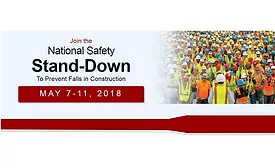
A Safety Stand-Down is a voluntary event for employers to talk directly to employees about safety.
How to conduct a Safety Stand-Down
Companies can conduct a Safety Stand-Down by taking a break to have a toolbox talk or another safety activity such as conducting safety equipment inspections, developing rescue plans, or discussing job specific hazards.
Over the last four years, OSHA’s National Safety Stand-Down to Prevent Falls in Construction has grown to include events in 50 states and internationally (more than 150 public events in the US. alone).
The IRSST has just made available a free online tool for analysing and managing the risks associated with work in confined spaces. The tool, called CLOSE, is intended for use by people already qualified for confined space risk management, including prevention officers, supervisors, clients, principal contractors, designer-integrators and rescuers.
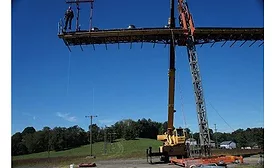
If you have seen a construction site recently, you may have noticed workers standing on elevated equipment that resembles scaffolding, except with only one platform level for workers. With its ship-like mast, this equipment is aptly called a mast-climbing work platform, or mast climber for short.
Elon Musk, owner of SpaceX and Tesla is a seriously strange and driven guy. That can be a good thing in some circumstances and even amusing if it’s your next door neighbor or crazy uncle. But when you own a major car company, it can mean workers getting hurt or killed. Last May we wrote about a report chronicling Tesla’s poor safety record.
New fan from SonicAire is UL approved for operation in Class II, Division 2 locations
April 20, 2018
SonicAire, Inc., leading manufacturer of overhead dust control fans, has announced the company’s latest product offering: a UL approved fan designed for operation in hazardous locations. The new SA XD2 is UL approved for Class II, Division 2 environments.
A professor of safety management at West Virginia University has been named William E. Tarrants Outstanding Safety Educator by the American Society of Safety Engineers (ASSE). Gary Winn, Ph.D., CHST, who teaches in the school’s Department of Industrial and Management Systems Engineering, heads up the school’s safety management master’s degree program and occupational safety and health doctorate.