Maintaining fire safety inspections and compliance is always a detailed process for any building manager, but the coronavirus pandemic has pushed many office buildings into uncharted territory.
In 2018 alone, there were 103,600 recorded incidents in commercial buildings. Electrical malfunctions are a leading cause of these events, and they cost businesses $373,400,000 in 2018.
Industry safety regulations and the evolution of voluntary performance standards have ensured that fire-resistant (FR) clothing is more readily available. For many industries, FR gear is a requirement to ensure worker safety, and keeping FR clothing in good repair is crucial for reducing on-site injuries and extending the life of the garments.
Industrial fire safety is a necessary part of any industrial warehouse and manufacturing plant, though fires and explosions vary from causes and severity. As industrial fire protection standards improve each year, safety and health professionals want to ensure the best practices on how to prevent fires and explosions.
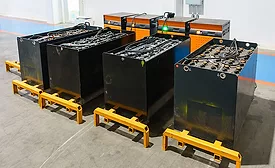
Each day that they are in use, forklifts and other types of powered industrial equipment must be inspected prior to operation. But often, not nearly as much thought is given to the battery charging stations that keep many of these essential machines running.
With the increasing popularity of vaping, the Federal Aviation Administration (FAA) is working with other federal agencies and organizations to remind airline passengers that electronic smoking devices like vaporizers (vapes) and e-cigarettes are considered hazardous materials when transported on aircraft.
Electronic smoking devices contain lithium batteries that pose a fire risk.
Over the 10 years from 2008 to 2017, the U.S. had an annual average of 1,344,100 fires, according to Fire in the United States 2008-2017, the 20th edition of the statistical overview of fires in the U.S. issued by the U.S. Fire Administration (USFA).
Those million-plus fires resulted in 3,190 civilian deaths, 16,225 civilian injuries and $14.7 billion in direct property loss each year. The figures in the report represent an increase in 10-year trends for fire-related deaths and dollar loss, even as 10-year trends for fires and fire-related injuries have decreased.
Although sales of artificial trees have risen from 11.9 million in 2012 to 23.6 in 2018, sales of real trees have remained stable. Approximately 32.8 million real trees were sold in the U.S. last year.
Lovers of real Christmas trees appreciate their scent and authenticity. However, without a simple maintenance measure, a real Christmas tree can pose a significant fire danger in a home.
The industrial sector is facing growing pressure to meet the rising demand for goods and energy. To meet these demands, implementation of IIoT-enabled tools can be instrumental in helping to increase production by improving plant connectivity, efficiency and scalability.