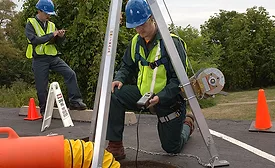
You may be asking why it matters what image a welder has. It is important because as experienced welders retire, a growing skills gap is making it more difficult for the industry to find qualified replacement welders.
Oilfield safety culture has come a long way since the ground breaking recommendations of the 1990 Cullin Report that followed the Piper Alpha disaster. But safety today is bogged down in a top-down dictatorial mentality which is not keeping up with how increasing systems automation and complexity is affecting the needs of our workers.
The recent flood of hundreds of new rigs, boats and barges came with an equally big flood of new rig managers, many of whom lacked the experience and self-confidence to fight the safety fascists- a weakness which is costing offshore contractors millions.
A construction worker on his second day on the job fell 53 stories to his death yesterday at a downtown Los Angeles high-rise slated to be the tallest building in the West, officials said.
People have been griping about the accelerating pace of working life and its effects on attention and well-being for 150 years, basically since industrialization, and probably before. Why this intensifying focus now on how best to cope in the workplace?
Some senior business people skillfully and consciously manage their sleep, emerging refreshed and alert after crossing multiple time zones or working late into the night. Yet we all know caffeinated and careworn executives who, after hours of wakeful slumber, struggle to recall simple facts, seem disengaged and uninspired, lack patience with others, and can’t think through problems or reach clear-cut decisions.
What is mindfulness?
According to The Mental Health Foundation mindfulness is an integrative, mind-body based approach that helps people to manage their thoughts and feelings.
Mindfulness skills are developed through systematic mindful attention training exercises, which can be based around awareness of body, breathing, movement, or everyday activities such as walking, eating or driving.
The Health and Safety industry is evolving and with it is the skill set required to be successful. There will always be a need for technical underpinning gained through formal qualifications, but many successful leaders attribute their success to the ability to demonstrate a set of critical competencies that go beyond technical knowledge.
 RSS
RSS