The employer of a man killed in a trench collapse last year in Colorado has been charged with manslaughter, according to the Granby Police Department.
The June 14, 2018 incident claimed the life of Rosario Martinez-Lopez, who was working in a trench at a condominium project when the collapse occurred. By the time emergency crews dug him out, he was unresponsive.
Federal agencies propose changes to regulations meant to avoid trucker fatigue and silica exposure; napping at work becomes more popular and researchers uncover a link between insomnia and heart disease. These were among the top occupational safety and health stories featured on ISHN.com this week.
The Concrete Polishing Council (CPC), a specialty council of the American Society of Concrete Contractors (ASCC), has developed seven Job Hazard Analysis (JHA) sheets for tasks primarily related to the process of polishing concrete. JHAs are used on the jobsite, prior to starting work each day, to remind craftsmen of the risks inherent in the work for that day, and the precautions that must be taken to avoid accidents.
Two themes emerged this week in the safety and health violations OSHA issued to non-complying companies: workers endangered by fall and trenching hazards.
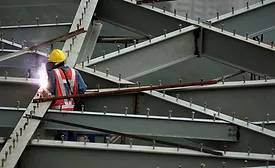
L N Framing, Inc., a residential and commercial framing contractor, was cited for exposing employees to fall hazards at a Jacksonville, Florida worksite. The company faces $58,343 in penalties for failing to ensure that employees used a fall protection system while installing roof trusses and interior framing on the second floor of a residential home under construction.
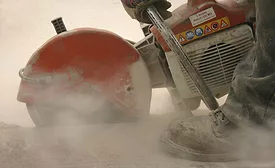
OSHA may “broaden the circumstances” under which certain employers would be permitted to comply with its Respirable Crystalline Silica Standard for Construction, according to a request for information and comment issued by the agency last week.
OSHA is looking for information on additional engineering and work practice control methods to effectively limit exposure to silica.
Worker injuries linked to opioid-related deaths and suicides, a Total Worker Health report card and heat-related illness takes a toll on construction workers. These were among the top stories featured on ISHN.com this week.
Although they compose only six percent of the total U.S. workforce, construction workers accounted for 36 percent of all occupational heat‐related deaths from 1992 to 2016 – and climate change may have something to do with it. That’s one of the key findings from new research from the Center for Construction Research and Training (CPWR).
Common to most construction sites in America is that both workers and managers wear Z89.1 compliant hard hats onsite as a symbol of safety, to protect from falling objects and also as a tool deflector.
There’s going to be some big changes in the fall safety industry. In 2017, OSHA published new regulations regarding fixed ladders that will shape how workers are protected for years to come.
Two speakers will address the topics of product installation and plant safety at the American Architectural Manufacturers Association (AAMA) Fall Conference (Sept. 30-Oct. 3). Richard Hawk, motivational safety speaker and trainer for Make Safety Fun, will give a keynote presentation entitled, "The Future of Safety in Manufacturing Plants." Matt Risinger, owner of Risinger & Co., specializes in architect-driven projects and will discuss installation techniques.
 RSS
RSS