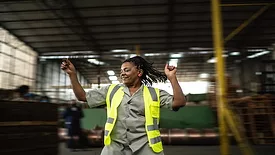
When organizations openly name safety as a value, they create the conditions for what researchers call "induced hypocrisy." Far from being a weakness, that productive tension is one of the more powerful means of improvement.
Manufacturers spend billions of dollars every year on automation, equipment, and productivity improvements. However, none of those investments matter if employees do not return home safely at the end of the day.
Kay Yoder, Senior Vice President of EHS at Southern Glazer’s Wine and Spirits, shares how she manages safety across an expansive North American footprint.
Human, AI, and Organizational Performance (HAOP) does not replace HOP. It extends HOP to two more performers: the organization, which HOP left implicit, and the AI, which is new.
Adverse health conditions tied to psychosocial risk hazards may contribute globally to more than 840,000 worker deaths annually, according to the International Labor Organization (ILO).
Recognized for his exceptional leadership and technical expertise, Wyatt Bradbury talks about modern indicator-based safety strategies and advocating for inclusive safety standards.
As May is Mental Health Awareness Month, Clare Epstein of Vector Solutions spoke to ISHN about why mental health is so important as part of workplace safety initiatives.