Safety Stand-Down Turns Awareness into Safer Jobsite Behaviors

In the construction and industrial sectors, safety is frequently hailed as the ultimate priority. Yet, there might be a gap between understanding safety regulations and executing them under the high-pressure demands of a live job site.
In an episode of ISHN’s All Things Safety Podcast, Chad Lingerfelt, Director of Training at Werner, talks about the company’s expanding OSHA’s National Safety Stand-Down initiative, bridging the disconnect between compliance and real-world behavior, and building a sustainable culture where safety is deeply personal.
"The purpose of this is simply...” Lingerfelt said. “We want to focus on safety in general and the goal is to create a momentum throughout the atmosphere of the whole US and on the job site to make sure that everyone goes home at the end of the day."
Extending Beyond One Week
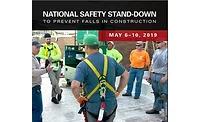
While OSHA’s National Safety Stand-Down typically spans a single week in May to highlight fall protection, Werner extends this initiative to the entire month to accommodate an influx of training requests and maintain safety momentum. In the first week of May alone, Werner conducted 476 training sessions, reaching over 96,000 workers.
Lingerfelt, a military veteran with over 40 years of training experience, emphasizes that safety should never be about "checking a box." True safety relies on visible leadership, collaborative cultures where workers have a voice, and a shift from sterile compliance to deeply personal motivations — specifically, ensuring every worker returns home to their family.
Werner expands OSHA's one-week initiative into a month-long focus to create a sustainable, country-wide momentum. By utilizing real-world scenarios and interactive, hands-on experiences, Werner aims to make safety training engaging rather than bureaucratic. The core goal is to instill long-term behavioral changes regarding proper equipment inspection and usage that persist long after May ends.
A major contributor to job site accidents is the pressure to meet tight deadlines, which often leads to shortcuts (e.g., failing to don a harness for a "quick" task). Lingerfelt counters this hasty mindset with a classic military adage: "Slow is smooth, smooth is fast." Rushing creates fatigue and errors, ultimately slowing the project down through accidents and rework, whereas methodical safety execution ensures efficiency.
Lingerfelt said: “When you speed things up and you start leaving things out, such as safety... it causes lots of pressure... It creates fatigue. And then when that happens, everything sort of starts to crumble. We try to really create that strong culture with safety, showing the proper way and understanding slow is smooth, smooth is fast."
Evolving from Compliance to Culture
Over the past decade, Lingerfelt has witnessed a shift from companies treating safety stand-downs as an administrative box-checking exercise to developing authentic safety cultures.
“When the leadership gets involved, things can really happen,” he said. “And when it starts from the top down and the bottom up... they have to somewhere meet in the middle. Leadership has to be speaking correctly and the workers have to be hearing that and see the example."
Werner leverages a mix of virtual/digital assets and in-person, instructor-led sessions. To ensure digital training translates to real-world competence, it must include rigorous comprehension checks.
Making Safety Personal
To shift employee mindset from *"I'm doing this because my boss told me to" to "I'm doing this for myself," Werner anchors its training in personal accountability. This includes openly discussing the financial and emotional realities for families and addressing critical mental health statistics as construction is an industry disproportionately affected by mental health crises.
“We say here at Werner, all the best ideas come from the workers. All best ideas come from the workers, how to make something better, more comfortable, safer, whatever that may be,” Lingerfelt said.
“Instead of screaming at people, we try to go to their level, meet them where they're at, and help them to go home at the end of the day... Tying your family back into it. That's how you make the behavior change."
To access on-demand resources, educational materials, or request an interactive, instructor-led safety training session for your crew, visit www.wernerco.com.
Sponsored by:
Looking for a reprint of this article?
From high-res PDFs to custom plaques, order your copy today!


.webp?t=1721257160 "download (1).jpg")