Female nurses who administer antineoplastic drugs – medications used to treat cancer – don’t always wear protective clothing, according to a new NIOSH study published online in the American Journal of Nursing, accompanied by a video abstract. This is one of the first studies to explore the use of antineoplastic drugs and personal protective equipment among non-pregnant and pregnant female nurses.
A new report says that “systemic failures” in the U.S. food safety system have led to a sharp increase in recalls of contaminated foods since 2013.
How Safe is Our Food?, from U.S. Public Interest Research Groups’ (PIRG) Education Fund, found that many types of food recalls have increased since the passage of the Food Safety Modernization Act (FSMA) in 2011.
A World Health Organization (WHO) report, published late last year, highlighted the latest scientific evidence linking exposure to air pollution to adverse health effects in children.
It wrote that although air pollution is widely recognized as a major health threat causing about 7 million premature deaths worldwide each year, the critical aspect that it is affecting children in uniquely damaging ways is often overlooked.
Workers in New York State who’ve been affected by the impact of the opioid crisis are getting some help from the U.S. Department of Labor, in the form of funding for disaster relief jobs and employment services.
The Dislocated Worker Grant (DWG) award to the New York State Department of Labor will assist eligible individuals in New York counties impacted by the health and economic effects of widespread opioid use, addiction, and overdose.
Pollution at London Underground tube stations is up to 30 times higher than in busy roads in the capital, research has found, potentially putting the health of staff and thousands of London commuters at risk.
The Committee on the Medical Effects of Air Pollutants (COMEAP) said there is “likely” to be some health risks associated with the high concentrations of particulate matter (PM) on the London Underground network.
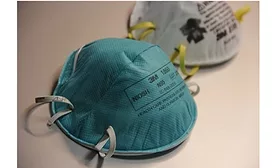
Disposable respirators are one of the most widely used respiratory protection devices due to the ease of use and disposal as well as their reasonable prices. Unlike face masks, disposable respirators provide low breathing resistance and efficient protection against oil-based and non-oil-based particulates.
What materials are respirators made from?
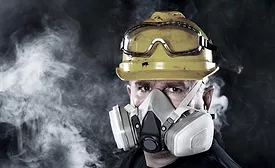
Filtering facepiece (dust masks) are generally made directly from a cloth-like filter material. Chemical cartridge/gas mask respirators can be made from a variety of materials.
An environmentally friendly diet proposed by scientists that would radically transform food production and the types of food we eat; how the shutdown is affecting federal workers’ mental health and a look back at one of the strangest and deadliest industrial disasters in U.S. history. These were among the top stories featured on ISHN.com this week.
Cleaning and disinfecting products are complex mixtures of chemicals that can irritate the skin. Evidence also shows that exposure to these products may increase the risk of work-related asthma among healthcare workers. But the effects of specific chemicals remain unclear. Now, a NIOSH study published in the journal Annals of Work Exposures and Health has added to our understanding by linking products and tasks to specific exposures.
 RSS
RSS