A collaborative study between the American Cancer Society and the National Cancer Institute finds rates of lung cancer, historically higher among men than women, have flipped among whites and Hispanics born since the mid-1960s. The authors of the study, which appears in the New England Journal of Medicine, say future research is needed to identify reasons for the trend, as the change is not fully explained by smoking patterns.
The rate of alcohol-related visits to U.S. emergency departments (EDs) increased by nearly 50 percent between 2006 and 2014, especially among females and drinkers who are middle-aged or older, according to a new study conducted by National Institute on Alcohol Abuse and Alcoholism (NIAAA) researchers.
For the second time in less than two months, Johnson & Johnson has suffered a big courtroom loss in a case that blamed a rare asbestos-related cancer on long-term use of contaminated baby powder.
A state court jury in Southern California today ordered the drug and consumer products giant to pay $4 million in punitive damages to mesothelioma victim Joanne Anderson and her husband, Gary Anderson.
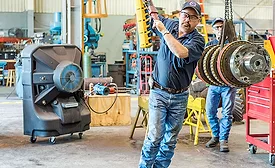
According to the Bureau of Labor and Statistics, in 2015 there were 2,905,900 recordable cases of workplace injuries and 4,836 workplace fatalities. All companies should have an Injury and Illness Prevention Program (IIPP) to help identify hazards in the workplace and protect all employees.
Health advocates are condemning a legislative move made last week by the U.S. House Appropriations Committee that they say will significantly undermine public health by weakening the FDA’s ability to regulate tobacco products.
A rider attached to the agriculture funding bill will exempt some types of cigars from FDA oversight and lessen the agency's authority to review the health hazards of thousands of tobacco products.
Patients with heart failure who felt socially isolated were much more likely to die or be hospitalized than more socially connected patients, according to new research in Journal of the American Heart Association, the Open Access Journal of the American Heart Association(AHA)/American Stroke Association.
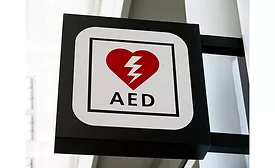
The Rhode Island General Assembly approved a bill last fall mandating that public places in Rhode Island capable of holding 300 or more people have an automated external defibrillator (AED) and a qualified person to administer it.
Most U.S. employees are not prepared to handle cardiac emergencies in the workplace because they lack training in CPR and First Aid, according to new survey results from the American Heart Association (AHA), the world’s leading voluntary health organization devoted to fighting cardiovascular disease.
Workplace success stories with AEDs are nothing new. Take for example ArvinMeritor, Inc. , which manufactures integrated systems and modules for passenger cars and light trucks. It has 150 manufacturing facilities worldwide. Many of these facilities are in very remote areas. After experiencing five sudden death cardiac arrests in recent years, ArvinMeritor, Inc., in 2005 initiated a Cardiac Arrest Response System (CARS) that includes placing Automated External Defibrillators (AEDs) in all 150 of the company's manufacturing sites worldwide.
Automated external defibrillators (AEDs) are an important lifesaving technology and may have a role to play in treating workplace cardiac arrest. Most sudden cardiac deaths occur outside of the hospital.
It is estimated that 5 percent or less of victims of sudden cardiac deaths are successfully resuscitated and discharged alive from the hospital.
 RSS
RSS