National CPR and AED Awareness Week is June 1-7, and the American Red Cross encourages people to get trained in CPR and how to use an automated external defibrillator (AED). Jenifer Fox, a recent University of Washington (UW) graduate, knows first-hand how CPR can save a life.
On any given day, educational institutions house more than 20 percent of the U.S. population. As such, educational settings are ideal locations for AED deployment.
In the past, concerns regarding legal liability and litigation have been perceived as a barrier to purchasing and deploying AEDs.
Generally, Good Samaritan immunity laws are enacted by policymakers to encourage particular types of conduct. For example, the first Good Samaritan law, enacted in California during the 1950s, offered immunity to physicians who voluntarily stopped to render aid to accident victims.
The goal of this approach was to encourage physicians to act by reducing the risk of negligence lawsuits.
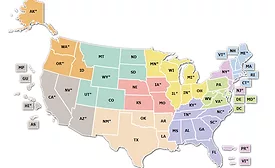
According to research by Mark V. Sherrid, MD, New York University Langone Medical Center, et al, published in the Journal of the American College of Cardiology in March 2017, certain states require or recommend AED placement in various settings, including schools. Following is a summary, based on this research.
According to the Heart and Stroke Foundation, if delivered in the first few minutes, defibrillation and CPR can double the survival rate of cardiac arrest, but with each passing minute, the probability of survival decreases seven to 10 percentage points. CBC News does not know whether an AED would have helped in this case.
Questions are being raised about how prepared flight crews are to deal with medical emergencies after an elderly man died on a WestJet flight from Hawaii to Calgary.
CBC News learned CPR was performed for more than 30 minutes before it was determined the passenger had died.
CBC News was told a nurse on the flight called for help moving the man to the floor.
The Consumers' Association of Canada says it will urge the Canadian Senate to include mandatory medical supplies when it deliberates on legislation that could lead to a new airline passenger bill of
The suggestion was sparked by an incident aboard a WestJet flight from Hawaii to Calgary in which an elderly man died after suffering a medical emergency.
Grilling season is right around the corner and grill gurus everywhere are preparing for many family parties and barbecues. The National Fire Protection Association (NFPA) encourages grillers to pay attention to safety during the spring and summer months when home fires involving grilling incidents occur most often.
Air pollution is a serious – and seemingly overwhelming -- public health problem, yet changes that individuals can make could help them both avoid some of the effects of harmful pollutants and reduce the level of toxins in the environment.
That’s according to the American Lung Association (ALA) and Dr. Eric Presser, a thoracic surgeon and author of An Empowering Guide to Lung Cancer: Six Steps to Taking Charge of Your Care and Your Life.
Restaurant meals are notorious for sky-high sodium levels and are-you-kidding-me calories, but treating yourself to a meal out doesn’t mean settling for poor nutrition. The American Heart Association (AHA) shares three “eat smart” hacks in honor of World Hypertension Day.
Outsmarting eating out has gotten easier now that many restaurants offer better-for-you items, calorie count on their menus and access to detailed nutrition information upon request. Still, availability and knowledge are only part of the equation.
 RSS
RSS