Businesses by and large would rather not know about employees’ mental struggles, and related so-called weaknesses and fragility, and employees don’t want managers and supervisors to know out of fear of losing their jobs. This is a dangerous silence all around.
Social nocebo1 is a contagious illness that impacts upwards of one-quarter of people who encounter it. Conditions are ripe for a rise of social nocebo in the workplace. The following are key actions that occupational safety and health pros must take to anticipate, recognize, evaluate and control social nocebo.
What are boundaries? A practical definition is “the lines or limits that are not to be crossed,” such as not passing a school bus when its red lights are flashing and one doughnut per week. We all create boundaries, some less rigid than others, but they’re meant to benefit and protect us without getting in the way of what we want to accomplish.
You might recall last year the fatal accident involving a self-driving Tesla. It reinforced the need to be vigilant even as we are assured (or assure ourselves) that “the machine will handle it.”
An executive coach says when he asks senior leaders what safety means to them, many pause and say, “Well, safety means everybody gets to go home.” What, are we fighting a war?
One of the real head-scratchers in the realm of workplace safety is the reality that such a large percentage of accidents, especially serious ones, happen to experienced workers.
Recently one of our potential customers asked this question: For a firm that has a DART rate of 0.5, and would like to get to a DART rate of 0.2, to help make the compelling case for change, what is the likelihood that you’re more likely to experience an SIF event having a DART rate of 0.5, thus the need for change?
It is implicit that any SMS should deliver a number of goals: safety performance, instituting standards and practices, compliance with regulatory requirements, communications and dissemination of information, setting up responsibilities & rights, etc.
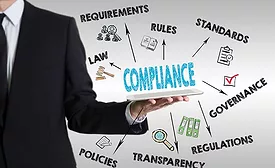
Compliance bias is the belief that U.S. government mandates such as OSHA regulations are sufficient for most organizations to achieve injury and illness prevention objectives. This bias is outdated and dead wrong.
You probably know that walking 10,000 steps a day is the new “magic metric” for the health-conscious. Ten years ago if you asked someone how many steps a day they should walk, you’d get a shoulder shrug. Nobody counted steps.
 RSS
RSS