A new report says that “systemic failures” in the U.S. food safety system have led to a sharp increase in recalls of contaminated foods since 2013.
How Safe is Our Food?, from U.S. Public Interest Research Groups’ (PIRG) Education Fund, found that many types of food recalls have increased since the passage of the Food Safety Modernization Act (FSMA) in 2011.
Despite being shut down during the partial federal government shutdown, the White House Office of Information and Regulatory Affairs (OIRA) last week approved OSHA’s final Tracking of Workplace Injuries and Illnesses rule. What are the details? The public doesn’t know and will not know until the rule can be published in the Federal Register, which is closed for business during the shutdown.
Kansas drywall contractor cited following fatal forklift incident. Midwest Drywall Company, Inc., faces $77,604 in penalties after a worker was fatally crushed by part of a forklift. OSHA inspectors determined that the company failed to properly secure a suspended and supported load, and ensure that workers were kept clear of it.
An environmentally friendly diet proposed by scientists that would radically transform food production and the types of food we eat; how the shutdown is affecting federal workers’ mental health and a look back at one of the strangest and deadliest industrial disasters in U.S. history. These were among the top stories featured on ISHN.com this week.
OSHA's civil penalties amounts for violations of workplace safety and health standards will increase in 2019 to adjust for inflation. The adjusted maximum penalty amounts will take effect upon publication in the Federal Register. New penalties for willful and repeat violations will be $132,598 per violation; serious, other-than-serious, and posting requirements are $13,260 per violation.
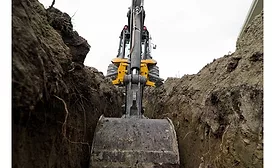
OSHA has cited RKM Utility Services Inc. for failing to protect workers from hydrogen sulfide after an employee died after exposure to dangerous levels of the gas while working in a trench in Dallas, Texas. OSHA inspectors determined that the company exposed employees to a hazardous atmosphere, failed to train employees on the health hazards of hydrogen sulfide, and did not drain water from the trench.
NFPA 2113: Standard on Flame-Resistant Garments for Protection of Industrial Personnel Against Flash Fire (latest edition 2015, next revision 2020) guides you to avoid risks associated with incorrect selection, use, and maintenance, as well as contamination and damage of flame-resistant (FR) garments.
OSHA standard 1910.242(b) relating to hand and portable powered tools and other hand-held equipment is clear on using compressed air for cleaning. “Compressed air shall not be used for cleaning purposes except where reduced to less than 30 psi and then only with effective chip guarding and personal protective equipment.”
A volunteer firefighter in Sun Prairie, Wisconsin, lost his life last July responding to an explosion and fire that resulted from two utility contractors failing to establish the location of underground utilities prior to beginning excavation work.
Most all of us have been around a boss or supervisor who isn’t very likeable or open to feedback. He or she is often avoided, and people may even fear approaching that boss with a safety-related concern or idea for improvement. Workers who perceive their bosses as open believe their leader really listens to their ideas and acts upon them when appropriate — or at the very least, gives their ideas a fair shake.
 RSS
RSS