The U.S. Department of Labor’s Office of Workers’ Compensation Programs has issued a final rule that revises the Black Lung Benefits Act in order to give miners greater access to their health information.
The U.S. Department of Transportation's National Highway Traffic Safety Administration (NHTSA) today proposed a new Federal Motor Vehicle Safety Standard that will help reduce fatalities and injuries in motorcoach and large bus crashes by mitigating occupant ejection.
OSHA’s final rule on Occupational Exposure to Respirable Crystalline may not be so final after all. During a hearing yesterday by the Subcommittee on Workforce Protections entitled, “Reviewing Recent Changes to OSHA’s Silica Standards,” its chairman, Republican Congressman Tim Wahlberg (MI-07), hinted that Congress may attempt a legislative end run around the regulation.
Just as a new report indicates a big jump in e-cigarette use among U.S. teenagers, a conservative think tank is arguing against FDA regulation of the devices, claiming that it will do more harm than good when it comes to public health.
Macondo disaster minimal compliance culture still exists
April 14, 2016
Offshore regulatory changes made thus far do not do enough to place the onus on industry to reduce risk, nor do they sufficiently empower the regulator to proactively oversee industry’s efforts to prevent another disaster like the Deepwater Horizon rig explosion and oil spill at the Macondo well in the Gulf of Mexico, an independent investigation by the U.S. Chemical Safety Board (CSB) warns.
When I learned about the dangers of silica dust in medical school in the 1970s, at the beginning of my career in occupational medicine, I thought silica dust was only of historical interest, or a hazard for just a few especially vulnerable workers with unscrupulous employers.
Public health experts call the Final Rule Governing Workplace Exposure to Crystalline Silica issued by OSHA last week “a lifesaving public health victory.” Roofers say it will increase fall hazards.
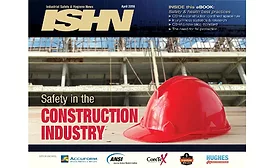
This exclusive ISHN ebook identifies the most serious construction hazards and provides protection tips and best practices. We pay particular attention to falls – the number one killer on construction sites.
OSHA standard 1910.1200, covering toxic and hazardous substances, was updated to align with the UN Globally Harmonized System of Classification and Labelling of Chemicals (GHS).
 RSS
RSS