America’s solar energy industry has grown rapidly — more than doubling its workforce. There are now more than 242,000 U.S. solar workers. Training programs and compliance with OSHA safety standards keep workers informed and can prevent accidents.
"There's no truth to the alien invasion or alien UFO landing"
December 11, 2019
Con Edison says an electrical fault at a substation in Astoria, Queens caused an electrical arc lighting up the sky over New York City while causing some flight delays and scattered power outages.
It happened shortly after 9 p.m. at the Astoria East and North Queens Con Edison plant on 20th Avenue and 32nd Street in Astoria.
The OSHA citations Dollar Tree Stores just received for exposing employees at its stores in Alabama and Connecticut to workplace hazards should feel familiar to the national retailer. The company “has an extensive history of similar violations and continues to show a disregard for safety measures designed to keep employees safe on the job,” said OSHA Mobile Area Director Jose Gonzalez.
Unfortunately, electrical work by its very nature is dangerous due to the high energy levels involved and, until an accident occurs, electricity is odorless, colorless, and invisible. As an electrical worker, you’ve chosen the third most dangerous profession, according to OSHA.
OSHA has cited Day & Zimmerman NPS, Inc., for exposing employees to electric shock hazards at the Tennessee Valley Authority Sequoyah Nuclear Power Plant in Soddy Daisy, Tenn. The company faces $71,599 in proposed penalties.
Two employees pulling electrical cable suffered burns from an arc flash.
An arc flash at Xcel Energy's Cabin Creek Hydroelectric Generating Station in Colorado left five employees with non-life-threatening injuries, according to a report from the Clear Creek Courant, Idaho Springs, Colo.
At 8:10 a.m. authorities responded to an emergency at the plant, which is above Georgetown along Guanella Pass Road.
According to OSHA, arc flash burns are one of the top three most common hazards when working with energized electrical equipment.
Every day in the U.S. there are up to 10 arc flash incidents, totaling more than 3,600 disabling electrical contact injuries each year. The violent nature of arc flash exposure, which can result in a fatality, even if a worker is 10 feet from the blast site.
OSHA cited ASARCO – a metal smelting company – for electrical hazards after an arc flash caused three workers to suffer severe burns at its facility in Hayden, Arizona. The company faces $278,456 in penalties for two willful violations and one serious violation.
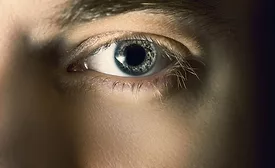
Arc eye, or welder’s flash, is an inflammation of the cornea, caused by the UV rays from the arc during welding. The symptoms, which appear a few hours to several hours after exposure, can include mild to severe pain, red watery eyes, sensitivity to light and the feeling of a foreign object in the eye. Typically, arc eye is temporary, but repeated or prolonged exposure can lead to permanent eye injury.
“Welding fumes are a complex mixture of fine condensed metallic particulate and other solid particles. While welding fume is not a gas, some gases such as ozone, NOx and carbon monoxide are also generated during the welding process,” says Keith Daley, environmental systems manager at The Lincoln Electric Company of Canada.
 RSS
RSS