A study reveals 83% of manufacturing leaders see increased productivity from safety programs. Improving worker safety with IoT in manufacturing is one of the best ways manufacturing companies can deal with safety concerns and risks.
Many occupational safety and health professionals perform tasks outside of their main area of expertise, according to a recent survey on their continuing education needs published in the American Journal of Industrial Hygiene icon.
The survey built on the 2011 National Assessment of the Occupational Safety and Health Workforce, also called the Westat report, which had similar findings.
Initial research focuses on enabling real-time monitoring of field technicians to ensure their safety and to provide audiovisual assistance to perform asset maintenance, with the hope of adopting lightweight yet robust wearable devices, GlobalData noted.
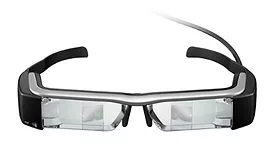
These features of wearable technology encourage oil and gas companies to adopt helmets, smart glasses, wristbands and other devices that incorporate technologies such as wireless connectivity, artificial intelligence (AI) and augmented reality (AR).
Atlas Oil was named the Excellence in Health and Safety award winner at the 2019 Texas Oil and Gas Awards, marking the company's second consecutive win in this prestigious category – last year in the Rocky Mountain region.
Safe Influx is a ground-breaking new technology to help avoid well blowouts by automating well control operations and removing the human risk factor associated with well control.
Invented last year by Phil Hassard, head of drilling simulation at Robert Gordon University, the technology is about to get its first outing in the field at the Weatherford Land Rig at Bridge of Don Aberdeen following overwhelmingly successful tests on a DrillSIM:6000 drilling simulator, manufactured by Drilling Systems, which is part of the 3T Energy Group.
Google Glass – and other virtual reality “wearables” are finding their place at work even if they didn’t initially succeed with consumers. A couple current uses of these virtual or “augmented” reality technologies include: Lockheed Martin using Microsoft’s $3,500 HoloLens (see video) to build spacecraft.
IBM has announced “major collaborations” with SmartCone, Guardhat, Garmin Health and Mitsufuji that will help to monitor the safety of workers in hazardous environments.
The collaborations will use internet of things (IOT) technologies that have been integrated into wearables, the tech giant said in an announcement Wednesday. Workers in sectors including factories, construction and mining will use the technology, IBM added.
There are no standards in place to govern how data gleaned from wearables is used and protected, but, according to Lydia Baugh, director of external affairs at the International Safety Equipment Association (ISEA), that might be about to change.
At its next annual meeting in November, the ISEA plans to start having discussions with its members about developing privacy and use standards — or at least guidance — for the data collected from wearables, how workers can view this information and in what ways the data can be analyzed to predict trends and patterns so as to better assist workers.
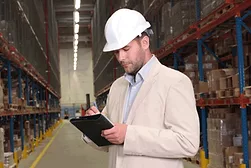
There’s a strong case to be made for wearable technology when it comes to promoting worker safety, especially in distribution and the warehouse.
Continuous measurement of biometrics such as body temperature, heartrate and respiration has provided valuable new insights into human health.
Independent research firm Verdantix announced the 11 winners of the annual EHS Innovation Awards at the Verdantix Summit in Atlanta. The international awards recognize organizations which have implemented innovative EHS technologies. Winners were selected by three independent judges, including the heads of EHS at Amazon and Birla Carbon and the Director of the Campbell Institute at the National Safety Council.
 RSS
RSS