Following the death of a worker who was hit by a forklift , OSHA has cited Nicholson Terminal & Dock Co. with nine-including two willful and seven serious-safety violations. The incident occurred Nov. 19, 2013, at the Detroit marine terminal when the worker was struck by a 62,000-pound-capacity forklift carrying a 40,000-pound steel coil.
The Voluntary Protection Programs Participants’ Association (VPPPA), has added Courtney Malveaux as its government affairs counsel. According to the organization, Malveaux, a Richmond attorney, will be taking the lead in the organization’s efforts to build state and federal support for OSHA’s Voluntary Protection Programs.
The United Union of Roofers, Waterproofers and Allied Workers (UURWAW) and National Roofing Contractors Association (NRCA) are supporting the National Safety Stand-Down to Prevent Falls in Construction, organized by the Occupational Safety and Health Administration (OSHA), taking place throughout the U.S. from June 2-6, 2014.
Recently, a manager in one of our service organizations asked some questions about recurring injury trends. The trends revealed a higher incident rate among newer employees and also an injury pattern around time of day. The manager understood how newer employees can have a higher injury frequency rate; however, he was intrigued by the other data.
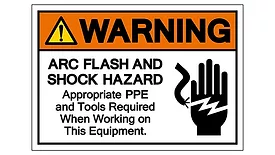
1 - Arc flash explosions do not happen… I have never seen one… Electrical work by its nature is dangerous due to the high energy levels involved and, until an accident occurs, electricity is odorless, colorless, and invisible. Electrical work is the third most dangerous profession, according to OSHA.
National Fire Protection Association, National Safety Council, and Bureau of Labor Statistics data indicate that 10 arc flash accidents happen every day in the U.S. More than 3,600 disabling electrical contact injuries happen every year. Last year in Oregon two workers were seriously burned in arc flash incidents:
Why did OSHA decide to modify its standards for electric power generation, transmission, and distribution work? OSHA last issued rules for the construction of transmission and distribution installations in 1972. Those provisions were out of date and inconsistent with the more recently promulgated general industry standard covering the operation and maintenance of electric power generation, transmission, and distribution lines and equipment.
It is a widely held belief that an arc flash incident is rare. Not so. Check out these statistics compiled from various sources and pertaining to arc flash incidents in the U.S.:
A Comment posted to ISHN regarding story (link at bottom): I continue to be perplexed at the view that safety professionals depend on an aggressive OSHA for our livelihood. It is as though OSHA birthed us. That is simply not so!
An arc flash occurs during a fault, or short circuit condition, which passes through as arc gap. The flash can be initiated through accidental contact, equipment which is underrated for the available short circuit current, contamination or tracking over insulated surfaces, deterioration or corrosion of equipment and, or parts, and other causes.
 RSS
RSS