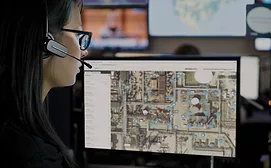
In response to growing demand for employee protection and a one-stop solution to keep workers safe on the job, Blackline Safety Corp., a global leader in connected safety technology, has announced a major expansion of its round-the-clock safety monitoring service.
For most industries, safety is a cost overhead. Although essential, it can slow down productivity or even, in the event of a safety incident, lead to a complete stop while issues are resolved, and investigations carried out. However, if the approach to safety changes from a reactive one to proactive, it can become an aid to achieving greater efficiency, lower costs, and higher profit margins.
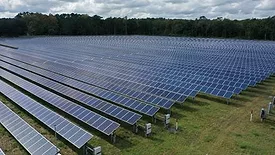
Honeywell announced it will supply Hecate Energy with an Energy Storage System (ESS) for a solar park located in Northern New Mexico. When completed in mid-2022, the 50-megawatt (MW) solar farm will be capable of supplying enough electricity to power up to 16,000 average New Mexican homes for a year.
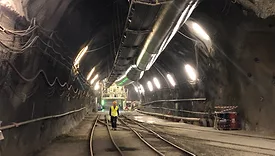
You’ve probably heard confined space horror stories a million times. The person inside a confined space becomes unresponsive. Training all workers before they work in confined spaces is a must, but in reality not every job is performed under ideal conditions.
No matter what hustle culture might try to teach us, people are not machines. They get tired when overworked, and fatigue can create a safety hazard. This is especially true in industrial settings, where the presence of heavy machinery and other potential workplace hazards make alertness more critical for employees.
Field technicians are an integral and critically important part of the provision of technical services, whether it be for the installation, repair, or maintenance of machinery and equipment.
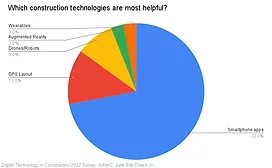
Research conducted by National Association of Women in Construction and Safe Site Check In offers insight into popular digital technologies and impact of the labor shortage and supply chain disruptions
March 10, 2022
In celebration of Women in Construction Week, theNational Association of Women in Construction (NAWIC) andSafe Site Check In announced the results of the “Digital Technology in Construction: 2022” survey. Participants included 600 women throughout the United States working in the construction industry at companies with revenues between $500,000 to over $1B annually.
Owners and operators of refineries, chemical plants and manufacturing facilities must change the way employees work as quickly as possible, and it is clear yesterday’s traditional operating model of onsite availability has evolved – not just due to current circumstances, but because of “The Great Resignation,” retirement of experienced plant workers is creating a shortfall of key skills.
Employers have a responsibility to anticipate and manage operational risks to protect workers, ensure compliance and promote the health of the organization.
What if we could crowdsource our EHS data? A prime example focuses on the safety successes of the U.S. airline industry - no commercial U.S. airline has experienced a fatal crash since 2009! Their safety strategy has been so effective that the healthcare industry, which currently experiences 250,000 unnecessary patient deaths a year in the U.S., is attempting to follow its protocols. So, what has helped the airline industry achieve such immense safety feats and how can EHS leaders in industries outside of the airline industry take a page out of their book?