Flooding caused by heavy rainfall is one of the possible causes of a fiery train derailment earlier this year that killed and injured horses and leaked high-hazard, flammable chemicals into the environment, including a nearby river.
Harold Nisker can be seen on a 1980s home video, golf club in hand, at a course back-dropped by the Rocky Mountains in Banff, Alberta. “I think the greens are very bad. And I can’t putt,” he says to the camera. “Other than that I’m having a great time.” Maybe partly an artifact of faded film, and maybe partly due to differences in turf management, the Banff greens and fairways do appear dimmer than the crayon green seen on the April broadcast of the Masters Tournament.
Canada will follow the European Union in banning some single-use plastics like straws, bags and cutlery, according to an announcement yesterday by Prime Minister Justin Trudeau.
A statement by the government accompanying the announcement notes that without such a prohibition, Canadians will throw away an estimated $8.3 billion worth of plastic materials each year by 2030. Less than 10 percent of the plastic used in Canada gets recycled.
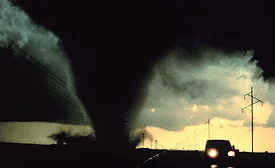
The recent destructive barrage of tornadoes in Ohio, Kansas and Pennsylvania that took lives and demolished buildings is a reminder that “tornado season” – the time of year when most tornadoes happen – is far from over. The dangerous vortex of violent, rotating wind that accompanies a storm system occurs most often in the U.S. from April to June, although tornadoes can wreak havoc long before and after that time.
Mother’s Day brought an unwelcome research result in a study done in Ecuador: high blood pressure among children exposed to pesticides sprayed during that country’s big flower harvest.
Ecuador is among the largest commercial flower growers in the world, with significant rose exports to North America, Europe and Asia – especially for Mother’s Day, a holiday with one of the highest sales of flowers.
Improved air quality in the Los Angeles region is linked to roughly 20 percent fewer new asthma cases in children, according to a USC study that tracked Southern California children over a 20-year period.
The research expands on the landmark USC Children’s Health Study, which found that children’s lungs had grown stronger in the previous two decades and rates of bronchitic symptoms decreased as pollution declined throughout the region.
Legal wrangling over hazardous pesticides – such as the recent lawsuit against the maker of Roundup – are not limited to the United States. The European Trade Union Institute (ETUI) is accusing senior European Commission officials of behind-the-scenes machinations that are enabling dangerous pesticides to continue being sold on the European market.
The latest lawsuit against the manufacturer of a popular weed killer has resulted in a $2 billion award for a husband and wife who claimed Roundup caused them both to contract cancer.
The California jury award against Monsanto, maker of the glyphosate-based herbicide, is the third recent court decision of its kind – and the largest.
An Alameda County jury ruled that the non-Hodgkin’s lymphoma of Alva and Alberta Pilliod of Livermore, Calif. was due to their use of Roundup.
The EPA has issued a final rule that closes a regulatory loophole for asbestos by prohibiting discontinued uses of the substance by being re-introduced to the marketplace without an agency review. Restrictions on Discontinued Uses of Asbestos; Significant New Use Rule (SNUR) is effective June 24, 2019.
The restricted significant new uses of asbestos (including as part of an article) is manufacturing (including importing) or processing for uses that are neither ongoing nor already prohibited under TSCA.
 RSS
RSS