ISHN logo
search
cart
facebook twitter linkedin youtube
  • Sign In
  • Create Account
  • Sign Out
  • My Account
ISHN logo
  • NEWS
    • Today's News
    • Global Safety News
    • Government Regulations
  • PRODUCTS
    • Product Innovations
    • Featured Products
  • TOPICS
    • Environmental Health and Safety
    • Facility Safety
    • Workplace Health
    • Occupational Safety
    • PPE
    • More Topics
  • CONSTRUCTION
  • TECHNOLOGY
  • COLUMNS
    • Best Practices
    • Dave Johnson: What’s going on
    • Editorial Comments
    • Leading Safety
  • MULTIMEDIA
    • ISHN Podcast
    • Videos
    • Cold Stress Education Quiz
    • Webinars
    • White Papers
  • MORE
    • Buyer's Guide
    • Newsletters
    • Convention Companion
    • Polls
    • Events
    • ISHN Store
    • Sponsor Insights
  • EMAGAZINE
    • eMagazine
    • Archived Issues
    • Contact
    • Advertise
  • JOIN TODAY!
Occupational Safety

Do’s and don’ts for working at heights

February 27, 2015

checklistWorking at height remains one of the biggest causes of fatalities and major injuries. Common cases include falls from ladders and through fragile surfaces. “Work at height” means work in any place where, if there were no precautions in place, a person could fall a distance liable to cause personal injury (for example a fall through a fragile roof).

Here’s how employers can take simple, practical measures to reduce the risk of any of their workers falling while working at height.

Case study

Preventing falls from ladders

A large, independent installer of digital terrestrial and satellite equipment recognised it could be doing more to tackle falls, especially as engineers were installing aerials and dishes at a variety of heights from portable leaning ladders and roof ladders.

The solution

They took measures including making sure ladders were secured using an eyebolt and ratchet strap, and equipping appropriately trained workers with specialist kit, such as a flexible safety line that can be attached to the secured ladder.

Trained workers now wear a fall-arrest harness that can be attached to the line and the ladder. This means that the ladder cannot slip during use and, even if the engineer slips and falls from the ladder, the fall will be stopped.

What do I have to do?

You must make sure work is properly planned, supervised and carried out by competent people with the skills, knowledge and experience to do the job. You must use the right type of equipment for working at height.

Take a sensible approach when considering precautions. Low-risk, relatively straightforward tasks will require less effort when it comes to planning and there may be some low-risk situations where common sense tells you no particular precautions are necessary.

Control measures

First assess the risks. Factors to weigh up include the height of the task, the duration and frequency, and the condition of the surface being worked on.

Before working at height work through these simple steps:

  • avoid work at height where it's reasonably practicable This means balancing the level of risk against the measures needed to control the real risk in terms of money, time or trouble. However, you do not need to take action if it would be grossly disproportionate to the level of risk. to do so
  • where work at height cannot be easily avoided, prevent falls using either an existing place of work that is already safe or the right type of equipment
  • minimize the distance and consequences of a fall, by using the right type of equipment where the risk cannot be eliminated,
  • For each step, always consider measures that protect everyone at risk (collective protection) before measures that only protect the individual (personal protection).

Collective protection is equipment that does not require the person working at height to act for it to be effective. Examples are permanent or temporary guardrails, scissor lifts and tower scaffolds.

Personal protection is equipment that requires the individual to act for it to be effective. An example is putting on a safety harness correctly and connecting it, with an energy-absorbing lanyard, to a suitable anchor point.

Dos and don’ts of working at height

Do….

  • as much work as possible from the ground
  • ensure workers can get safely to and from where they work at height
  • ensure equipment is suitable, stable and strong enough for the job, maintained and checked regularly
  • take precautions when working on or near fragile surfaces
  • provide protection from falling objects
  • consider emergency evacuation and rescue procedures

Don’t…

  • overload ladders – consider the equipment or materials workers are carrying before working at height. Check the pictogram or label on the ladder for information
  • overreach on ladders or stepladders
  • rest a ladder against weak upper surfaces, eg glazing or plastic gutters
  • use ladders or stepladders for strenuous or heavy tasks, only use them for light work of short duration (a maximum of 30 minutes at a time)
  • let anyone who is not competent (who doesn’t have the skills, knowledge and experience to do the job) work at height

Source: United Kingdom’s Health and Safety Executive (HSE)

KEYWORDS: accident prevention Fall Protection injuries ladder safety

Share This Story

Looking for a reprint of this article?
From high-res PDFs to custom plaques, order your copy today!

Recommended Content

JOIN TODAY
to unlock your recommendations.

Already have an account? Sign In

  • forklift safety

    Exploring the latest technologies in forklift safety

    With more staff and more stock in warehousing now more...
    Workplace Training Strategies
    By: Josh Cramer
  • welding

    All about welder’s flash or arc eye

    A flash burn is a painful inflammation of the cornea,...
    Environmental Health and Safety
  • dangerous jobs

    The 10 most dangerous jobs in the U.S.

    On-the-job deaths have been rising — hitting the highest...
    Government Safety Regulations
    By: Benita Mehta
Manage My Account
  • eMagazine Subscriptions
  • ISHN Newsletter & Other Newsletter Alerts
  • Online Registration
  • Manage My Preferences
  • Subscription Customer Service

More Videos

Sponsored Content

Sponsored Content is a special paid section where industry companies provide high quality, objective, non-commercial content around topics of interest to the ISHN audience. All Sponsored Content is supplied by the advertising company and any opinions expressed in this article are those of the author and not necessarily reflect the views of ISHN or its parent company, BNP Media. Interested in participating in our Sponsored Content section? Contact your local rep!

close
  • man wearing the the Sundström SR200 Full Face Mask Respirator
    Sponsored byOHD

    5 Fit Testing Mistakes That Could Cost You

  • This image shows Magid AcuSpex polarized blue mirrored safety glasses.
    Sponsored byMagid Glove and Safety

    Construction PPE Guide: What Crews Need for Each Task

  • lone worker in confined space
    Sponsored byAlphasense Ltd.

    GET THE LEAD OUT of your Safety Oxygen Sensors!

Popular Stories

SpaceX 7 launch

OSHA Investigating Fatal Fall at SpaceX Starbase

Automated loading dock equipment

After March 2026 Rivian Death, Safety Managers Reassess Loading Dock Systems Under OSHA's Warehouse Emphasis Program

psychology in the workplace

Most Workplaces Measure Psychological Safety, Ignoring Psychosocial Risks

top 10 most dangerous jobs

Poll

Seasonal Readiness

With the federal heat stress prevention rule on the horizon, which area of your safety program needs the most attention?
View Results Poll Archive

Products

Surviving an OSHA Audit A Management Guide, 2nd Edition

Surviving an OSHA Audit A Management Guide, 2nd Edition

See More Products

ISHN Podcasts

Related Articles

  • working at heights

    7 parts of an in-house rescue plan for working at heights

    See More
  • worker being lowered into confined space

    Essentials for working at heights in confined spaces

    See More
  • Fall protection for working at extreme heights on wind turbines

    See More

Related Products

See More Products
  • 111885960X.jpg

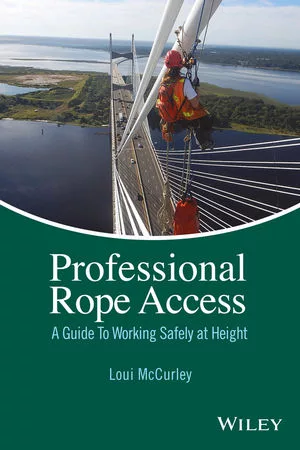
    Professional Rope Access: A Guide To Working Safely at Height

See More Products

Events

View AllSubmit An Event
  • December 16, 2016

    ASSE to host virtual symposium on new OSHA Walking-Working Standard

    The American Society of Safety Engineers is offering a virtual symposium to help occupational safety and health professionals better understand the sweeping changes OSHA recently made to its final rule on Walking-Working Surfaces and Personal Fall Protection standards in relation to slip, trip and fall hazards.
  • June 28, 2017

    Walking working surfaces webinar offered by ORCHSE Strategies

    OSHA’s Updated Walking Working Surfaces Standard Webinar will be led by Rich Fairfax, Former Deputy Assistant Director for OSHA, on June 28, 2017 from 10:30 am -12 noon.
View AllSubmit An Event

Related Directories

  • Grace Industries

    How Do You Protect Your Lone Workers? Working at Heights? Check out our new WorkForce product line - Fall Detection with Immediate Notification – Prevent Suspension Trauma. Fixed Facility – No Monthly Fees. Working in the field? Check out Grace Connected Safety – Cellular and Satellite Cloud Connect
×

Become a Leader in Safety Culture

Build your knowledge with ISHN, covering key safety, health and industrial hygiene news, products, and trends.

JOIN TODAY
  • RESOURCES
    • Advertise
    • Contact Us
    • Directories
    • Manufacturing Division
    • Store
    • Want More
  • SIGN UP TODAY
    • Create Account
    • eMagazine
    • Newsletters
    • Customer Service
    • Manage Preferences
  • SERVICES
    • Marketing Services
    • Reprints
    • Market Research
    • List Rental
    • Survey/Respondent Access
  • STAY CONNECTED
    • LinkedIn
    • Facebook
    • YouTube
    • X (Twitter)
  • PRIVACY
    • PRIVACY POLICY
    • TERMS & CONDITIONS
    • DO NOT SELL MY PERSONAL INFORMATION
    • PRIVACY REQUEST
    • ACCESSIBILITY

Copyright ©2026. All Rights Reserved BNP Media, Inc. and BNP Media II, LLC.

Design, CMS, Hosting & Web Development :: ePublishing