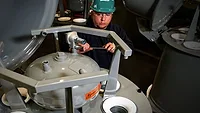
Recirculating dust collection systems offer energy savings
Whether dust collectors are used in your plant to ensure good indoor air quality (IAQ) for workers, keep equipment clean and/or recover high-value process dusts, you might want to consider recirculating the air back into the plant downstream of the collector(s).
There are at least three primary benefits to using a recirculating dust collection system.
Less regulatory paperwork
When contaminated air is exhausted outdoors, the EPA must be satisfied that the exhausted air is in compliance with current standards—a process that involves time-consuming permit applications, testing, and regulatory paperwork. By containing the air totally inside the building, you can deal with OSHA instead of the EPA—a less daunting prospect, even though OSHA air quality standards have themselves become increasingly stringent. A 2011 EPA regulation, the National Emission Standard for Hazardous Air Pollutants (NESHAP) Rule 6x, which states that contaminated air can no longer be exhausted outdoors in a large number of U.S. metalworking applications, is further fueling this trend.
Substantial energy savings
If you are containing factory air indoors and the air is climate-controlled, air recirculation is hands down the single best way to save energy and maximize return on investment with a dust collector. By recirculating heated or air conditioned air back through the plant instead of venting it outdoors, the cost to replace that conditioned air is eliminated.
Facilities in all regions report five- to six-figure annual energy savings, with the greatest savings seen in northern climates which experience longer, colder winters. In addition, the U.S. Department of Energy offers public utility-sponsored rebates and incentives for facilities that save energy by recirculating heated or cooled air. A good source for information on these programs is the Database of State Incentives for Renewables & Efficiency (www.dsireusa.org).
Also, dust collection systems for production areas with high ceilings can often improve the efficiency of a heating system by taking the hot air off the ceiling and delivering it back at ground level.
Being a good neighbor
An indoor dust collection system is not subject to unneeded scrutiny by commercial or residential neighbors. Outdoor systems and exhaust stacks, on the contrary, can be a frequent source of community concern and potential complaints. These issues can be eliminated with a recirculating system.
Recirculation isn’t always an option. Some applications involving thermal spray equipment, foundry furnaces or other emissions sources that have by-products of combustion can give off hazardous gases. While cartridge dust collectors can effectively capture the dry particulate contaminants from these processes, they cannot stop the hazardous gases. In these cases, the air cannot be returned to the plant.
Meeting OSHA standards
A crucial concern with any recirculating dust collector is to satisfy that the system has adequately removed the dust to protect workers’ health. The first step is to ascertain the allowable indoor limit for the dust being captured. OSHA has established permissible exposure limits (PELs) based on 8‐hour time weighted average for hundreds of dusts. Exposure limits can vary widely depending on the type of dust(s) being captured.
The next step is to select a particulate removal system that will meet IAQ requirements. Whatever brand or type of equipment is used, obtain a guarantee from the manufacturer for the maximum emissions rate (mg of dust per cubic meter of air) for the equipment over an 8-hour TWA.
Do not simply accept efficiency stated as a percentage, even if the manufacturer is touting 99.99 percent efficiency. OSHA only cares that the quantified amount of dust in the air is below established limits. If, for example, the established limit is an average of 5 mg per cubic meter, the manufacturer must provide a guarantee of something less than that—preferably at least half the limit.
Backup protection and monitoring
Today’s cartridge dust collectors offer very high filtration efficiency options, and a properly designed and maintained cartridge collector will typically be able to satisfy OSHA PEL requirements for most dusts as noted above. Nevertheless, there is always the chance of a leak in the system. The use of a safety monitoring filter is recommended to provide backup protection in the event of a problem. Just as you would not drive across the desert without a spare tire, you should not operate a recirculating dust collection system unless it has backup protection as well.
Such systems typically include a side-access housing, a pre-filter and a high efficiency final filter. With newer integrated designs, the safety monitoring filter is mounted directly on top of the dust collector to save on floor space and eliminate the need for extra ductwork and a transition section. It provides a backup system to keep emissions at acceptable levels in the event of a dust collector failure.
Where toxic dusts are present, a safety monitoring system is mandatory and should always use a HEPA (high efficiency particulate air) filter as the final filter.
A remote monitoring and control system is another option worth consideration, especially for large pollution control systems with multiple collectors. These control systems can electronically monitor an entire network of dust collectors, providing automatic alarming of fault conditions and troubleshooting problems as soon as they occur. New web-based diagnostic systems make it possible to stay connected to vital information whether you are in or out of the factory.
However you choose to recirculate, keep in mind the worker who has to breathe that air day in and day out. If Alexander Pope were alive today, perhaps he would sum it up this way: “To ‘air’ is human… to recirculate is divine.”
Looking for a reprint of this article?
From high-res PDFs to custom plaques, order your copy today!