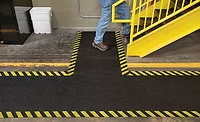
Identify & control slips, trips & fall hazards
One of the big challenges for safety managers when it comes to managing slips, trips and falls is to identify and place critical control and accident prevention measures into working environments. Through regulation and informational bodies such as OSHA and OH&S there is a wealth of information, advice and guidance on managing slips, trips and falls in the workplace. So why is it that despite this wealth of advice—slips, trips and falls continue to cause such a problem in the workplace?
Read any literature relating to this issue and one of the essential components of any slip, trip and fall management program is housekeeping—keeping work areas free of any hazards that could create a potential problem. For contained areas—such as offices and factories that often have standardized procedures in standardized environments this is more straightforward. But for outdoor workers in industries such as construction, transportation, logistics and oil and gas, who are almost always on the move in different environments and conditions, the challenge for the safety manager becomes extreme and “standard” preventative measures cannot always be applied.
Where the environment cannot be managed through engineering out risk exposure, one of the keys to minimizing slip, trip and fall risks is to equip workers with safety footwear designed to deal with specific hazards they encounter. While on the surface much of the safety footwear today may look similar, it is vitally important to remember and understand there is no “one size fits all” solution, so it’s essential that the main hazards are identified—both physical and environmental—and the right solutions selected.
Originally, safety footwear was very much about providing physical protection. That need still exists today of course, but other requirements such as outsole performance, comfort, flexibility, stability, fitting, and boot weight are also important and can directly impact on accident reduction — and need to be considered within the selection process. Innovation, style, R&D and materials technology, combined with increased collaboration with end users, is increasingly at the heart of today’s safety footwear industry, shaping not just the way it is designed but improving the levels of safety and comfort provided.
Therefore, when selecting safety footwear, there are a number of considerations to take into account:
Outsole performance
Think of an outsole as a tire tread, designed to provide grip performance and stability. Just as tires are designed for specific terrains, so too are outsoles. What environment and conditions workers are in will help determine what outsole is required. For example, are they encountering wet, muddy or uneven surfaces? Are they likely to encounter chemicals? If so, which type? Is there a need for heat or cold resistance? Maybe they are climbing ladders or stairs regularly?
Choosing the wrong outsole in the wrong environment can increase the chances of a slip, trip or fall accident. For example, an outsole with shallow tread without deep self-cleaning cleats is likely to become clogged very quickly in muddy conditions, thus increasing risk of an incident.
Comfort
Comfort is critical not just for worker well-being, but also for accident prevention. Heavy, cumbersome or inflexible safety footwear can increase the chances of foot (and/or leg) fatigue and in turn the chance of a slip, trip or fall. The latest innovations in the market include insoles which use comfort foam for improved fit. Also consider anti-foot fatigue features such as foot arch supports. Some use technical fibers designed to provide temperature control with anti-bacterial channels to manage perspiration. Composite metal-free safety footwear that is lighter is also available. Other developments include built in metatarsal protection made from a soft and flexible material that allows for ease of movement when walking, but hardens upon impact to encase the foot in protection, and speed lacing systems.
Physical protection
Where workers are in danger from heavy or sharp objects dropping onto, or piercing the footwear, it’s important to ensure that appropriate physical protection measures are in place. This includes toe and ankle protection, puncture-resistant outsoles, metatarsal guard, and scuff caps.
Type of work
Examine the way people work and the type of work they do. Are they on their feet all day—constantly on the move, moving across uneven surfaces, twisting and turning or flexing? Ensure their way of working is built into the safety footwear selection process.
Collaboration
Last but not least—safety managers don’t need to manage alone. We spend a lot of time working with companies directly to understand their business and observe the specific hazards they face in order to inform research and product development. For some workers physical protection is paramount, but for others slip resistance is absolutely vital, so we look at factors such as the working environment (indoor, outdoor) underfoot terrain (flat, uneven, undulating, wet, muddy) the hazardous substances that workers will likely come into contact with, how they work, the time they are at work and any wider hazards they are likely to encounter. We also physically observe them and note any other factors which might affect which footwear they should use—sometimes these can include issues they haven’t even realized existed! Tap into the knowledge and expertise of leading safety footwear manufacturers to aid the selection process.
Conclusion
As accident reduction levels are starting to slow, safety managers need to take a fresh look at slips, trips and falls. Given the numbers reported annually there is still much more that can be done. Slips, trips and falls are extremely difficult to manage, given the way people work and the environments in which that work is carried out. PPE should always be the last line of defense, but where it is necessary, it is essential that time is invested to fully research the right solutions for the right environments. While on the surface they may look similar, under the surface the difference in technical features can be massive and contribute significantly to a workers comfort, well-being and above all else safety and accident prevention. Leading manufacturers have built up a wealth of technical knowledge and incorporate this into key user features within their ranges, whilst at the same time constantly striving for newer, better and further enhanced footwear solutions.
Looking for a reprint of this article?
From high-res PDFs to custom plaques, order your copy today!