ISHN logo
search
cart
facebook twitter linkedin youtube
  • Sign In
  • Create Account
  • Sign Out
  • My Account
ISHN logo
  • NEWS
    • Today's News
    • Global Safety News
    • Government Regulations
  • PRODUCTS
    • Product Innovations
    • Featured Products
  • TOPICS
    • Environmental Health and Safety
    • Facility Safety
    • Workplace Health
    • Occupational Safety
    • PPE
    • More Topics
  • CONSTRUCTION
  • TECHNOLOGY
  • COLUMNS
    • Best Practices
    • Dave Johnson: What’s going on
    • Editorial Comments
    • Leading Safety
  • MULTIMEDIA
    • ISHN Podcast
    • Videos
    • Cold Stress Education Quiz
    • Webinars
    • White Papers
  • MORE
    • Buyer's Guide
    • Newsletters
    • Convention Companion
    • Polls
    • Events
    • ISHN Store
    • Sponsor Insights
  • EMAGAZINE
    • eMagazine
    • Archived Issues
    • Contact
    • Advertise
  • JOIN TODAY!
PPEWorkplace Health

Can you stand it? Prolonged standing puts millions at risk

By Dave Johnson
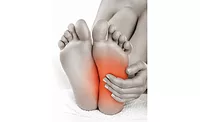
Prolonged standing
March 7, 2016

Almost 150 years ago doctors warned of the occupational health risks of prolonged standing at work. In the 1870s and 1880s, doctors in Paris, London and New York began to report large numbers of “shop girls” suffering foot ailments caused by prolonged standing.

In today’s economy, with the emphasis on service sector jobs, research points out almost half of all workers worldwide spend more than three-quarters of their workday on their feet. At-risk jobs are many, including “old economy” machine operators, printing press workers and assembly line workers; and service workers such as checkout operators, health care workers, bank staff, casino workers, reception staff, pharmacy technicians and hotel desk clerks.

Health effects

Employees earning their living by spending all or most of their days on their feet are at greater risk of health problems including varicose veins, poor circulation and swelling of the feet and legs, foot problems, joint damage, heart and circulatory problems, and pregnancy difficulties. Other standing-related health problems include bunions and corns, heel problems, Achilles tendonitis, flat feet, low back pain, arthritis in knees and hips, stiffness in neck and shoulders, and high blood pressure.

“Basically, the body does not like to have the same posture or load placed on it continuously,” says the director of environmental and occupational hygiene at the University of Cincinnati, in a previously published article.

Hard concrete floors are about the worst possible surface to stand on for most or all of a work day. Two hours of standing on the job is not associated with problems, but a longer period is likely to have detrimental effects, according to a Swiss researcher. Older workers, common in today’s economy, and those employed in heavy manual jobs frequently develop knee and joint pain as they get older, and may become progressively less able to cope with constant standing, according to studies.

Overall, the most commonly reported symptoms appear to be discomfort, fatigue and swelling of the legs. Back pain associated with work is about twice as common in employees who stand compared to those who usually work sitting, according to studies.

What to do

Constant sitting is not the answer -- not the safe alternative to constant standing. Prolonged sitting carries its own health risks, studies show. The first step is simple awareness. For hundreds, even thousands of years, standing on the job has been the norm and thus often taken for granted. The health consequences are often ignored or simply not known, especially regarding longer-term issues such as high blood pressure, heart and circulatory problems, and problems in pregnancy and birth defects.

Every employee is different. Some will complain about standing; others remain quiet. Safety and health professionals should first read up on the literature regarding prolonged on-the-job standing, identify at-risk jobs in the workplace, and educate both management and employees. Having facts in hand is important for selling solutions. Options include more rest breaks, alternating standing and walking with sitting, and work station redesign -- making work surfaces height-adjustable, using a foot-rail or footrest to enable workers to shift weight from one leg to the other, and using elbow supports for precision work.

Anti-fatigue matting can be used wherever workers have to stand for long periods. Two types of comfort matting are: floor mats and insoles. Anti-fatigue floor mats should be easy to clean and have sloped edges so they don’t become a trip hazard. Floor mats comes in various thicknesses and materials, such as a durable natural rubber mat or a sponge mat with a vinyl-nitrile outer surface to withstand wear and tear, and an inner layer of blown vinyl-nitrile sponge for comfort. Other materials include urethane, injection- molded PVC, and PVC sponges. Some mats have various surface patterns – pebbled, diamond-plate or bubble domes. Lightweight mats can easily be cut to size on-site and rolled up and stored for maintenance. Non-conductive matting insulates and protects workers from shocks generated by high-voltage equipment. Mat life expectancy depends on foot traffic, exposure to oils, caustic chemicals or fluids, temperature extremes, and cleaning and maintenance schedules.

Insoles are inserted into work shoes or boots and the shock-absorbing material is in direct contact with the feet. They are available in numerous sizes, are machine washable, and are hygienic, with anti-fungal, anti-bacterial, anti-perspiration and odor-reducing properties. Insoles can also be non-conductive for shock protection and puncture-resistant.

Other options include rubber overshoes that fit over most types of footwear, including steel-toe safety footwear, and socks for industrial athletes that offer comfort and protection from heat and cold.

If you’re not already using these types of solutions, let the anti-fatigue battle begin. Many of your workers stand and deliver all day long, they face potentially serious health effects, and they shouldn’t stand for it.

Share This Story

Looking for a reprint of this article?
From high-res PDFs to custom plaques, order your copy today!

Djohnson new pic 7.10.22

Dave Johnson was chief editor of ISHN from 1980 until early 2020. He uses his decades of expertise to write on hot topics and current events in the world of safety. He also writes and edits at Dave Johnson’s Writing Shop LLC and is editor-at-large for ISHN. Find him at https://www.facebook.com/Dave-Johnsons-Writing-Shop-101316571547263/, and on LinkedIn at https://www.linkedin.com/in/daveljohnsoneditor/.

Recommended Content

JOIN TODAY
to unlock your recommendations.

Already have an account? Sign In

  • forklift safety

    Exploring the latest technologies in forklift safety

    With more staff and more stock in warehousing now more...
    Facility Safety
    By: Josh Cramer
  • welding

    All about welder’s flash or arc eye

    A flash burn is a painful inflammation of the cornea,...
    Environmental Health and Safety
  • dangerous jobs

    The 10 most dangerous jobs in the U.S.

    On-the-job deaths have been rising — hitting the highest...
    Occupational Safety
    By: Benita Mehta
Manage My Account
  • eMagazine Subscriptions
  • ISHN Newsletter & Other Newsletter Alerts
  • Online Registration
  • Manage My Preferences
  • Subscription Customer Service

More Videos

Sponsored Content

Sponsored Content is a special paid section where industry companies provide high quality, objective, non-commercial content around topics of interest to the ISHN audience. All Sponsored Content is supplied by the advertising company and any opinions expressed in this article are those of the author and not necessarily reflect the views of ISHN or its parent company, BNP Media. Interested in participating in our Sponsored Content section? Contact your local rep!

close
  • man wearing the the Sundström SR200 Full Face Mask Respirator
    Sponsored byOHD

    5 Fit Testing Mistakes That Could Cost You

  • This image shows Magid AcuSpex polarized blue mirrored safety glasses.
    Sponsored byMagid Glove and Safety

    Construction PPE Guide: What Crews Need for Each Task

  • lone worker in confined space
    Sponsored byAlphasense Ltd.

    GET THE LEAD OUT of your Safety Oxygen Sensors!

Popular Stories

SpaceX 7 launch

OSHA Investigating Fatal Fall at SpaceX Starbase

Worker Impairment

How to Tell When a Co-Worker is Impaired? A Safety Pro’s Challenge

Automated loading dock equipment

After March 2026 Rivian Death, Safety Managers Reassess Loading Dock Systems Under OSHA's Warehouse Emphasis Program

top 10 most dangerous jobs

Poll

Seasonal Readiness

With the federal heat stress prevention rule on the horizon, which area of your safety program needs the most attention?
View Results Poll Archive

Products

Surviving an OSHA Audit A Management Guide, 2nd Edition

Surviving an OSHA Audit A Management Guide, 2nd Edition

See More Products

ISHN Podcasts

Related Articles

  • Prolonged standing

    Can you stand it? Prolonged standing puts millions at risk

    See More
  • Prolonged standing

    Can you stand it? Prolonged standing puts millions at risk

    See More
  • Youth smoking rates putting millions at risk of premature death

    See More

Related Products

See More Products
  • 1118911040.jpg

    Risk Assessment: A Practical Guide to Assessing Operational Risks

  • industrial hy.jpg

    Industrial Hygiene: Improving Worker Health through an Operational Risk Approach

  • 1119906652.webp

    Alive and Well at the End of the Day: The Supervisor's Guide to Managing Safety in Operations, 2E

See More Products

Related Directories

  • BrimGuard

    BrimGuard fits over most any North American style hard hat (cap or full brim) and provides a highly visible color-coded identification for your new hires. With BrimGuard, you can: -Reduce the risk of accidents and injuries by making new hires stand out from the crowd -Increase the accountability and responsibility of new hires by making them easily recognizable -Enhance the communication and collaboration between new hires and seasoned workers by facilitating mentoring and feedback -Save time and money by eliminating the need for stickers, decals, or separate hard hats for new hires -Improve the morale and retention of new hires by making them feel welcome and supported BrimGuard is made of durable, lightweight, and washable reusable silicone that can withstand harsh work environments. It comes in safety colors to suit your needs.
  • Bulwark FR

    When real lives are on the line and corporate reputations are at stake you can turn to Bulwark® Protection. We’re the PPE powerhouse that surrounds you completely. We balance the demand for FR and PPE that looks as good as it protects. We expand your knowledge in all directions with the latest information, advice and guidance.
×

Become a Leader in Safety Culture

Build your knowledge with ISHN, covering key safety, health and industrial hygiene news, products, and trends.

JOIN TODAY
  • RESOURCES
    • Advertise
    • Contact Us
    • Directories
    • Manufacturing Division
    • Store
    • Want More
  • SIGN UP TODAY
    • Create Account
    • eMagazine
    • Newsletters
    • Customer Service
    • Manage Preferences
  • SERVICES
    • Marketing Services
    • Reprints
    • Market Research
    • List Rental
    • Survey/Respondent Access
  • STAY CONNECTED
    • LinkedIn
    • Facebook
    • YouTube
    • X (Twitter)
  • PRIVACY
    • PRIVACY POLICY
    • TERMS & CONDITIONS
    • DO NOT SELL MY PERSONAL INFORMATION
    • PRIVACY REQUEST
    • ACCESSIBILITY

Copyright ©2026. All Rights Reserved BNP Media, Inc. and BNP Media II, LLC.

Design, CMS, Hosting & Web Development :: ePublishing