Consider these confined space best practices
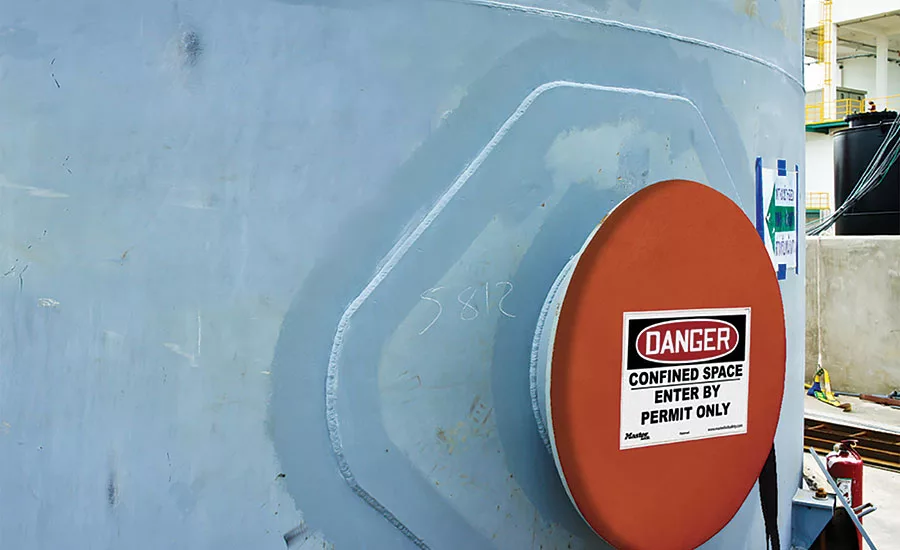
I have never enjoyed signing confined space entry permits. Inking the line that gives the green light for people to work in dangerous places is an act that I always take seriously – every single time I sign my name. But if I could change this aspect of OSHA compliance, I wouldn’t, because someone needs to make the decision whether or not the task to be completed is worth the potential risk to workers.
If something is missed or an accident occurs during confined space entry, responsibility falls on you, the entry supervisor, to own your decision to send your team into a confined space where there may be unrecognized dangers.
For safe and successful results, you need a well-trained and disciplined entry team, a consistent plan that includes a detailed confined space hazard assessment to understand potential exposures, and a well-defined emergency rescue plan.
Best practices
Below are some themes I have learned from observing some of the best confined space programs out there that I’d like to share with you:
• This job is potentially dangerous – But, if you and your team know all the exposures and seriously prepare accordingly, you can turn it into one of the safest tasks you perform.
• Take the time to train a competent team – Too often, I have seen basic confined space training provided in a tight time frame to meet a deadline without really delivering the content that makes a difference.
• Commit to working as a team – Everyone has an important role to play that is interdependent on the other. There is no room to take chances. Putting the team at risk by not following the rules cannot be tolerated.
• Everybody involved in the entry should have the necessary skills to perform and document a detailed confined space hazard assessment – Everybody on the entry team (yes, attendants too) should either work from pre-established assessments or contribute to one being done just prior to entering spaces they have never been in before.
• Have the gear and know how it works – If it is required, and you don’t have it, or it doesn’t work, or you or someone on your team is not sure how to use it … don’t do the entry. It pays to be prepared. Have an entry equipment maintenance program and cross train your team on inspections, so they stay familiar with the functionality of all the gear. Add equipment that is missing from your kit, so it’s there when it’s needed. This often comes from awareness generated from the hazard assessment process.
• Generate entry permits containing key data from your hazard assessments – I have used a tool for years that prints space-specific entry permits containing key information from the hazard assessment. The permit includes information like required entry equipment, required PPE, lockout guidance, known contaminants, pre-determined communication and emergency protocols, as well as a reference I.D. to the full hazard assessment with a check-off step that says it has been reviewed. I have noticed that this kind of information is sometimes sparse or inconsistently entered from permit to permit on some of the confined space programs I have audited. It’s important that this information is available and known by you and your team to help ensure safety.
• You should have eyes on the entry – In my experience, there are three kinds of confined space entry supervisors.
The first kind is still getting to know their team and their team’s capabilities. They oversee every entry operation personally.
The second knows their team’s capabilities and will sign permits confidently, knowing that they will prepare properly, according to the requirements of the hazard assessment. But they still go out periodically and check on their team.
The third kind of supervisor doesn’t fully appreciate what they are asking their people to do and just sign an entry permit without reviewing the assessment. They assume the work is being done safely without verifying actual conditions, unfortunately demonstrating by example that this permit process is nothing more than paperwork to them. Coincidently, bad accidents only seem to happen to this kind of supervisor – the ones who lacked an organized entry strategy.
• Have a rock-solid rescue plan – Safe and successful operations rely on administrative controls (i.e. correct human behavior) and PPE, which are the lowest rungs on ladder of hierarchy of control. Regardless of their skills and preparation, you need to train your team to shift into rescue mode when necessary. This always requires more people than were involved in the initial entry operation. Where are your additional responders coming from? What is the rescue plan? Those details should be part of the original hazard assessment.
• Use local fire/EMS for medical care only – Local rescue teams may have confined space rescue capability, but sometimes they don’t. That’s not a risk worth taking if an accident happens. When local fire/EMS do have confined space experience, it is often very limited and they might not have experience with the kind of space where a disaster has struck. By the time they get to the site and get set up, it will most likely be a situation that has gone from bad to worse. Ensure that you have your rescue plan in place and use local fire/EMS for medical care only.
As an entry supervisor, you control ALL of this – at least to some extent. If you are signing permits, you should know your team is properly prepared and equipped to run the entry safely and that they can deal with problems that may suddenly arise. If you don’t have that confidence, you need to campaign for what you need to improve the process. If you know your team is not ready, or if you are unsure if your team is ready, your signature does not belong on that confined space entry permit.
Always have confidence – always own your decision.
Looking for a reprint of this article?
From high-res PDFs to custom plaques, order your copy today!