ISHN logo
search
cart
facebook twitter linkedin youtube
  • Sign In
  • Create Account
  • Sign Out
  • My Account
ISHN logo
  • NEWS
    • Today's News
    • Global Safety News
    • Government Regulations
  • PRODUCTS
    • Product Innovations
    • Featured Products
  • TOPICS
    • Environmental Health and Safety
    • Facility Safety
    • Workplace Health
    • Occupational Safety
    • PPE
    • More Topics
  • CONSTRUCTION
  • TECHNOLOGY
  • COLUMNS
    • Best Practices
    • Dave Johnson: What’s going on
    • Editorial Comments
    • Leading Safety
  • MULTIMEDIA
    • ISHN Podcast
    • Videos
    • Cold Stress Education Quiz
    • Webinars
    • White Papers
  • MORE
    • Buyer's Guide
    • Newsletters
    • Convention Companion
    • Polls
    • Events
    • ISHN Store
    • Sponsor Insights
  • EMAGAZINE
    • eMagazine
    • Archived Issues
    • Contact
    • Advertise
  • JOIN TODAY!
Today's Safety NewsTransportation Safety

How we could cut motor vehicle crash fatalities in half
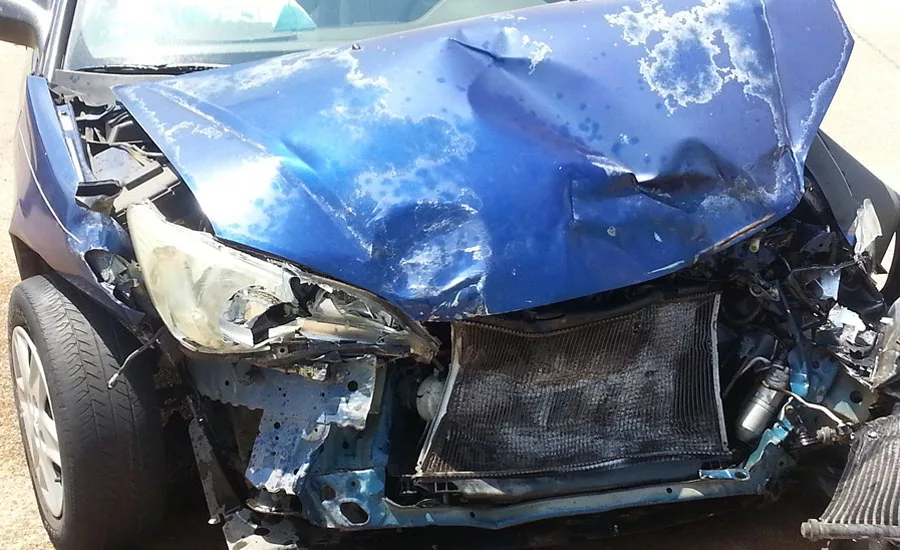
car accident
July 7, 2016

About 90 people die each day from motor vehicle crashes in the United States, resulting in the highest death rate among 19 high-income comparison countries. Our nation has made progress in road safety, reducing crash deaths by 31 percent from 2000 to 2013. But other high-income countries reduced crash deaths even further—by an average of 56 percent during the same period, according to the latest Vital Signs report by the Centers for Disease Control and Prevention (CDC).

We rank high - in the wrong ways

Lower death rates in comparison countries, as well as the high prevalence of risk factors in the U.S., suggest that we can make more progress in saving lives. Compared with other high-income countries, the US had the:

  • most motor vehicle crash deaths per 100,000 population and per 10,000 registered vehicles;
  • second highest percentage of deaths involving alcohol (31 percent); and
  • third lowest front seat belt use (87 percent).

If the U.S. had the same motor vehicle crash death rate as Belgium—the country with the second highest death rate after the U.S.—about 12,000 fewer lives would have been lost and an estimated $140 million in direct medical costs would have been averted in 2013. And if the U.S. had the same rate as Sweden—the country with the lowest crash death rate—about 24,000 fewer lives would have been lost and an estimated $281 million in direct medical costs would have been averted in 2013.

"We can do  better"

 “It is important to compare us not to our past but to our potential. Seeing that other high-income countries are doing better, we know we can do better too,” said Debra Houry, M.D., M.P.H., director of CDC’s National Center for Injury Prevention and Control. “People of our nation deserve better and safer transport."

For this Vital Signs report, CDC analyzed data compiled by the World Health Organization (WHO) and the Organization for Economic Co-operation and Development (OECD). CDC determined the number and rate of motor vehicle crash deaths in the U.S. and 19 other high-income countries and reported national seat belt use and percentage of deaths that involved alcohol-impaired driving or speeding, by country, when available. Countries included in the study were Australia, Austria, Belgium, Canada, Denmark, Finland, France, Germany, Ireland, Israel, Japan, Netherlands, New Zealand, Norway, Slovenia, Spain, Sweden, Switzerland, the United Kingdom, and the United States.

Each country included in the study was a member of OECD, met the World Bank’s definition for high income, had a population of more than 1 million people, and reported the annual number of motor vehicle deaths and vehicle miles traveled. In addition, the difference between the country-reported motor vehicle crash death rate and the WHO-estimated rate could not exceed 1 death per 100,000 population.

Saving 10,000 lives a year

 “It’s unacceptable for 90 people to die on our roads each day, especially when we know what works to prevent crashes, injuries, and deaths,” said Erin Sauber-Schatz, Ph.D., M.P.H., transportation safety team lead, CDC’s National Center for Injury Prevention and Control. “About 3,000 lives could be saved each year by increasing seat belt use to 100 percent, and up to 10,000 lives could be saved each year by eliminating alcohol-impaired driving.”

The researchers recommend using seat belts in both front and rear seats, properly using car seats and booster seats for children through at least age 8, never drinking and driving, obeying speed limits, and eliminating distracted driving.  In addition, states can use proven strategies to support these actions that save lives, prevent injuries, and avert crash-related costs.

CDC’s Injury Center works to protect the safety of all Americans, every day. For more information about motor vehicle safety, please visit www.cdc.gov/motorvehiclesafety.  

Vital Signs is a CDC report that typically appears on the first Tuesday of the month as part of the CDC journal Morbidity and Mortality Weekly Report. The report provides the latest data and information on key health indicators. These are cancer prevention, obesity, tobacco use, motor vehicle injury prevention, prescription drug overdose, HIV/AIDS, alcohol use, health care-associated infections, cardiovascular health, teen pregnancy, and food safety.

KEYWORDS: accident prevention accident victims Centers for Disease Control (CDC) motor vehicle accidents traffic safety

Share This Story

Looking for a reprint of this article?
From high-res PDFs to custom plaques, order your copy today!

Recommended Content

JOIN TODAY
to unlock your recommendations.

Already have an account? Sign In

  • forklift safety

    Exploring the latest technologies in forklift safety

    With more staff and more stock in warehousing now more...
    Facility Safety
    By: Josh Cramer
  • welding

    All about welder’s flash or arc eye

    A flash burn is a painful inflammation of the cornea,...
    Environmental Health and Safety
  • dangerous jobs

    The 10 most dangerous jobs in the U.S.

    On-the-job deaths have been rising — hitting the highest...
    Government Safety Regulations
    By: Benita Mehta
Manage My Account
  • eMagazine Subscriptions
  • ISHN Newsletter & Other Newsletter Alerts
  • Online Registration
  • Manage My Preferences
  • Subscription Customer Service

More Videos

Sponsored Content

Sponsored Content is a special paid section where industry companies provide high quality, objective, non-commercial content around topics of interest to the ISHN audience. All Sponsored Content is supplied by the advertising company and any opinions expressed in this article are those of the author and not necessarily reflect the views of ISHN or its parent company, BNP Media. Interested in participating in our Sponsored Content section? Contact your local rep!

close
  • man wearing the the Sundström SR200 Full Face Mask Respirator
    Sponsored byOHD

    5 Fit Testing Mistakes That Could Cost You

  • This image shows Magid AcuSpex polarized blue mirrored safety glasses.
    Sponsored byMagid Glove and Safety

    Construction PPE Guide: What Crews Need for Each Task

  • lone worker in confined space
    Sponsored byAlphasense Ltd.

    GET THE LEAD OUT of your Safety Oxygen Sensors!

Popular Stories

SpaceX 7 launch

OSHA Investigating Fatal Fall at SpaceX Starbase

Worker Impairment

How to Tell When a Co-Worker is Impaired? A Safety Pro’s Challenge

Automated loading dock equipment

After March 2026 Rivian Death, Safety Managers Reassess Loading Dock Systems Under OSHA's Warehouse Emphasis Program

top 10 most dangerous jobs

Poll

Seasonal Readiness

With the federal heat stress prevention rule on the horizon, which area of your safety program needs the most attention?
View Results Poll Archive

Products

Surviving an OSHA Audit A Management Guide, 2nd Edition

Surviving an OSHA Audit A Management Guide, 2nd Edition

See More Products

ISHN Podcasts

Related Articles

  • 7 fatalities in 5-vehicle Fla. crash – but cause a mystery

    See More
  • How do you talk about workplace motor vehicle safety?

    See More
  • National Safety Council logo 2020

    NSC: Motor vehicle fatality rates rose 23.5% in May, despite quarantines

    See More

Related Products

See More Products
  • Top Ten Pitfalls in OSHA Recordkeeping and How to Avoid Them

See More Products

Related Directories

  • ESAB Welding & Cutting

    At ESAB, we exist to shape the future of welding and cutting. We connect fabricators with the widest range of products and PPE under our industry-leading brand portfolio with the latest technologies to solve virtually any industry challenge — then we back it up with our knowledge, experience and passion to help them be more productive than ever before. To learn more, visit esab.com or call 1-800-ESAB-123.
×

Become a Leader in Safety Culture

Build your knowledge with ISHN, covering key safety, health and industrial hygiene news, products, and trends.

JOIN TODAY
  • RESOURCES
    • Advertise
    • Contact Us
    • Directories
    • Manufacturing Division
    • Store
    • Want More
  • SIGN UP TODAY
    • Create Account
    • eMagazine
    • Newsletters
    • Customer Service
    • Manage Preferences
  • SERVICES
    • Marketing Services
    • Reprints
    • Market Research
    • List Rental
    • Survey/Respondent Access
  • STAY CONNECTED
    • LinkedIn
    • Facebook
    • YouTube
    • X (Twitter)
  • PRIVACY
    • PRIVACY POLICY
    • TERMS & CONDITIONS
    • DO NOT SELL MY PERSONAL INFORMATION
    • PRIVACY REQUEST
    • ACCESSIBILITY

Copyright ©2026. All Rights Reserved BNP Media, Inc. and BNP Media II, LLC.

Design, CMS, Hosting & Web Development :: ePublishing