ISHN logo
search
cart
facebook twitter linkedin youtube
  • Sign In
  • Create Account
  • Sign Out
  • My Account
ISHN logo
  • NEWS
    • Today's News
    • Global Safety News
    • Government Regulations
  • PRODUCTS
    • Product Innovations
    • Featured Products
  • TOPICS
    • Environmental Health and Safety
    • Facility Safety
    • Workplace Health
    • Occupational Safety
    • PPE
    • More Topics
  • CONSTRUCTION
  • TECHNOLOGY
  • COLUMNS
    • Best Practices
    • Dave Johnson: What’s going on
    • Editorial Comments
    • Leading Safety
  • MULTIMEDIA
    • ISHN Podcast
    • Videos
    • Cold Stress Education Quiz
    • Webinars
    • White Papers
  • MORE
    • Buyer's Guide
    • Newsletters
    • Convention Companion
    • Polls
    • Events
    • ISHN Store
    • Sponsor Insights
  • EMAGAZINE
    • eMagazine
    • Archived Issues
    • Contact
    • Advertise
  • JOIN TODAY!
Today's Safety NewsGovernment Safety RegulationsOccupational Safety

New guidance seeks to keep unsafe companies out of federal bidding process

August 25, 2016

Companies who repeatedly violate safety regulations should have a tougher time getting federal government contracts, under new guidance published by the U.S. Department of Labor.

New guidance issued by the federal government is aimed at preventing government contracts from going to companies that routinely violate labor laws – including safety regulations.

The exception, not the rule

Although there’s already an Executive Order in place (EO 13673, Fair Pay and Safe Workplaces) that requires federal agencies to do business only with “responsible” sources, multiple studies conducted over the last two decades indicate that consideration of contractor labor law violations during the federal procurement process has been the exception rather than the rule.

In the mid-1990s, the congressional General Accounting Office (GAO), now known as the Government Accountability Office, issued two reports finding that federal contracts worth billions of dollars had been awarded to companies that had violated the OSH Act and the National Labor Relations Act. The reason? Contracting agencies lacked adequate information about contractors’ noncompliance.

Lots of violators get contracts

Over a decade later, with contracting expenditures escalating, the GAO again found a similar pattern. Looking at the companies that had the largest wage violations and workplace health- and-safety penalties from fiscal years 2005 to 2009, the GAO found that a surprisingly high percentage of those companies subsequently received federal contracts.

The new guidance provides explicit new instructions for federal contracting officers to consider a contractor’s compliance with certain federal and state labor laws as a part of the determination of contractor “responsibility” that contracting officers presently must undertake before awarding a Federal contract.  

In addition, “the Order directs the FAR Council to propose the rules and regulations necessary to carry out the Order and the Department to develop guidance to help implement the new requirements. In this final Guidance, the Department provides detailed definitions for various terms used in the Order and the FAR rule to categorize and classify labor law violations, and the Department provides a summary of the processes through which contracting agencies will assess a contractor’s overall record of labor law compliance and carryout their other duties under the Order.”

A "smart step"

The National Council for Occupational Safety and Health (National COSH) is calling the guidance “a smart step forward for workers, businesses and taxpayers.”

“As a homeowner, you wouldn’t want to hire a painting company that uses rickety ladders and puts workers at risk on your property,” said National COSH Acting Executive Director Jessica Martinez. “Taxpayers also want fair value for money spent on government contracts, instead of hiring scofflaws who cut corners and put workers at risk.”

“From now on, companies applying for federal contacts worth more than $500,000 will have to report their history of workplace violations,” said Martinez. “This leads to better quality services and reduces the hidden costs that result from injured workers and those not receiving a living wage. There’s no blacklist of these companies. Once there is a spotlight on these problems, however, there will be an incentive to settle and remediate these violations, so taxpayers can be sure their money is being spent efficiently and workers are treated fairly.”

The organization cites a study by the Center for American Progress Action Fund, which shows that federal contractors with a history of repeat workplace violations “were also often guilty of shortchanging taxpayers through poor performance on government contracts.”

Responsible contracting policies, Martinez added, “also ensure that the worst actors in the market place do not have the opportunity to profit from public contracts.”

The "usual complaints"

National COSH senior organizer Peter Dooley predicted that business associations will issue “the usual complaints” about burdensome government regulations.

“The real burden of bad business practices falls on workers, who are exposed every day to preventable illnesses and injuries on the job – and who are often subject to illegal retaliation when they exercise their right to a safe workplace,” said Dooley, adding: “Businesses that comply with workplace laws shouldn’t have to compete with those who don’t.”

KEYWORDS: Executive Order federal contractors National Council of Occupational Safety and Health (National COSH) OSH Act

Share This Story

Looking for a reprint of this article?
From high-res PDFs to custom plaques, order your copy today!

Recommended Content

JOIN TODAY
to unlock your recommendations.

Already have an account? Sign In

  • forklift safety

    Exploring the latest technologies in forklift safety

    With more staff and more stock in warehousing now more...
    Workplace Training Strategies
    By: Josh Cramer
  • welding

    All about welder’s flash or arc eye

    A flash burn is a painful inflammation of the cornea,...
    Environmental Health and Safety
  • dangerous jobs

    The 10 most dangerous jobs in the U.S.

    On-the-job deaths have been rising — hitting the highest...
    Occupational Safety
    By: Benita Mehta
Manage My Account
  • eMagazine Subscriptions
  • ISHN Newsletter & Other Newsletter Alerts
  • Online Registration
  • Manage My Preferences
  • Subscription Customer Service

More Videos

Sponsored Content

Sponsored Content is a special paid section where industry companies provide high quality, objective, non-commercial content around topics of interest to the ISHN audience. All Sponsored Content is supplied by the advertising company and any opinions expressed in this article are those of the author and not necessarily reflect the views of ISHN or its parent company, BNP Media. Interested in participating in our Sponsored Content section? Contact your local rep!

close
  • man wearing the the Sundström SR200 Full Face Mask Respirator
    Sponsored byOHD

    5 Fit Testing Mistakes That Could Cost You

  • This image shows Magid AcuSpex polarized blue mirrored safety glasses.
    Sponsored byMagid Glove and Safety

    Construction PPE Guide: What Crews Need for Each Task

  • lone worker in confined space
    Sponsored byAlphasense Ltd.

    GET THE LEAD OUT of your Safety Oxygen Sensors!

Popular Stories

SpaceX 7 launch

OSHA Investigating Fatal Fall at SpaceX Starbase

dust explosion

Tennessee OSHA Issues Record $3.1M Fine After Deadly Explosion at Munitions Plant

Worker Impairment

How to Tell When a Co-Worker is Impaired? A Safety Pro’s Challenge

top 10 most dangerous jobs

Poll

Seasonal Readiness

With the federal heat stress prevention rule on the horizon, which area of your safety program needs the most attention?
View Results Poll Archive

Products

Surviving an OSHA Audit A Management Guide, 2nd Edition

Surviving an OSHA Audit A Management Guide, 2nd Edition

See More Products

ISHN Podcasts

Related Articles

  • NTSB says feds failing to keep unsafe drivers off roads

    See More
  • Wind energy company sues to keep bird kill data out of public’s hands

    See More
  • U.S. Chamber of Commerce: Unsafe companies are "a few outliers" (3/17)

    See More

Related Products

See More Products
  • 111894948X.jpg

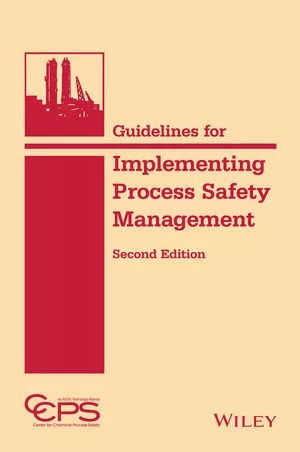
    Guidelines for Implementing Process Safety Management, 2nd Edition

  • 1119906652.webp

    Alive and Well at the End of the Day: The Supervisor's Guide to Managing Safety in Operations, 2E

See More Products

Related Directories

  • New Pig

    The world leader in absorbent products, New Pig provides innovative products to help maintain cleaner, safer, more productive work environments.
  • BrimGuard

    BrimGuard fits over most any North American style hard hat (cap or full brim) and provides a highly visible color-coded identification for your new hires. With BrimGuard, you can: -Reduce the risk of accidents and injuries by making new hires stand out from the crowd -Increase the accountability and responsibility of new hires by making them easily recognizable -Enhance the communication and collaboration between new hires and seasoned workers by facilitating mentoring and feedback -Save time and money by eliminating the need for stickers, decals, or separate hard hats for new hires -Improve the morale and retention of new hires by making them feel welcome and supported BrimGuard is made of durable, lightweight, and washable reusable silicone that can withstand harsh work environments. It comes in safety colors to suit your needs.
×

Become a Leader in Safety Culture

Build your knowledge with ISHN, covering key safety, health and industrial hygiene news, products, and trends.

JOIN TODAY
  • RESOURCES
    • Advertise
    • Contact Us
    • Directories
    • Manufacturing Division
    • Store
    • Want More
  • SIGN UP TODAY
    • Create Account
    • eMagazine
    • Newsletters
    • Customer Service
    • Manage Preferences
  • SERVICES
    • Marketing Services
    • Reprints
    • Market Research
    • List Rental
    • Survey/Respondent Access
  • STAY CONNECTED
    • LinkedIn
    • Facebook
    • YouTube
    • X (Twitter)
  • PRIVACY
    • PRIVACY POLICY
    • TERMS & CONDITIONS
    • DO NOT SELL MY PERSONAL INFORMATION
    • PRIVACY REQUEST
    • ACCESSIBILITY

Copyright ©2026. All Rights Reserved BNP Media, Inc. and BNP Media II, LLC.

Design, CMS, Hosting & Web Development :: ePublishing