Five factors to consider when building your AED program
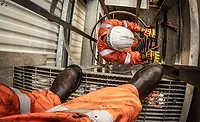
The data from OSHA are grim: Every year, 10,000 Americans die at work from sudden cardiac arrest (SCA), or approximately 13 percent of all occupational deaths.
The fact that most of these deaths were preventable provides little consolation to families ripped apart by these tragedies, but the reality is that the availability of automated external defibrillators (AEDs) would have increased each victim’s likelihood of survival. This is why many organizations, especially those with workers in high-hazard environments, have made AEDs a crucial part of their emergency response plan.
Consider Roche Diagnostics: At its Indianapolis headquarters, the company employs more than 4,000 people across a vast swath of office buildings, laboratories, and warehouses stretching across 1.6 million square feet. Its occupational health and safety team determined that AEDs would only be one part of the emergency-response equation; they also needed assistance with medical direction, training, and AED placement.
Put simply, Roche Diagnostics didn’t just need devices – they needed an AED solution tailored to their unique topography.
The biotech company identified several key factors before selecting an AED provider but the ultimate litmus test came only one week after implementing their program: While eating lunch in a break room, an employee collapsed from SCA. A fellow employee who knew the company’s emergency protocols raced to an AED cabinet, grabbed the device, and shocked the victim back to life. A year later, another employee was saved.
By integrating the AED program into the company’s broader emergency response plan – including quality assurance, protocols, SOPs – the safety team helped save two lives and provided the justification for implementing a world-class AED program.
Five factors you should consider when investigating whether AEDs are right for your organization:
1. Know the enemy
Let’s start here: If your organization has an AED program, the likelihood of a colleague surviving an SCA event is 60 percent. Without an AED program, the number craters to less than 7 percent, according to the AHA.
SCA is triggered by an abrupt, unpredictable electrical malfunction in the heart causing an irregular heartbeat. Victims are often healthy and fit adults, who have no known risk factors, so everyone is potentially a victim.
And minutes count during an SCA event. If a rescuer can provide defibrillation in the first minute, the victim’s chance of survival increases to more than 90 percent. However, each minute that passes will decrease the victim’s chance of survival by 7 to 10 percent if no defibrillation is provided, according to the American Heart Association (AHA).
Bottom line: AEDs will help save more lives if they are available in the workplace.
2. Know the laws
All states have some form of Good Samaritan laws on their books that protect individuals from civil liability should they use an AED in an emergency situation. Some states also require medical oversight, specific maintenance mandates, and even local EMS or state registration of AEDs in order to be compliant with the Good Samaritan Laws. Plus, while there are no federal mandates to have AEDs in the workplace, there is a federal Cardiac Arrest Survival Act and various state public-access defibrillation (PAD) laws that outline AED placement, medical oversight, and training requirements.
Suffice to say, legislation is on your side and an AED provider can step you through the local laws.
(Note: All AED manufacturers have indemnification agreements to protect organizations from any claims, damages, liabilities, or actions asserted by any third party arising out of personal injury caused by any AED. Be sure to request a copy of your AED manufacturer’s indemnification agreement as a necessity before designing your AED program. As of writing this article, no judgments have been rendered against an AED operator for negligent or improper use of AEDs, according to the AHA.)
3. Know the AED providers
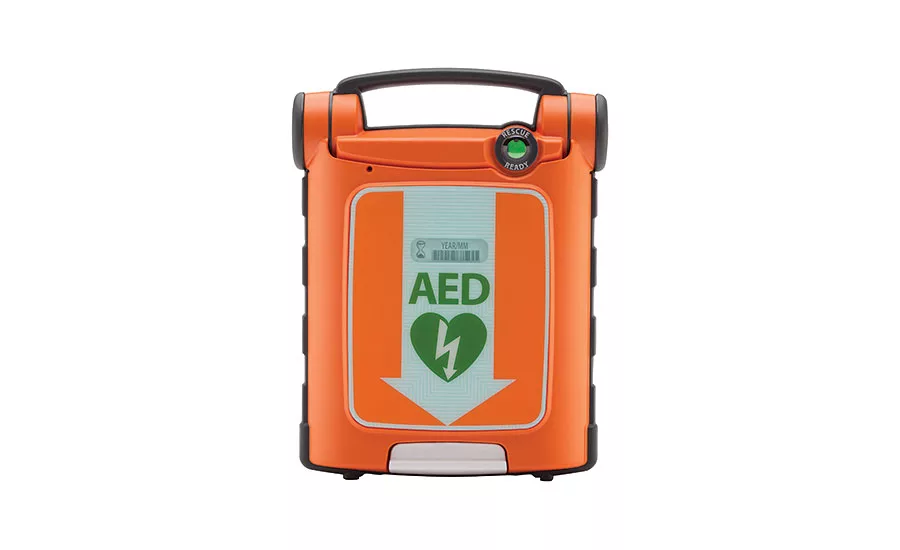
If you were called upon to rescue a colleague, which features would you want in an AED? You would likely want assurances that the AED is operational, which is why manufacturers have designed slick form-factors that diagnose and showcase the device’s readiness from afar. Others have even designed technology to conduct periodic self-tests for pad and battery presence and function.
Also, you would likely want an AED that is easy-to-use. Anyone who has witnessed a cardiac arrest event in person can tell you that it is quite harrowing, which is why most organizations purchase AEDs that step rescuers through the rescue via voice or text prompts and also automatically shock the victim.
Finally, after you’ve revived your co-worker, would you like assurances that the CPR you will provide is correct to the latest AHA CPR guidelines? Several AED manufacturers have developed high-tech CPR feedback devices that coach rescuers through compressions to assure effective CPR.
4. Know the environment
Whether your workforce is scaling electrical power lines, laying bricks on construction sites, or even working on offshore drilling rigs, you need to assess which AED is best suited to your workforce’s environment.
For example, manufacturers have designed AEDs that meet Ingress Protection (IP) standards that rate the device’s ability to protect against body-part intrusion, dust, accidental contact, and water. Make sure you check the manufacturer’s IP standard when determining which AED to purchase.
Also, because OSHA recommends that AEDs be placed within three to five minutes from a possible victim, you may need assistance from the AED provider in determine the exact number and location of AEDs. If the AED provider does not have a track record of providing this basic level of consultation, you probably want to look somewhere else.
5. Know the future of AEDs (or make an educated guess)
AEDs, like any technology, are evolving. Some of the latest AED releases have seen bilingual voice prompts, improved connectivity, and intuitive interfaces that remove some of the guesswork.
Another factor is the company’s track record: When was the time they released an AED into the marketplace? Are they recognized for developing innovative features or are they a me-too player? Does the company specialize in AEDs or is it one of many medical products that they manufacture each year? The answers to these questions will likely determine whether the AED provider will meet your future needs.
Regardless of which AED brand you choose, just remember that, like Roche Diagnostics and thousands of other organizations relying on AED programs this year, a life may depend on it.
Looking for a reprint of this article?
From high-res PDFs to custom plaques, order your copy today!