ISHN logo
search
cart
facebook twitter linkedin youtube
  • Sign In
  • Create Account
  • Sign Out
  • My Account
ISHN logo
  • NEWS
    • Today's News
    • Global Safety News
    • Government Regulations
  • PRODUCTS
    • Product Innovations
    • Featured Products
  • TOPICS
    • Environmental Health and Safety
    • Facility Safety
    • Workplace Health
    • Occupational Safety
    • PPE
    • More Topics
  • CONSTRUCTION
  • TECHNOLOGY
  • COLUMNS
    • Best Practices
    • Dave Johnson: What’s going on
    • Editorial Comments
    • Leading Safety
  • MULTIMEDIA
    • ISHN Podcast
    • Videos
    • Cold Stress Education Quiz
    • Webinars
    • White Papers
  • MORE
    • Buyer's Guide
    • Newsletters
    • Convention Companion
    • Polls
    • Events
    • ISHN Store
    • Sponsor Insights
  • EMAGAZINE
    • eMagazine
    • Archived Issues
    • Contact
    • Advertise
  • JOIN TODAY!
Facility Safety

Lockout-tagout training avoids the hazardous quick fix
By Judie Smithers
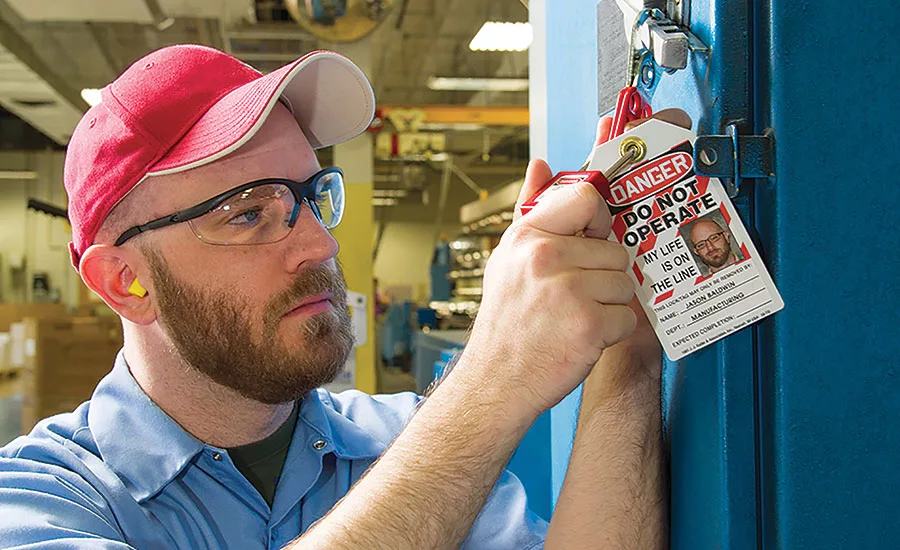
LOTO training

Photo courtesy of J.J. Keller & Associates, Inc

November 1, 2016

It happens fast. Running a machine that removes bran from rice, the operator reached into the exhaust side to remove a buildup of bran. The machine was not locked out. The operator made contact with a fan blade and cut off her fingertip. An employee manually loaded two pallets in the magazine of an automatic palletizer. One pallet jammed. The worker took off the top of the machine and reached inside to push the pallet manually. The machine’s sensor detected that the pallet had cleared, and the dispensing lift plate cycled. The moving parts crushed the worker’s forearm

When LOTO applies

OSHA’s lockout/tagout (LOTO) standard (§1910.147) applies to the control of energy supplies during servicing and/or maintenance of machines and equipment. Activities such as constructing, installing, setting up, adjusting, inspecting, modifying, lubricating, cleaning, unjamming, and making adjustments or tool changes to machines are covered. These tasks can expose the worker to serious hazards if the equipment unexpectedly starts up or otherwise releases hazardous energy. Violations of the LOTO standard ranked fifth on OSHA’s list of the top 10 most frequently cited standards for fiscal year 2015.

During normal production operations, these servicing and maintenance activities are covered by the LOTO standard only if:

  • An employee is required to remove or bypass a guard or other safety device; or
  • An employee is required to place any part of his or her body into an area on a machine or piece of equipment where work is actually performed upon the material being processed (point of operation) or where an associated danger zone exists during a machine operating cycle.

In the above examples, each operator reached into a danger zone for what was to be a quick fix. OSHA’s LOTO standard notes; “Exception to paragraph (a)(2)(ii): Minor tool changes and adjustments, and other minor servicing activities, which take place during normal production operations, are not covered by this standard if they are routine, repetitive, and integral to the use of the equipment for production, provided that the work is performed using alternative measures which provide effective protection (See Subpart O of this Part [OSHA’s machine safeguarding rules]).”

Minor servicing risks

Without carefully considering risks on a case-by-case basis, using the “minor servicing exception” can lead to serious or fatal injuries. In the first example, the operator could have avoided the need to lock out the machine (and the injury) if she had used a tool to clear the bran build-up. In the second example, the machine was partially disassembled and it’s unlikely that using a long-handled tool to move the pallet would have been effective; applying LOTO is really the only choice to prevent this injury.

The machine operator first notices a problem with equipment, and it’s human nature to look for a quick fix. Unfortunately, once the machine operator identifies what needs to be done, too often he or she underestimates the risks. A mentality of, “This isn’t important enough to call for a mechanic. I can deal with it,” has hurt a lot of people.

Train machine operators

Thorough training eliminates the impulse to take action without proper precautions. Use examples and case studies to point out how simply trying to keep production going can lead to a life-changing injury. Talk with each operator to identify each machine’s tendencies to jam, go out of adjustment, or otherwise malfunction. Have the operators and mechanics brainstorm methods to prevent these occurrences. If the problems can’t be eliminated, provide the operators with the necessary tools to do minor servicing safely. These tools can include LOTO equipment if you want to train the operators as authorized employees so they can clear jams, etc. without risking injuries. Otherwise, make it absolutely clear that operators must stop the machine and call for maintenance.

Provide thorough procedures

Having detailed LOTO procedures for each machine makes it easier to lock out the equipment quickly and correctly. You can have procedures for clearing jams, cleaning, or making minor adjustments in addition to the procedures for replacing belts, gears, or other in-depth repairs. It’s a good practice to post the procedures at the machine.

Inspect and review

OSHA’s standard includes a requirement to periodically inspect LOTO procedures. Affected employees, such as the machine operator, must be included in the review of the procedure only if tagout is used instead of lockout. Still, giving operators an annual reminder of their LOTO-related responsibilities is a good way to raise awareness of the importance of LOTO. 

KEYWORDS: lockout/tagout (LOTO)

Share This Story

Looking for a reprint of this article?
From high-res PDFs to custom plaques, order your copy today!

Judie Smithers is an editor -  workplace safety with J. J. Keller & Associates, Inc., Neenah, Wis.; (800) 558-5011; www.jjkeller.com.

She is also authorized as an OSHA General Industry Outreach Trainer.


Recommended Content

JOIN TODAY
to unlock your recommendations.

Already have an account? Sign In

  • forklift safety

    Exploring the latest technologies in forklift safety

    With more staff and more stock in warehousing now more...
    Workplace Training Strategies
    By: Josh Cramer
  • welding

    All about welder’s flash or arc eye

    A flash burn is a painful inflammation of the cornea,...
    Environmental Health and Safety
  • dangerous jobs

    The 10 most dangerous jobs in the U.S.

    On-the-job deaths have been rising — hitting the highest...
    Occupational Safety
    By: Benita Mehta
Manage My Account
  • eMagazine Subscriptions
  • ISHN Newsletter & Other Newsletter Alerts
  • Online Registration
  • Manage My Preferences
  • Subscription Customer Service

More Videos

Sponsored Content

Sponsored Content is a special paid section where industry companies provide high quality, objective, non-commercial content around topics of interest to the ISHN audience. All Sponsored Content is supplied by the advertising company and any opinions expressed in this article are those of the author and not necessarily reflect the views of ISHN or its parent company, BNP Media. Interested in participating in our Sponsored Content section? Contact your local rep!

close
  • man wearing the the Sundström SR200 Full Face Mask Respirator
    Sponsored byOHD

    5 Fit Testing Mistakes That Could Cost You

  • This image shows Magid AcuSpex polarized blue mirrored safety glasses.
    Sponsored byMagid Glove and Safety

    Construction PPE Guide: What Crews Need for Each Task

  • lone worker in confined space
    Sponsored byAlphasense Ltd.

    GET THE LEAD OUT of your Safety Oxygen Sensors!

Popular Stories

SpaceX 7 launch

OSHA Investigating Fatal Fall at SpaceX Starbase

Automated loading dock equipment

After March 2026 Rivian Death, Safety Managers Reassess Loading Dock Systems Under OSHA's Warehouse Emphasis Program

psychology in the workplace

Most Workplaces Measure Psychological Safety, Ignoring Psychosocial Risks

top 10 most dangerous jobs

Poll

Seasonal Readiness

With the federal heat stress prevention rule on the horizon, which area of your safety program needs the most attention?
View Results Poll Archive

Products

Surviving an OSHA Audit A Management Guide, 2nd Edition

Surviving an OSHA Audit A Management Guide, 2nd Edition

See More Products

ISHN Podcasts

Related Articles

  • The infamous quick fix

    See More
  • LOTO training

    Don’t let your Lockout/Tagout training lapse

    See More
  • Lockout-tagout training video

    See More

Related Directories

  • e-Hazard

    E-Hazard is dedicated to building an electrical safety culture with you. Our electrical engineering services and training will prepare your team for any electrical safety needs or concerns. E-Hazard can help with electrical training, arc flash studies, electrical audits, electrical safety programs, LOTO, infrared scanning, NFPA 70B, consulting and much more.
×

Become a Leader in Safety Culture

Build your knowledge with ISHN, covering key safety, health and industrial hygiene news, products, and trends.

JOIN TODAY
  • RESOURCES
    • Advertise
    • Contact Us
    • Directories
    • Manufacturing Division
    • Store
    • Want More
  • SIGN UP TODAY
    • Create Account
    • eMagazine
    • Newsletters
    • Customer Service
    • Manage Preferences
  • SERVICES
    • Marketing Services
    • Reprints
    • Market Research
    • List Rental
    • Survey/Respondent Access
  • STAY CONNECTED
    • LinkedIn
    • Facebook
    • YouTube
    • X (Twitter)
  • PRIVACY
    • PRIVACY POLICY
    • TERMS & CONDITIONS
    • DO NOT SELL MY PERSONAL INFORMATION
    • PRIVACY REQUEST
    • ACCESSIBILITY

Copyright ©2026. All Rights Reserved BNP Media, Inc. and BNP Media II, LLC.

Design, CMS, Hosting & Web Development :: ePublishing