The Industrial Internet of Things revolutionizes gas detection
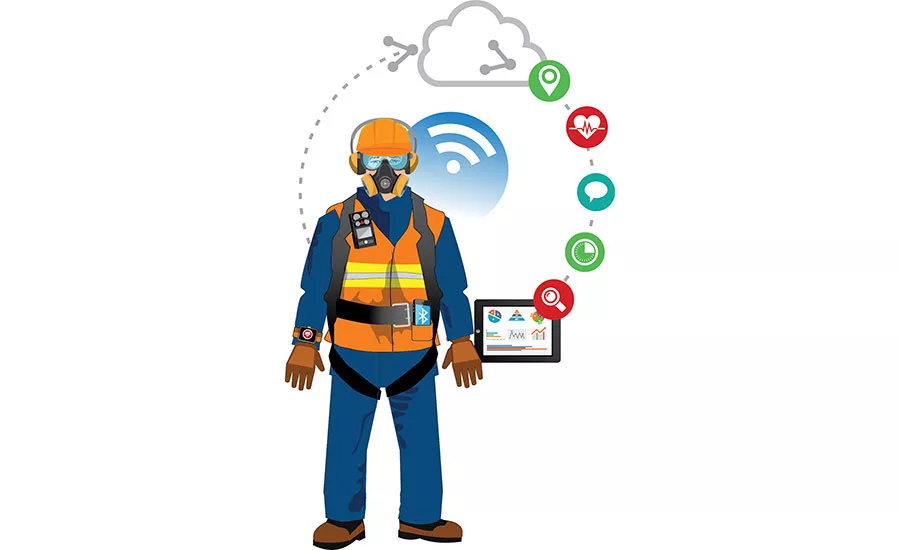
Photo courtesy of Industrial Scientific
Personal electronic gas detectors revolutionized gas detection programs and vastly improved worker safety in the 1980s and 1990s. Personal electronic gas detectors represented a huge leap forward from gas lamps and canaries. Since then, innovations including infrared imaging, ultrasonic sensors and holographic techniques have been introduced to detect gas in both personal monitors and in fixed systems. While these techniques are highly effective and sophisticated, they are intended to solve a specific challenge, to tell a worker using the gas detector when dangerous levels of gas are present.
But there is more to do to ensure worker safety beyond alerting a specific worker. The Industrial Internet of Things, which brings cost-effective connectivity and communication, provides the foundation and opens up the opportunity to further increase productivity and improve safety.
Gas detection programs can be enhanced across three dimensions: worker-to-supervisor communication; gas meter-to-gas meter communication; and gas meter-to-cloud communication.
Worker and supervisor communication
Workers and supervisors typically stay in close communication throughout the workday as required by corporate mandates or governmental regulations. This is possible if the supervisors and workers have work environments conducive to face-to-face communication. Face-to-face communication helps the supervisor document incidents, respond accordingly, and proactively adjust working conditions to keep risks low.
However, many industries have cases where personal communication isn’t possible. For example, pipeline inspections can happen many miles away from headquarters. On a construction site, noise from jackhammers and riveters make verbal communication impossible, and removing ear protection could be dangerous.
Workers in these situations, known as lone workers, perform their jobs in isolation without direct supervision and aren’t able to easily communicate with others. Lone workers could be geographically far from teammates and supervisors or in close proximity but working under conditions that make it impossible to communicate with others, such as working in a restricted access area. Such staff may be exposed to hazardous gas and there is no one to assist them; they have to go it alone. Further complicating this danger is an unexpected threat that would trigger a man-down alarm or panic button activation. Man-down alarms and panic situations assume help is close by and can hear the call for help.
Companies have ways to support lone workers, but they aren’t foolproof; check-in systems distract workers from tasks, buddy systems strain resources, and depending on the instrument alone is risky during a panic or man-down scenario.
The better way
Use gas meters that can communicate wirelessly via Bluetooth with smartphones, local Ethernet networks, or satellite devices. Smart gas detectors contain data logs that store data like gas exposure, man-down activation and panic alarms. Smartphones, Ethernet networks and satellite devices provide ways to get the data to supervisors. Bluetooth enables communication across two different devices.
On the hardware side (in our example the gas detector and a smartphone), an antenna-equipped chip in both devices sends and receives signals at a specific frequency. The software (again running on the gas detector and smartphone) interprets incoming Bluetooth signals and sends them out in ways other devices can read and understand.
Bluetooth-enabled gas detectors can send data such as: low alarms, high alarms, STEL alarms, panic button activations or man-down alarms to smartphones, internet hotspots or satellite devices. These devices then trigger email, SMS or automated calls when they receive alarm data from the gas meter. Plus they can add additional situational context like GPS position or ambient temperature.
Now the lone worker becomes a connected worker. A smart gas detector communicates with a smartphone, local Ethernet network or satellite box to trigger real-time messages to supervisors. These devices can trigger real-time alerts using Wi-Fi, cellular or satellite, depending on lone worker location and signal strength.
Meter to meter communication
How can you improve communication between other workers on a single job site? Use gas meters with peer-to-peer networking turned on. In peer-to-peer networks, each worker on the network can see the alarms from those in their group. Taking it a step further, some gas meters also have helpful instructions for how to respond when an instrument goes into alarm mode. For example, the response to an H2S exposure, “ventilate,” is completely different from a low battery alarm, “replace the battery.” Because gas meters are life-saving equipment and often deployed underground or in confined spaces, some manufacturers are building proprietary networks to guarantee communication.
When evaluating peer-to-peer networks, it is important to consider the type of gas detectors that can communicate together. Single gas, multi-gas, area monitors and more should be able to communicate together. Also consider how the alarms are communicated across instruments.
Gas meters to cloud communication
Whether you are managing lone workers or managing an entire plant, you can increase communication to keep workers safe using the techniques above. In addition, under both of these scenarios, you are collecting large volumes of data about instruments, workers and locations. To add an additional layer of protection, look for software solutions with the ability to do live monitoring of all workers — those working in isolated conditions and those under direct supervision. Live monitoring solutions are cloud applications that collect data from peer-to-peer networks and lone workers and display them visually on a map.
The Industrial Internet of Things
Communication across gas detectors and smartphones, Ethernet hotspots, and satellite boxes and transition of data across these devices is the result of the Industrial Internet of Things. Low-cost sensors, networking, and low cost and reliable data transition are the fuel. As you evaluate your gas detection program, here are some questions you should be able to answer in our connected world of constantly communicating devices.
1. Can you monitor lone workers at all times and respond in the moment to a gas exposure, panic button activation or man-down alarm?
2. Can you create peer-to-peer wireless networks across gas detectors? Can your personal monitors communicate with your area monitors?
3. Can you take advantage of existing smartphones, satellite and Wi-Fi to provide more complete insight into workers and gas exposures?
4. How can you automate tracking of workers across different sites and shifts?
If you cover these points, you are well on your way to creating an in-depth safety program. The goal is to allow workers and supervisors to react faster with more information when gas hazards occur.
Looking for a reprint of this article?
From high-res PDFs to custom plaques, order your copy today!