ISHN logo
search
cart
facebook twitter linkedin youtube
  • Sign In
  • Create Account
  • Sign Out
  • My Account
ISHN logo
  • NEWS
    • Today's News
    • Global Safety News
    • Government Regulations
  • PRODUCTS
    • Product Innovations
    • Featured Products
  • TOPICS
    • Environmental Health and Safety
    • Facility Safety
    • Workplace Health
    • Occupational Safety
    • PPE
    • More Topics
  • CONSTRUCTION
  • TECHNOLOGY
  • COLUMNS
    • Best Practices
    • Dave Johnson: What’s going on
    • Editorial Comments
    • Leading Safety
  • MULTIMEDIA
    • ISHN Podcast
    • Videos
    • Cold Stress Education Quiz
    • Webinars
    • White Papers
  • MORE
    • Buyer's Guide
    • Newsletters
    • Convention Companion
    • Polls
    • Events
    • ISHN Store
    • Sponsor Insights
  • EMAGAZINE
    • eMagazine
    • Archived Issues
    • Contact
    • Advertise
  • JOIN TODAY!
Workplace Health

Steps to protect employees from hearing loss
By Aaron McDevitt
Steps to protect employees from hearing loss
January 5, 2017

When we think of a “workplace accident,” we often imagine amputation, paralysis, and in some extreme cases death. Each day, companies of all shapes and sizes face the incredible responsibility of protecting their employees from these workplace accidents.

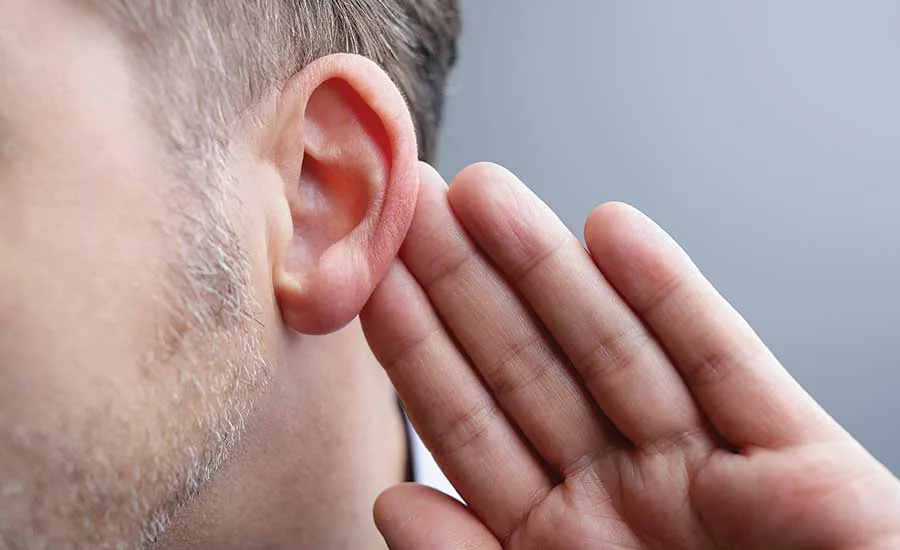
However, one of the most common injuries is often overlooked – occupational hearing loss. A recent study from the CDC reported that nearly 13 percent of all workers suffer from at least some hearing loss.

Occupational hearing loss is one of the most common work-related illnesses in the United States, yet it does not often come top of mind when we consider workplace incidents. As an employer, it is your responsibility to provide a safe and healthful workplace for all employees, and that begins with noise and hearing protection.

Facts about occupational hearing loss

The first step to protecting your employees against anything that could affect their hearing ability is educating yourself on occupational hearing loss.

According to the CDC, roughly 22 million U.S. workers are exposed to hazardous noise levels at work each year. Additionally, over 30 million U.S. workers are exposed to dangerous chemicals, which can be harmful to the ear and can affect hearing ability.

Short-term exposure to loud noises can lead to temporary changes in hearing, such as a ringing in an employee’s ears known as tinnitus. While these symptoms typically go away within a few hours, repeated exposure can lead to permanent tinnitus or complete hearing loss over time.

Long-term exposure to these hazardous noise levels can cause permanent hearing loss, which cannot be corrected by surgery or a hearing aid. Noise-induced hearing loss can also limit one’s ability to hear high frequency sounds, understand certain speech, and seriously impair their ability to communicate with others around them.

According to OSHA, loud noises can lead to several other issues as well. For instance, loud noises can create physical and psychological stress, reduce productivity in the workplace, interfere with communication and concentration, and contribute to other serious workplace accidents and injuries by making it difficult for employees to hear warning signals.

The cost of failing to protect

Not only can occupational hearing loss damage a worker’s quality of life, it also carries a high economic price. While it is impossible to put a number on the human toll of hearing loss, OSHA reported that an estimated $242 million is spent annually on workers’ compensation for hearing loss disability.

Additionally, a recent OSHA study found that U.S. businesses paid more than $1.5 million in penalties for failing to protect employees from noise just in the last year.

So how can you protect employees from damaging noise and protect yourself from unexpected and unnecessary fines? Implement a hearing loss prevention program and invest in quality sound enclosures for noisy machinery.

Implementing a hearing loss
prevention program

Hearing loss prevention programs have certainly come a long way over the past few decades. In fact, NIOSH set the following eight standards for implementing a successful hearing loss prevention program.

  1. Noise exposure monitoring
  2. Engineering and administrative controls
  3. Audiometric evaluation
  4. Use of hearing protection devices
  5. Education and motivation
  6. Record keeping
  7. Program evaluation
  8. Program audit

Importance of a quality sound enclosure

A sound or noise enclosure refers to a type of guarding that encloses a loud machine to protect employees from hearing loss or complications from noise pollution.

Sound enclosures are typically made out of plastic or clear PolyPro panels and work by using sound absorbers inside the guard to keep out a certain amount of noise. OSHA mandates that any machine that produces a noise must be guarded with soundproof panels to block out a percent of that noise.

While sound enclosures are often a highly effective means of noise control for mechanical equipment, it is important to remember that not all machines are the same.

When looking to protect your employees from the harmful noise of loud machinery, it is important to select the best sound enclosure to fit your particular needs. It’s best to look for something easy to clean, water resistant, heat reflecting and heavy duty.

With over four million workers going to work each day in an environment where damaging noise could be present, it is more important than ever to make sure you are protecting your employees and your company.

KEYWORDS: hearing loss hearing protection

Share This Story

Looking for a reprint of this article?
From high-res PDFs to custom plaques, order your copy today!

Aaron McDevitt is president of Faztek, an industrial safety guarding provider that works directly with customers to create custom safety solutions. Faztek’s mission is to provide quality guarding solutions through innovative designs, dependable service, efficient turnarounds and appropriate prices.

For additional information, please visit www.faztek.net.

Recommended Content

JOIN TODAY
to unlock your recommendations.

Already have an account? Sign In

  • forklift safety

    Exploring the latest technologies in forklift safety

    With more staff and more stock in warehousing now more...
    Facility Safety
    By: Josh Cramer
  • welding

    All about welder’s flash or arc eye

    A flash burn is a painful inflammation of the cornea,...
    Environmental Health and Safety
  • dangerous jobs

    The 10 most dangerous jobs in the U.S.

    On-the-job deaths have been rising — hitting the highest...
    Transportation Safety
    By: Benita Mehta
Manage My Account
  • eMagazine Subscriptions
  • ISHN Newsletter & Other Newsletter Alerts
  • Online Registration
  • Manage My Preferences
  • Subscription Customer Service

More Videos

Sponsored Content

Sponsored Content is a special paid section where industry companies provide high quality, objective, non-commercial content around topics of interest to the ISHN audience. All Sponsored Content is supplied by the advertising company and any opinions expressed in this article are those of the author and not necessarily reflect the views of ISHN or its parent company, BNP Media. Interested in participating in our Sponsored Content section? Contact your local rep!

close
  • man wearing the the Sundström SR200 Full Face Mask Respirator
    Sponsored byOHD

    5 Fit Testing Mistakes That Could Cost You

  • This image shows Magid AcuSpex polarized blue mirrored safety glasses.
    Sponsored byMagid Glove and Safety

    Construction PPE Guide: What Crews Need for Each Task

  • lone worker in confined space
    Sponsored byAlphasense Ltd.

    GET THE LEAD OUT of your Safety Oxygen Sensors!

Popular Stories

SpaceX 7 launch

OSHA Investigating Fatal Fall at SpaceX Starbase

Worker Impairment

How to Tell When a Co-Worker is Impaired? A Safety Pro’s Challenge

Automated loading dock equipment

After March 2026 Rivian Death, Safety Managers Reassess Loading Dock Systems Under OSHA's Warehouse Emphasis Program

top 10 most dangerous jobs

Poll

Seasonal Readiness

With the federal heat stress prevention rule on the horizon, which area of your safety program needs the most attention?
View Results Poll Archive

Products

Surviving an OSHA Audit A Management Guide, 2nd Edition

Surviving an OSHA Audit A Management Guide, 2nd Edition

See More Products

ISHN Podcasts

Related Articles

  • OSHA fines JBS beef plant in Colorado for failing to protect employees from virus

    See More
  • OSHA

    OSHA states what employers must do to protect employees from electric arcs

    See More
  • noise-induced hearing loss

    3 steps to prevent noise-induced hearing loss

    See More

Related Products

See More Products
  • Optimizing Social Media from a B2B Perspective

See More Products

Events

View AllSubmit An Event
  • September 22, 2016

    Bang! Damage from impulse noise and the effectiveness of hearing protection

    Some of the most hazardous sounds we hear are brief sounds – noises from impacts and impulses. These arise from sources like household tools, construction, industrial noise, firecrackers, guns, and even automotive airbags.
View AllSubmit An Event
×

Become a Leader in Safety Culture

Build your knowledge with ISHN, covering key safety, health and industrial hygiene news, products, and trends.

JOIN TODAY
  • RESOURCES
    • Advertise
    • Contact Us
    • Directories
    • Manufacturing Division
    • Store
    • Want More
  • SIGN UP TODAY
    • Create Account
    • eMagazine
    • Newsletters
    • Customer Service
    • Manage Preferences
  • SERVICES
    • Marketing Services
    • Reprints
    • Market Research
    • List Rental
    • Survey/Respondent Access
  • STAY CONNECTED
    • LinkedIn
    • Facebook
    • YouTube
    • X (Twitter)
  • PRIVACY
    • PRIVACY POLICY
    • TERMS & CONDITIONS
    • DO NOT SELL MY PERSONAL INFORMATION
    • PRIVACY REQUEST
    • ACCESSIBILITY

Copyright ©2026. All Rights Reserved BNP Media, Inc. and BNP Media II, LLC.

Design, CMS, Hosting & Web Development :: ePublishing