ISHN logo
search
cart
facebook twitter linkedin youtube
  • Sign In
  • Create Account
  • Sign Out
  • My Account
ISHN logo
  • NEWS
    • Today's News
    • Global Safety News
    • Government Regulations
  • PRODUCTS
    • Product Innovations
    • Featured Products
  • TOPICS
    • Environmental Health and Safety
    • Facility Safety
    • Workplace Health
    • Occupational Safety
    • PPE
    • More Topics
  • CONSTRUCTION
  • TECHNOLOGY
  • COLUMNS
    • Best Practices
    • Dave Johnson: What’s going on
    • Editorial Comments
    • Leading Safety
  • MULTIMEDIA
    • ISHN Podcast
    • Videos
    • Cold Stress Education Quiz
    • Webinars
    • White Papers
  • MORE
    • Buyer's Guide
    • Newsletters
    • Convention Companion
    • Polls
    • Events
    • ISHN Store
    • Sponsor Insights
  • EMAGAZINE
    • eMagazine
    • Archived Issues
    • Contact
    • Advertise
  • JOIN TODAY!
Occupational SafetyEnvironmental Health and Safety

Bluetooth beacons come of age

Wireless data is collected to know where and when exposures occurred
By Gregg Bako
ISHN0517_F8_pic.jpg
May 1, 2017

Most people today are using Bluetooth technology (also known as Bluetooth Low Energy or BLE) in their daily lives. Bluetooth is embedded in many of our favorite consumer products and does a great job of making our lives more convenient and efficient. It’s likely that your car, computer, smartphone and entertainment center all employ Bluetooth technology to wirelessly transmit information. Just walking around town, you’ll notice people talking on headsets, listening to music as they run and exercise, or checking their daily fitness stats on their wearable fitness tracker, all using Bluetooth. It’s simply a part of our everyday lives!

While everyone is familiar with some of the devices mentioned above, you may not be quite as familiar with Bluetooth beacons. Beacons are being used at ballparks, malls and museums, and to provide useful information to patrons using an app on your smartphone.

So how can this technology apply to our work lives? Specifically, how can beacons be used in our careers as safety professionals to keep workers safe from dangers on the job?

As gas detection monitor manufacturers build new instruments, we are seeing many forms of wireless technology being added directly into the monitors. By incorporating Bluetooth technology into a gas monitor, the monitor can now pick up signals from beacons placed in industrial settings to add critical pieces of information to data log records, shape operator behavior, and prevent unauthorized use of equipment and access to restricted locations.

How Bluetooth beacons can answer the “where?”

Often as safety professionals we look back at alarm events and data log information to find that an operator was exposed to higher levels of a toxic gas. As we dig further into the data we see that the alarm condition persisted for several minutes.

Why were they in that condition for so long? And where were they?

If we are lucky enough to have the monitor assigned in the software to a particular user, we can go back and ask them where they were. Unfortunately, it is usually the case that the operator may not remember where they were at 10:07am on Monday the 12th. Here is where the beacons can fill in the gaps. Beacons for industrial applications can be used in hazardous areas, can be set up in minutes, can run up to four years continuously on a couple of batteries, and can provide invaluable data as to where an alarm condition occurred.

How are Bluetooth beacons deployed in an industrial facility?

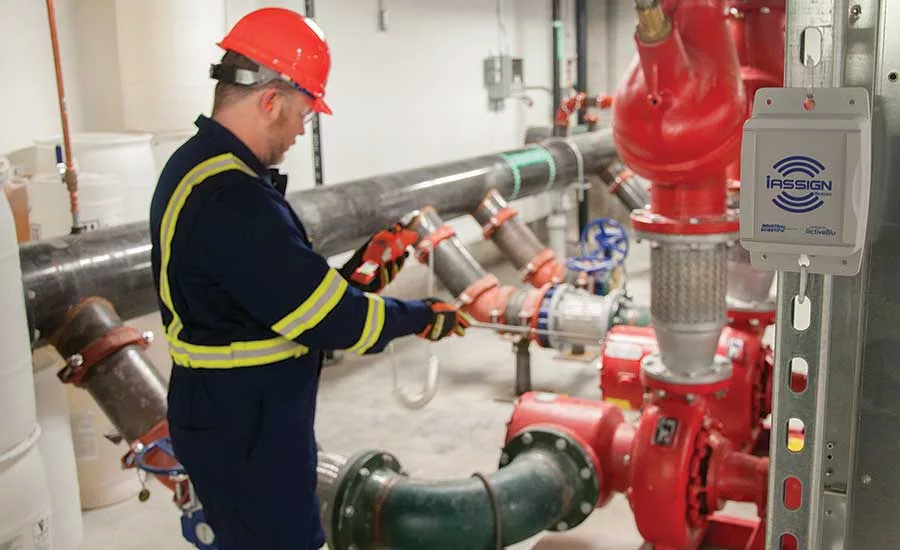
Beacons are placed throughout an industrial facility or unit within the facility and each configured to a distance from one to 30 meters. As an operator with a compatible gas monitor walks through the area, the monitor sees the various beacons and determines, based on signal strength, if it is within the predefined distance of the beacon. If it is, it tags the monitor’s data log with the name of that beacon. No operator actions are needed. For example, an operator walks within 20 feet of the beacon at Separations Tank 4 (Sep Tank 4), the monitor sees several beacons in the area, but it quickly realizes that based on the signal strength from this particular beacon, it is within the beacon’s predefined distance and sets the monitor’s “Site” to “Sep Tank 4.”

A day later, as the alarm information is reviewed, it can be seen that four operators experienced high SO2 alarms in the area of Sep Tank 4. This tank is scheduled to be taken offline for maintenance in several weeks, but perhaps this maintenance timetable needs to be accelerated.

How do we move beyond “where we were” to “where we shouldn’t be?”

In addition to beacons being a valuable tool to let us know where alarms are occurring within a facility, they can also be valuable to ensure that untrained personnel are not gaining access to areas of the facility where they should not be. Since beacons know if an operator with a monitor is within a specified distance of it, it can send the monitor into alarm if an operator without sufficient permission has entered an area. This proximity alarm feature ensures that everyone within an area has the proper training and is authorized to be in that area.

As you can see, some of the Bluetooth technology that has become so commonplace in our personal lives is quickly moving into our lives at work. However, this technology at work goes well beyond making our day more fun and productive, it makes our day safer! 

KEYWORDS: exposure monitoring gas monitoring technology wireless technology

Share This Story

Looking for a reprint of this article?
From high-res PDFs to custom plaques, order your copy today!

Gregg Bako is the global product manager of Multi-Gas Solutions at Industrial Scientific Corporation. He can be reached at gbako@indsci.com.

Recommended Content

JOIN TODAY
to unlock your recommendations.

Already have an account? Sign In

  • forklift safety

    Exploring the latest technologies in forklift safety

    With more staff and more stock in warehousing now more...
    Facility Safety
    By: Josh Cramer
  • welding

    All about welder’s flash or arc eye

    A flash burn is a painful inflammation of the cornea,...
    Environmental Health and Safety
  • dangerous jobs

    The 10 most dangerous jobs in the U.S.

    On-the-job deaths have been rising — hitting the highest...
    Government Safety Regulations
    By: Benita Mehta
Manage My Account
  • eMagazine Subscriptions
  • ISHN Newsletter & Other Newsletter Alerts
  • Online Registration
  • Manage My Preferences
  • Subscription Customer Service

More Videos

Sponsored Content

Sponsored Content is a special paid section where industry companies provide high quality, objective, non-commercial content around topics of interest to the ISHN audience. All Sponsored Content is supplied by the advertising company and any opinions expressed in this article are those of the author and not necessarily reflect the views of ISHN or its parent company, BNP Media. Interested in participating in our Sponsored Content section? Contact your local rep!

close
  • man wearing the the Sundström SR200 Full Face Mask Respirator
    Sponsored byOHD

    5 Fit Testing Mistakes That Could Cost You

  • This image shows Magid AcuSpex polarized blue mirrored safety glasses.
    Sponsored byMagid Glove and Safety

    Construction PPE Guide: What Crews Need for Each Task

  • lone worker in confined space
    Sponsored byAlphasense Ltd.

    GET THE LEAD OUT of your Safety Oxygen Sensors!

Popular Stories

SpaceX 7 launch

OSHA Investigating Fatal Fall at SpaceX Starbase

Automated loading dock equipment

After March 2026 Rivian Death, Safety Managers Reassess Loading Dock Systems Under OSHA's Warehouse Emphasis Program

psychology in the workplace

Most Workplaces Measure Psychological Safety, Ignoring Psychosocial Risks

top 10 most dangerous jobs

Poll

Seasonal Readiness

With the federal heat stress prevention rule on the horizon, which area of your safety program needs the most attention?
View Results Poll Archive

Products

Surviving an OSHA Audit A Management Guide, 2nd Edition

Surviving an OSHA Audit A Management Guide, 2nd Edition

See More Products

ISHN Podcasts

Related Articles

  • product innovations

    Powered gloves come of age

    See More
  • AEDs come of age in the workplace

    See More
  • REACH comes of age - are you ready?

    See More

Related Products

See More Products
  • 9781498773416.jpg

    The Legal Aspects of Industrial Hygiene and Safety

  • 1119906652.webp

    Alive and Well at the End of the Day: The Supervisor's Guide to Managing Safety in Operations, 2E

  • fearless world.jpg

    The Fearless World of Professional Safety in the 21st Century

See More Products
×

Become a Leader in Safety Culture

Build your knowledge with ISHN, covering key safety, health and industrial hygiene news, products, and trends.

JOIN TODAY
  • RESOURCES
    • Advertise
    • Contact Us
    • Directories
    • Manufacturing Division
    • Store
    • Want More
  • SIGN UP TODAY
    • Create Account
    • eMagazine
    • Newsletters
    • Customer Service
    • Manage Preferences
  • SERVICES
    • Marketing Services
    • Reprints
    • Market Research
    • List Rental
    • Survey/Respondent Access
  • STAY CONNECTED
    • LinkedIn
    • Facebook
    • YouTube
    • X (Twitter)
  • PRIVACY
    • PRIVACY POLICY
    • TERMS & CONDITIONS
    • DO NOT SELL MY PERSONAL INFORMATION
    • PRIVACY REQUEST
    • ACCESSIBILITY

Copyright ©2026. All Rights Reserved BNP Media, Inc. and BNP Media II, LLC.

Design, CMS, Hosting & Web Development :: ePublishing