The OSHA blaming and shaming game
Does negative press change corporate misbehavior?
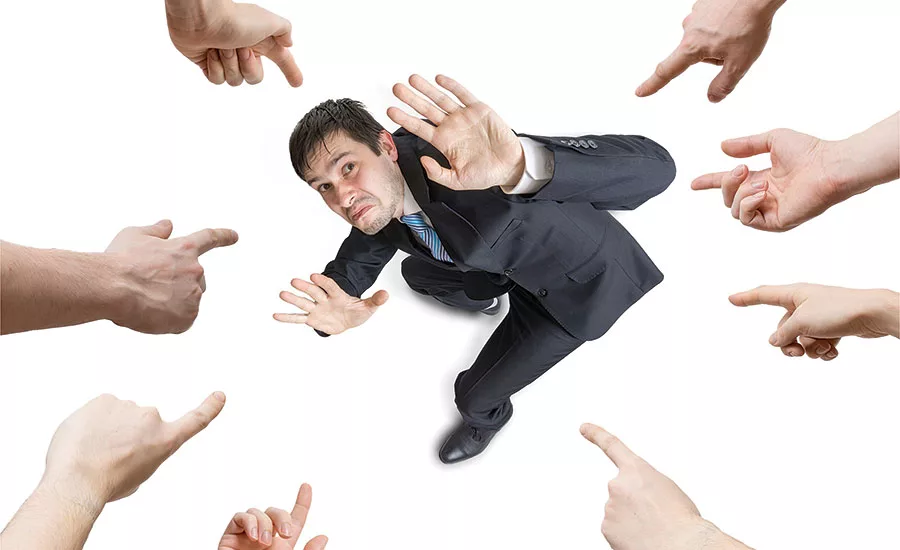
With the virtual halt to federal OSHA press releases on enforcement cases, ISHN asked veteran agency observers and safety and health experts for their input on whether the practice pays off in changing corporate misbehavior.
Getting an education
As an occupational safety and health person, I found reading OSHA citations to be educational. It is always interesting to see where PPE is, and is not used, in what industries, etc. So, even if there’s no press release language shaming the employer, the citation press releases are/were a means to get a pulse on OSHA’s on-the-ground activities.
Dan Glucksman- Public Affairs Director, International Safety Equipment Association
A surgical tool
OSHA-published fines and shame directed at other workplaces are effective surgical tools in the hands of savvy health and safety professionals who can weave it into a broader message at their firms in order to keep visibility, sustain budgets and staff and help with compliance programs. And yes, it’s excellent marketing fodder for consultants.
Bad people and companies should be seriously punished and shamed, but our laws and system most often prevent proportional justice from being done.
Anonymous CIH, CSP, ROH
It has a short shelf life
My view is that it is hard to see blaming and shaming as a very effective strategy. OSHA has never seemed to have a pulpit to convince a lot of medium to small companies to see the light. Also, news does not last long on cable or your cell phone. The event has to have scale, which means at least a few people have to die, some must be seriously hurt, and there must be visible property damage. A safety engineer said to me that progress in health and safety comes with someone’s blood. I believe the public is comfortable with the level of health and safety they have bought. Just like companies. Blaming and shaming works in some cases, but for only a minimal amount time.
Hank Lick- head of Ford Motor Company industrial hygiene (retired)
Media coverage matters
Having worked with employers for well over 30 years while at OSHA I always felt, (especially when the penalties were so low) that what really got an employer’s attention and what was successful in making change was the media attention. When other employers saw bad press against an employer in their community, I felt it spurred them on to look at what they had in place and make some changes.
More times than not, employers were most concerned about media attention affecting their business and people in the community thinking poorly of them.
The downside is that OSHA always has launched a news release before the case settles and often times the way the original press release played in the media turned out actually not to relate to the severity of the conditions at the site. Yet OSHA never issued a retraction or a corrective press release - which I think the agency should consider doing.
Anonymous former OSHA official
A reckless bully
The prior administration at OSHA’s policy of shaming employers was an abuse of its power and unfairly damaged the reputations of good companies. Following a significant citation, OSHA would often issue a press release designed to embarrass the company. Unfortunately, the facts underlying the citation and the press release were frequently incorrect.
Even when a company had demonstrated to OSHA that the citation and the press release were based on errors, OSHA would not issue a correction or a public apology.
The policy unfairly damaged the reputations of good companies and it undercut OSHA’s effectiveness. Many in industry came to see OSHA as a bully that was reckless with the facts.
Mark S. Dreux- Partner, Arent Fox LLP, Attorneys at Law
Creating a false narrative
One reservation I have about the “blaming and shaming” approach is that it runs the risk of supporting a “guilty until proven innocent” standard.
A second reservation is the lack of context of many of the publicly-reported safety offenses. The image created and reinforced is that obviously “those guys don’t care about keeping their employees safe.” The public may wonder how this outlier, this known uniquely dangerous company, could still be in business!
Public shaming can create and support a false narrative. If (a big if) the feds and news organizations were as zealous in telling the whole story as they often are in getting the big headline out, I would support the practice.
John Kello- Professor of psychology, Davidson College
OSHA blame/shame gets me work
Blaming and shaming does work. Back in my corporate days the CEO stated his biggest concern was “risk to corporate reputation.” The Risk Identification and Prevention (RIP) Section suggested rather than work to keep OSHA out of the facilities, invite them in through VPP and gain positive press. Negative news, particularly public reports of injury/illness, was greatly frowned upon. Internally, blaming and shaming took place in monthly comparison safety reports among the plants. Plant managers would up their game to avoid being at the bottom of the pack.
In my consulting life, OSHA blame/shame gets me work. It’s a “if it happened to them, it could happen to us” mentality.
Dan Markiewicz, MS, CIH, CSP, CHMM- Independent consultant
Can corporations have an emotional response?
I believe the press releases are a statement of fact and the large citations are newsworthy events. That seems to be when an agency should issue a press release. It seems consistent with other agencies of the Federal Government who also enforce laws.
By the way, there usually is also a significant amount of blame taking place in the workplace – often targeted at the worker who was a victim of the unsafe condition and received the injury.
Also, is this shame? I guess if corporations are people, then corporations can have an emotional response (and of course, not all OSHA citations are issued to corporations).
In large OSHA cases that I have been personally involved in there is usually interaction about the media release – when the employer is working to correct the hazards and OSHA violations and resolve the cited items. The adage that you get the press release that you deserve fits pretty well in my experience.
Jim Frederick- United Steelworkers Union
Don’t kick someone doing a remarkable job
My general feeling is that some employers need to be shamed... they simply do not care about compliance.
However, I did a fair amount of work last year for the local division of a large multi-national manufacturer. They were inspected and the compliance officer found a couple of things related to machine guarding and confined space that he cited them on. They made changes voluntarily and before any citation was issued.
Initial citations on two serious counts totaled $12,000; after many discussions with OSHA they were changed to deminimus. OSHA decided to slip in another charge on a no-risk machine issue and the company ended up paying about $5,000.
So what shows on the OSHA website? The original $12,000 charge on two serious counts. The manager was livid. He’s on top of everything. I can tell a scumbag from a great leader after five minutes in a company. If I can do it, OSHA should be able to.
Anonymous safety professional
OSHA has not learned from BBS
Behavioral scientists have shown the debilitating effect of punishment. Negative consequences do not work over the long run. This is reminiscent of the approach to punish the worker for getting hurt after s/he returns from a lost-time injury. It suggests that OSHA has not learned from behavior-based safety.
Dr. E Scott Geller- Distinguished Alumni Professor, Virginia Tech
Learn from the Europeans
Aside from all of the arguments about the proper role of government and OSHA, the best argument is that the Europeans do not follow this practice yet seem to have every bit as good a performance as we do. While we historically come from the command and control philosophy, I do think there is something to be said about working with the people you are regulating.
S.Z. Mansdorf, PhD, CIH, CSP, QEP- Consultant in EHS and Sustainability
Looking for a reprint of this article?
From high-res PDFs to custom plaques, order your copy today!