How metatarsal guards can protect feet from direct trauma
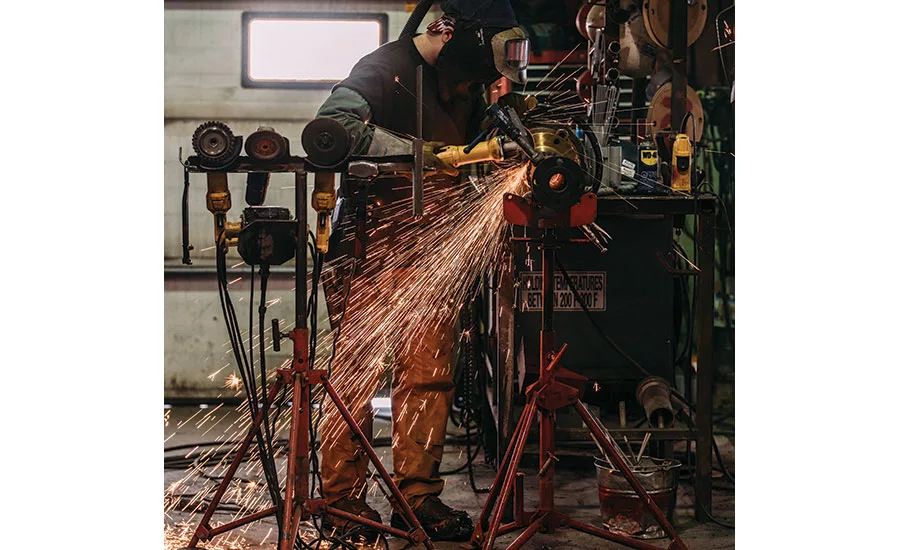
Job sites can be dangerous. Falling objects are a common risk for injuries, even when dropped from only a few feet. Safety boots are important in many work environments, and depending upon the severity of the risk of foot injury, work boots with a metguard component should be part of an employee’s personal protective equipment (PPE).
Work boots with a metguard component are designed to reduce or prevent metatarsal injury by absorbing the impact of objects falling or rolling up on the upper foot. Metguard safety boots have, in addition to a protective toe cap, a “shield” either built into the tongue of the boot or attached externally to the upper to protect against objects dropping or rolling onto workers’ feet.
The workers most likely to suffer are laborers, tradespeople and machine operators. Most metatarsal injuries occur in the manufacturing, fabrication, construction, transportation, storage, retail, trade and property services industries. Metguard footwear is also commonly worn by employees involved with some kind of welding operation, as it protects them from molten metal run-off.
The cost factor
Failure to comply with OSHA regulations invites warnings, sanctions and fines. While certain citations can be at a minimum of a few thousand dollars, it is important to note OSHA raised its maximum penalties at the start of 2018 to $12,600 for “serious” and “other-than-serious” violations and to $12,934 each day for “failure-to-abate” violations. In addition, “willful” and “repeat” violations can now carry a maximum of $129,336.
According to the most recent data from the U.S. Bureau of Labor Statistics, the workforce suffered approximately 100,000 occupational foot injuries that averaged 10 days away from work. If you add up the cost of OSHA fines plus the loss in productivity caused by an injury, not to mention potential worker compensation as well as the possibility of an additional hire, lack of foot protection can become very costly to a company.
More importantly, however, is the health and safety of employees. The cost of a pair of safety boots is small compared to a foot injury that can put an employee out of work for days or weeks — or cause permanent disability. Injury can result in thousands of dollars of workers’ compensation fees and lost productivity.
Metatarsals defined
The metatarsals are five bones within the foot that extend from the tarsal bones in the heel all the way out to the toes. The five metatarsals are numbered one (extends to the big toe) through five (extends to the pinky toe). They work like levers when walking or running and aid in balance and holding up the body.
The metatarsals have minimal soft tissue to protect them at the top of the foot, so they are easily injured and can take weeks to heal. A fracture of the big toe — not technically a metatarsal, but part of the same area of concern — can take as long as eight to ten weeks. Metguards can’t protect against all foot injuries, but they do offer some protection against direct trauma.
Metguard boot styles
Metguard footwear has two general designs. One incorporates an internal metguard and looks like a typical work boot because the metguard is not visible. The other style features an exterior guard that is connected to the toe of the boot, lies over the shoelaces and attaches to the upper part of the boot with a Velcro-style patch or through shoelaces. This exterior-guard style allows a worker to flip the metguard open during work breaks.
Metguard boots are often manufactured with full-grain leather uppers, steel or fiberglass shanks and rubber outsoles. Recent innovations have introduced new materials and construction methods to provide more worker comfort and flexibility while still providing the necessary metatarsal impact protection.
Metguard footwear comes in multiple boot and shoe styles, such as pull-ons and oxfords. The work boot style the employee selects depends on the employee’s occupation and personal footwear preferences. Some workers prefer eight-inch work boots for additional support. Other workers like a six-inch boot for its lighter weight and comfort. Metguard boots cost moderately more than a similar work boot without metguard protection.
Buying the right metguard work boots
Individuals looking to purchase boots with metguard components should consider multiple factors:
Decide on a style. The boot style that works best is highly dependent on the individual. Some workers feel more comfortable when the metguard rests on the exterior, while others prefer interior metguard shields. Depending on the model, metguard work boots can include additional safety features like oil and slip-resistant outsoles and puncture-resistant midsoles.
Choose electrical hazard protection, if necessary. If the line of work calls for electrical hazard (EH) protection, look for boots that are EH-certified and rated. Such footwear is constructed so that the outsole may provide a secondary source of electrical hazard protection capable of withstanding 14,000 volts at 60 hertz for one minute under dry conditions.
Take the time to get the size right. Sizing the boots and trying on several pairs before purchase is critically important when selecting footwear with a metguard — even more so than when choosing traditional work boots. Metguards may be harder and stiffer than a regular safety toe boot, causing discomfort in some wearers if not fit properly.
Get assistance from experts. Visit a shoe store specializing in industrial footwear. The store’s staff will be able to assist in selecting and fitting the best metguard footwear for each employee’s specific job and work environment.
Employer purchasing requirements
OSHA requires employers to contribute to workers’ basic personal protective equipment (PPE) needs, including foot protection, holding employers responsible for employees meeting the minimum level of PPE required by the standards. If an employer decides to use upgraded PPE to meet the requirements, the employer must pay for the upgraded PPE. If an employer provides PPE at no cost and an employee chooses to use different PPE, then the employer is not required to pay for the item.
Overall, employers should help workers find and wear work boots that are appropriate for their jobs. A workplace hazard assessment by a trained footwear expert can help you determine whether your employees require metatarsal protection. Although metguard boots cannot protect against all potential foot injuries caused by falling objects, they do provide a vital layer of protection for an employer’s most valuable asset — their employees.
Looking for a reprint of this article?
From high-res PDFs to custom plaques, order your copy today!