ISHN logo
search
cart
facebook twitter linkedin youtube
  • Sign In
  • Create Account
  • Sign Out
  • My Account
ISHN logo
  • NEWS
    • Today's News
    • Global Safety News
    • Government Regulations
  • PRODUCTS
    • Product Innovations
    • Featured Products
  • TOPICS
    • Environmental Health and Safety
    • Facility Safety
    • Workplace Health
    • Occupational Safety
    • PPE
    • More Topics
  • CONSTRUCTION
  • TECHNOLOGY
  • COLUMNS
    • Best Practices
    • Dave Johnson: What’s going on
    • Editorial Comments
    • Leading Safety
  • MULTIMEDIA
    • ISHN Podcast
    • Videos
    • Cold Stress Education Quiz
    • Webinars
    • White Papers
  • MORE
    • Buyer's Guide
    • Newsletters
    • Convention Companion
    • Polls
    • Events
    • ISHN Store
    • Sponsor Insights
  • EMAGAZINE
    • eMagazine
    • Archived Issues
    • Contact
    • Advertise
  • JOIN TODAY!
Occupational SafetyEnvironmental Health and SafetyPPERisk Management

FR protection is effective, comfortable & stylish

No sacrifices necessary
By Mark Saner
FR Protection work safety
September 24, 2018

Producing flame-resistant (FR) fabrics dates back to around 450 B.C. when textiles made from asbestos, which was known to have fire-resistant properties, were used to wrap the bodies of the deceased before they were placed on funeral pyres. Since these shrouds didn’t burn, they helped keep the ashes of the dead separate from the ashes of the fire.

In the centuries since, FR fabrics have taken a variety of forms, each with their own challenges. In 1821, Joseph Gay-Lussac discovered that treating fabrics with ammonium phosphates and borax made them somewhat fire retardant, but this treatment washed out of clothing too easily. During World War II, another flame-resistant finish was developed, but this one added significantly to the weight of the fabric. Other finishes, developed later, weakened the fabric instead.

Over time, techniques for developing FR fabrics significantly improved, resolving many of the issues seen with earlier solutions and even giving rise to fabrics that are inherently FR, rather than treated with an FR finish. But only recently has FR clothing evolved to a point where the fabrics are both effective and comfortable and the styles offer a look and fit that workers want to wear.

Comfort and style impact safety

It makes sense that comfort and style weren’t always top priorities in FR clothing — after all, the main focus was protection. But we now know that comfort and style can impact the safety benefits FR workwear provides.

If FR products are uncomfortable or unsightly, workers may be tempted to make alterations to them, or worse, skip wearing them altogether.

The more comfortable FR clothing is, and the more that FR styles align with modern preferences, the more likely it is that workers will wear the proper apparel and have the protection they need when they need it.

Improvements in comfort

In the past, FR clothing had a reputation for being heavy and stiff. But that is no longer the case.

One major change that contributes significantly to FR clothing comfort is fabric weight. FR protection can now be achieved with much lighter weight fabrics than ever before. These fabrics help make FR clothing more comfortable because they keep wearers cooler in warm temperatures and also tend to be easier to move around in.

FR fabric breathability has also improved over the years, helping to increase comfort. Breathable fabrics contribute to comfort by allowing air and moisture to easily pass through them, which helps to regulate temperature.

Another comfort-related fabric characteristic that has improved significantly since the early days of FR clothing is moisture management. When workers perspire, their clothing can become damp, causing it to grow heavy, change shape and stick to the skin — all of which cause discomfort. Many modern FR fabrics are designed to resolve this issue by wicking moisture away from the skin and drying quickly.

A final way FR clothing comfort has improved is through the development of multi-hazard protection. Products that combine FR properties with other safety benefits, such as chemical-splash protection (CP), offer a single protective garment for workplaces where previously two or more separate garments would often have been needed to address each hazard.

Better styles

Comfort isn’t the only thing that’s improved over the years. Today’s FR clothing offers significantly better style options as well.

In addition to classic coveralls, button down shirts and outerwear, you can now get henleys, knits and even base layer shirts that offer FR protection. And unlike early FR clothing, many of these styles now come in a broad selection of colors.

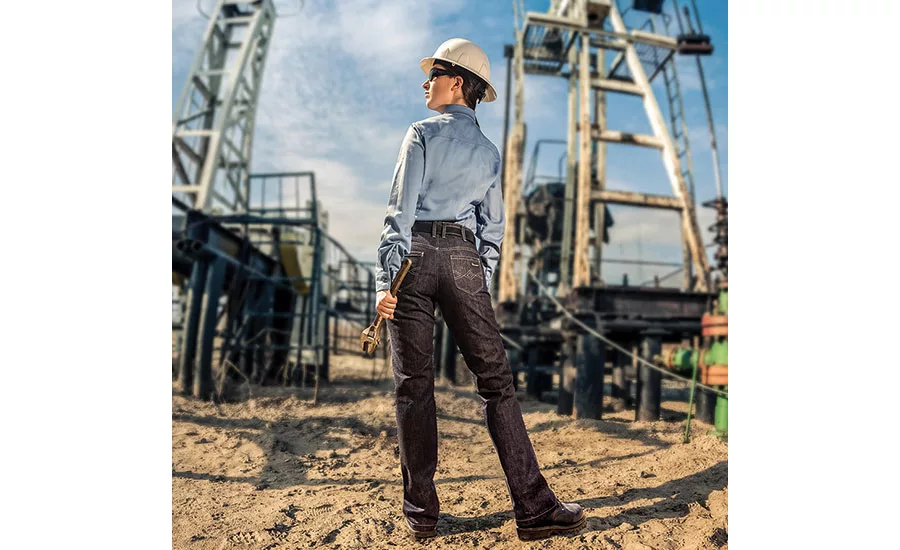
FR work pants have also evolved. Modern options include jeans made from soft, flexible fabrics and modeled after popular non-FR styles, as well as durable pants built with comfortable yet strong ripstop fabrics.

Women’s styles

One final, major improvement in FR clothing styles is the development of products designed specifically for women. Historically, FR clothing providers focused their efforts on men’s clothing, which meant that women who needed FR protection had to wear oversized, poor-fitting garments that compromised not only style, but also safety. But with increasing numbers of women working in industries such as utilities, oil and gas, and firefighting, manufacturers have begun developing better styles for women.

FR protection sure has come a long way since 450 B.C. That said, both comfort and style are largely subjective, and since preferences can vary significantly by workplace and individual, it is often beneficial to do a wear trial prior to purchasing FR workwear.

KEYWORDS: arc blast Arc flash flame resistant FR clothing FR protection

Share This Story

Looking for a reprint of this article?
From high-res PDFs to custom plaques, order your copy today!

Mark Saner is currently the technical services manager for VF Imagewear/Bulwark Protective Apparel. Previously, he served as the FR technical manager for Workrite Uniform Company from 2006 until early 2018. He brings more than 40 years of experience in the fire and safety industries to his work.

Contact Mark at 1-800-521-1888 or visit www.workrite.com.

Recommended Content

JOIN TODAY
to unlock your recommendations.

Already have an account? Sign In

  • forklift safety

    Exploring the latest technologies in forklift safety

    With more staff and more stock in warehousing now more...
    Facility Safety
    By: Josh Cramer
  • welding

    All about welder’s flash or arc eye

    A flash burn is a painful inflammation of the cornea,...
    Environmental Health and Safety
  • dangerous jobs

    The 10 most dangerous jobs in the U.S.

    On-the-job deaths have been rising — hitting the highest...
    Government Safety Regulations
    By: Benita Mehta
Manage My Account
  • eMagazine Subscriptions
  • ISHN Newsletter & Other Newsletter Alerts
  • Online Registration
  • Manage My Preferences
  • Subscription Customer Service

More Videos

Sponsored Content

Sponsored Content is a special paid section where industry companies provide high quality, objective, non-commercial content around topics of interest to the ISHN audience. All Sponsored Content is supplied by the advertising company and any opinions expressed in this article are those of the author and not necessarily reflect the views of ISHN or its parent company, BNP Media. Interested in participating in our Sponsored Content section? Contact your local rep!

close
  • man wearing the the Sundström SR200 Full Face Mask Respirator
    Sponsored byOHD

    5 Fit Testing Mistakes That Could Cost You

  • This image shows Magid AcuSpex polarized blue mirrored safety glasses.
    Sponsored byMagid Glove and Safety

    Construction PPE Guide: What Crews Need for Each Task

  • lone worker in confined space
    Sponsored byAlphasense Ltd.

    GET THE LEAD OUT of your Safety Oxygen Sensors!

Popular Stories

SpaceX 7 launch

OSHA Investigating Fatal Fall at SpaceX Starbase

Automated loading dock equipment

After March 2026 Rivian Death, Safety Managers Reassess Loading Dock Systems Under OSHA's Warehouse Emphasis Program

psychology in the workplace

Most Workplaces Measure Psychological Safety, Ignoring Psychosocial Risks

top 10 most dangerous jobs

Poll

Seasonal Readiness

With the federal heat stress prevention rule on the horizon, which area of your safety program needs the most attention?
View Results Poll Archive

Products

Surviving an OSHA Audit A Management Guide, 2nd Edition

Surviving an OSHA Audit A Management Guide, 2nd Edition

See More Products

ISHN Podcasts

Related Articles

  • Why chemical-splash protection is important

    A burning issue: Why chemical-splash protection is important

    See More
  • FR outerwear: warmth, protection & function

    See More
  • ISHN0517_F5_pic.jpg

    FR Denim with arc flash protection can be stylish & durable

    See More

Related Products

See More Products
  • 0470387408.jpg

    Preparing for OSHA s Voluntary Protection Programs: A Guide to Success

See More Products

Related Directories

  • Bulwark FR

    When real lives are on the line and corporate reputations are at stake you can turn to Bulwark® Protection. We’re the PPE powerhouse that surrounds you completely. We balance the demand for FR and PPE that looks as good as it protects. We expand your knowledge in all directions with the latest information, advice and guidance.
×

Become a Leader in Safety Culture

Build your knowledge with ISHN, covering key safety, health and industrial hygiene news, products, and trends.

JOIN TODAY
  • RESOURCES
    • Advertise
    • Contact Us
    • Directories
    • Manufacturing Division
    • Store
    • Want More
  • SIGN UP TODAY
    • Create Account
    • eMagazine
    • Newsletters
    • Customer Service
    • Manage Preferences
  • SERVICES
    • Marketing Services
    • Reprints
    • Market Research
    • List Rental
    • Survey/Respondent Access
  • STAY CONNECTED
    • LinkedIn
    • Facebook
    • YouTube
    • X (Twitter)
  • PRIVACY
    • PRIVACY POLICY
    • TERMS & CONDITIONS
    • DO NOT SELL MY PERSONAL INFORMATION
    • PRIVACY REQUEST
    • ACCESSIBILITY

Copyright ©2026. All Rights Reserved BNP Media, Inc. and BNP Media II, LLC.

Design, CMS, Hosting & Web Development :: ePublishing