ISHN logo
search
cart
facebook twitter linkedin youtube
  • Sign In
  • Create Account
  • Sign Out
  • My Account
ISHN logo
  • NEWS
    • Today's News
    • Global Safety News
    • Government Regulations
  • PRODUCTS
    • Product Innovations
    • Featured Products
  • TOPICS
    • Environmental Health and Safety
    • Facility Safety
    • Workplace Health
    • Occupational Safety
    • PPE
    • More Topics
  • CONSTRUCTION
  • TECHNOLOGY
  • COLUMNS
    • Best Practices
    • Dave Johnson: What’s going on
    • Editorial Comments
    • Leading Safety
  • MULTIMEDIA
    • ISHN Podcast
    • Videos
    • Cold Stress Education Quiz
    • Webinars
    • White Papers
  • MORE
    • Buyer's Guide
    • Newsletters
    • Convention Companion
    • Polls
    • Events
    • ISHN Store
    • Sponsor Insights
  • EMAGAZINE
    • eMagazine
    • Archived Issues
    • Contact
    • Advertise
  • JOIN TODAY!
Occupational SafetyEnvironmental Health and SafetySafety & Health Best Practices Workplace Health

Silica dust prevention for masons
silica exposure
October 30, 2018

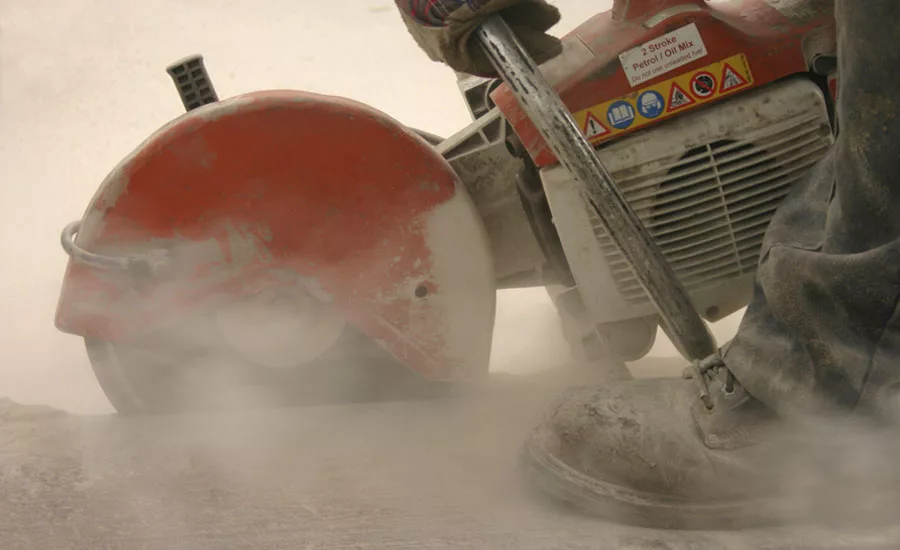
There are numerous job tasks and functions throughout the construction industry that are notorious for producing massive amounts of dust. Typically these jobs involve grinding, sawing, drilling, and chiseling. For masons, the danger comes from operating on stone and concrete materials such as brick, asphalt, and mortar that contain concentrated amounts of crystalline silica. When these materials are operated on, silica containing dust is emitted and enters the workers’ breathing zone                      

The amount of dust that is produced or that accumulates varies depending on the task being performed and the material that the task is being performed on. Notably, concrete cutting and grinding, jackhammering, and tuck pointing are all construction tasks that are completed by masons during demolition, refurbishment, or foundational construction. This article takes a deeper look at each function and explains how dust is formed as well as how airborne dust can be eliminated to prevent masons from developing serious, life-threatening lung illnesses.

Concrete cutting & grinding

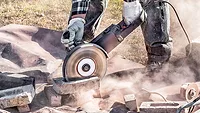
Concrete grinding and cutting are frequently used techniques in the construction industry. Masons use specialized equipment to cut concrete, asphalt, brick, and tile for industrial projects such as building construction or entryway creation. Concrete grinding often occurs when sidewalks, parking lots, roads, and highways have been overused and are in need of repair. This method of construction offers instant enhancement to the overall smoothness and safety of the concrete. When concrete is cut or ground, silica dust is released and without the proper control methods, this dust can pose serious health issues to masons.

Controls – Operate grinding and cutting tools that are equipped with an integrated water delivery system to help eliminate silica dust production. These systems continuously supply water to the concrete surface that cuts off dust production at the source. For proper implementation, employers are required to ensure the following:

  • A sufficient amount of water is applied to the surface for dust suppression
  • Spray nozzles are not congested or defective and are applying water at the point of dust conception
  • All hoses and connections from water source are intact

For masons who are grinding specifically, a grinder with a shroud and commercial dust collection system should be provided to minimize secretions of dust. Dust collection systems should be used for both indoor and outdoor grinding operations. For concrete grinder dust collectors, employers must guarantee that:

  • Shroud and dust collection systems are installed according to the instructions of the manufacturer
  • Hoses connecting the vacuum system to the grinding tool are intact and without any knots or bows
  • All dust collection bags and filters are emptied, cleaned, and changed regularly to avoid becoming clogged and overfilling

Jackhammering

Jackhammering is common for masons who need to break large, thick slabs of concrete or stone for demolition projects. These tools can also be used when laying a new foundation to cut out old, deteriorated concrete so that it can be replaced. Due to how destructive the process is, jackhammering is another construction job function that produces excessive amounts of silica containing dust.

Controls – Similar to concrete grinding and cutting, jackhammering is safest when concrete is destroyed in a wet state. However, this type of work produces significant amounts of dust and water spraying techniques should almost always be paired with an industrial shroud and dust collection system. Vacuum systems such as these will enhance wet cutting methods by collecting any remaining dust that can be created. By law, employers are required to ensure that:

  • Shroud and vacuum systems have been appropriately installed and employees have been trained on how to accurately operate and clean equipment
  • Vacuum hoses are free of clogs and kinks, and filters are cleaned and replaced on a regular basis
  • An adequate amount of water and pressure is applied to point of dust formation to enhance overall dust suppression

Tuck pointing

The process of removing timeworn, deteriorated mortar is more commonly known as tuck pointing. Mortar is used to hold bricks and stonework together and seal any gaps to eliminate the potential of water seeping in and damaging the architectural structure. To replace old mortar, masons must rake and scrape it out with a handheld grinding blade. This method inevitably produces a cloud of dust containing respirable crystalline silica. 

Controls – Control and prevention methods that help to eliminate silica dust production when tuck pointing includes using a grinder that is fashioned to a commercial shroud and dust collection system. Tuck pointing dust collection systems should have a filter that collects dust at an efficiency of 99 percent or greater. Systems with filter-cleaning instruments prevent debris and dust from building up on the filter and greatly improve the suction of the dust collection system. It is vital that employers confirm:

  • Shroud and dust collection systems are installed in accordance with manufacturer’s guidelines and efficiently enclose the grinding blade
  • Vacuum filters are cleaned regularly and hoses connecting from the tool to the vacuum are intact and without kinks
  • Whenever possible, tool is operated in a direction that goes against the blade rotation;
  • Employees have been properly trained and working and cleaning methods

For more information on silica dust prevention, check out Industrial Vacuum’s Silica Dust Resource Hub.

KEYWORDS: occupational exposure

Share This Story

Looking for a reprint of this article?
From high-res PDFs to custom plaques, order your copy today!

Recommended Content

JOIN TODAY
to unlock your recommendations.

Already have an account? Sign In

  • forklift safety

    Exploring the latest technologies in forklift safety

    With more staff and more stock in warehousing now more...
    Facility Safety
    By: Josh Cramer
  • welding

    All about welder’s flash or arc eye

    A flash burn is a painful inflammation of the cornea,...
    Environmental Health and Safety
  • dangerous jobs

    The 10 most dangerous jobs in the U.S.

    On-the-job deaths have been rising — hitting the highest...
    Government Safety Regulations
    By: Benita Mehta
Manage My Account
  • eMagazine Subscriptions
  • ISHN Newsletter & Other Newsletter Alerts
  • Online Registration
  • Manage My Preferences
  • Subscription Customer Service

More Videos

Sponsored Content

Sponsored Content is a special paid section where industry companies provide high quality, objective, non-commercial content around topics of interest to the ISHN audience. All Sponsored Content is supplied by the advertising company and any opinions expressed in this article are those of the author and not necessarily reflect the views of ISHN or its parent company, BNP Media. Interested in participating in our Sponsored Content section? Contact your local rep!

close
  • man wearing the the Sundström SR200 Full Face Mask Respirator
    Sponsored byOHD

    5 Fit Testing Mistakes That Could Cost You

  • This image shows Magid AcuSpex polarized blue mirrored safety glasses.
    Sponsored byMagid Glove and Safety

    Construction PPE Guide: What Crews Need for Each Task

  • lone worker in confined space
    Sponsored byAlphasense Ltd.

    GET THE LEAD OUT of your Safety Oxygen Sensors!

Popular Stories

SpaceX 7 launch

OSHA Investigating Fatal Fall at SpaceX Starbase

Automated loading dock equipment

After March 2026 Rivian Death, Safety Managers Reassess Loading Dock Systems Under OSHA's Warehouse Emphasis Program

psychology in the workplace

Most Workplaces Measure Psychological Safety, Ignoring Psychosocial Risks

top 10 most dangerous jobs

Poll

Seasonal Readiness

With the federal heat stress prevention rule on the horizon, which area of your safety program needs the most attention?
View Results Poll Archive

Products

Surviving an OSHA Audit A Management Guide, 2nd Edition

Surviving an OSHA Audit A Management Guide, 2nd Edition

See More Products

ISHN Podcasts

Related Articles

  • silica dust exposure

    Standards and best practices for inspecting and assessing suspect silica dust

    See More
  • silica dust exposure

    Chicago countertop manufacturer faces $1M in penalties for silica dust violations

    See More
  • silica exposure

    Safety spectacle add-on sensor being developed for silica dust

    See More

Related Products

See More Products
  • 1119010160.jpg

    Guidelines for Combustible Dust Hazard Analysis

See More Products

Events

View AllSubmit An Event
  • May 23, 2017

    Zika Virus: An Emerging Infectious Disease, Epidemiology, Risks and Prevention in the Workplace

    Zika Virus: An Emerging Infectious Disease, Epidemiology, Risks and Prevention in the Workplace will present the history and evolution of the Zika Virus including understanding the geographic areas and populations at risk, the epidemiology of the disease, modes of transmission, case definitions, clinical presentation, health effects, surveillance and prevention in the workplace and in the community.
View AllSubmit An Event

Related Directories

  • Scientific Dust Collectors

    Scientific Dust Collectors (SDC) began in 1981 when our first patent for improving filter cleaning was issued. Our patented UniFlow Supersonic Nozzle -based cleaning system is where it all starts. Combined with our High Side Inlets, Wide Filter Spacing, and Inlet Baffling, we are able to guarantee performance, efficiency, and filter life. ASHRAE 199 Test Lab on site.
×

Become a Leader in Safety Culture

Build your knowledge with ISHN, covering key safety, health and industrial hygiene news, products, and trends.

JOIN TODAY
  • RESOURCES
    • Advertise
    • Contact Us
    • Directories
    • Manufacturing Division
    • Store
    • Want More
  • SIGN UP TODAY
    • Create Account
    • eMagazine
    • Newsletters
    • Customer Service
    • Manage Preferences
  • SERVICES
    • Marketing Services
    • Reprints
    • Market Research
    • List Rental
    • Survey/Respondent Access
  • STAY CONNECTED
    • LinkedIn
    • Facebook
    • YouTube
    • X (Twitter)
  • PRIVACY
    • PRIVACY POLICY
    • TERMS & CONDITIONS
    • DO NOT SELL MY PERSONAL INFORMATION
    • PRIVACY REQUEST
    • ACCESSIBILITY

Copyright ©2026. All Rights Reserved BNP Media, Inc. and BNP Media II, LLC.

Design, CMS, Hosting & Web Development :: ePublishing