Don’t rush gas detection monitoring
Losing sight of Safety
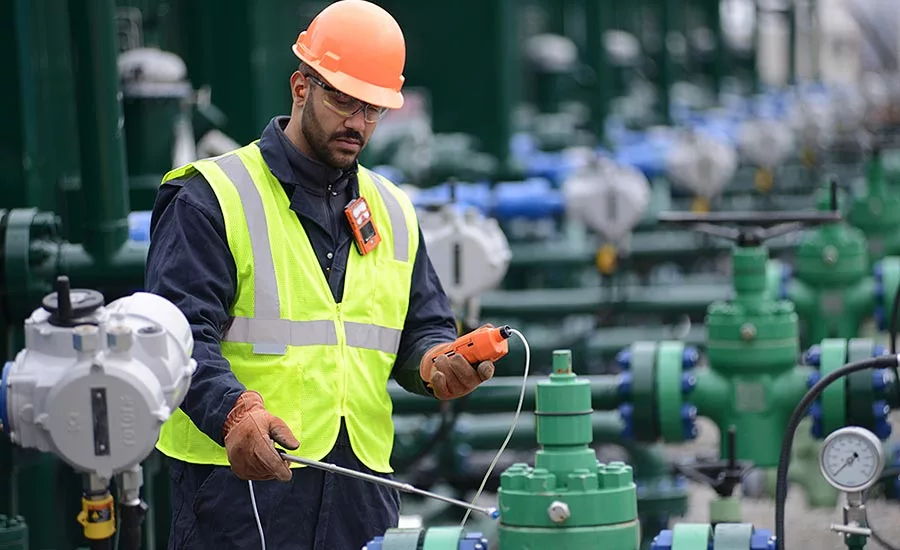
Time is money. It’s an old saying that we have heard a thousand times, but why is it so memorable? Perhaps because it’s true.
The problem with this maxim is that to save time, people often lose sight of safety. When it comes to safety, we all know how to wear our PPE (personal protective equipment) properly. But why is it that when we use gas detection equipment, only some use it correctly?
I’m not referring to the basics of meter operations like calibrating properly to certified gases, bump testing meters before we use them for the day, or even making sure the sensors are zeroed in fresh air. One mistake I frequently observe is users not allowing the sensors the appropriate time to accurately detect gas.
Fast-paced world
Part of the problem lies in this fast-paced, technology-driven world, where everyone has become accustomed to getting what they want right away. My kids can turn on a computer or tablet, speak to it, and two seconds later it’s playing whatever show they want to watch. They don’t believe me when I say we used to have to wait for the show we wanted to come on, and if we missed it, we couldn’t just rewind the TV.
We tend to forget that even though this gas detection device in our hand is an advanced piece of technology, it still needs time to react to what it is seeing. As much as we wish it were true, a gas detector is not an instantaneous reading machine.
As a safety trainer, I often see workers check a room for gases. In under a minute they will clear the 15x30-foot area, then move on to the next location. On some occasions, the instrument will go into alarm or display a reading a few seconds after the user has walked by the source. They stop and wait, but because the source was behind them, the gas diffuses out of the sensor and the monitor no longer shows a reading. The user simply assumes it was nothing and continues checking the room.
Gas readings take time
It takes time for sensors to fully respond to a gas reading. To explain why we need to wait, let’s look at the electrochemical sensors used to detect toxic gases. These sensors consist of a working electrode, a counter electrode and sometimes a reference electrode. Electrolyte connects the electrodes together electrically to create a circuit. When gas diffuses through the sensor’s polytetrafluoroethylene (PTFE) membrane and hits the working electrode, an electrochemical reaction occurs. During this reaction (either oxidation or reduction), the flow of electrons from one electrode to the other creates an electric current that is proportional to the concentration of gas. The instrument displays the output of this current according to its last calibration, which is how users get their gas readings.
So how long does it take for these sensors to respond to gas? We use a value that is called the T90 for these electrochemical sensors. T90 is the amount of time the sensor takes to reach 90 percent of the target gas concentration. So how long is the T90? There are a number of variables, but it mainly depends on the gas the sensor is meant to read and the manufacturer of the sensor. Some sensors have a T90 of 15 seconds, 17 seconds, and even 30 seconds. Because of this, some gas detector manufacturers have come up with a general T90 of 30 seconds overall. This covers all the sensors that are in a standard four-gas monitor.
A critical two minutes
An important thing to remember is that the T90 gives us 90 percent of the reading, not 100 percent. This is fine for checking pipes and machines for leaks or toxic gases from exhaust. If you take the meter and hold it around the pipe or machine for the duration of the T90 (30 seconds) and you get no discernable readings, it is safe to say there are no leaks in that spot. If you do get a reading while checking for a leak, then you will need to wait to get the full 100 percent reading from the sensor. This typically takes two minutes. At that point, the sensor electrolytes have become fully saturated with the target gas and will give the best possible reading.
One additional factor to consider is that regardless of the response time, when any of the alarm set points are met, the instrument will alarm because of the changing condition. I will use carbon monoxide (CO) as an example. The typical alarm set point for CO is 35ppm. If you walk into an area that has 35ppm of CO, in the first 30 seconds you might see approximately 30 to 31ppm of CO, not reaching the alarm point. In the next 30 to 60 seconds the sensor can reach its full potential and the instrument will alarm.
Another common misconception is that using an instrument with a pump will make the sensors respond faster. Unfortunately, it does not work that way. The pump draws the gas sample into the unit, but it does not make the sensors respond any faster.
The other caveat to using a pump is once you put tubing or a wand onto the instrument you now have increased the wait time for sensor responses. The gas sample has to travel from the end of the tube or wand to the sensors, which typically takes a specific amount of time. The amount of time this takes depends on the length of the tubing or wand and the strength of the pump motor. The T90 hasn’t changed, but the sensors are not being exposed to the gas until the pump delivers it to them. To find out how long you should wait with your pumped instrument, consult with the manufacturer of the unit.
As much as we want to get the job done quickly, we need to do it safely. This applies to a wide array of safety areas beyond gas detection and is important to all of them.
One of the best quotes I ever heard from a safety professional was, “Yes, time is money, but safety is priceless.”
If we can’t take the time required to get the correct reading with the gas detector, we are not doing it safely. If you take the time to do proper gas sampling, it could save someone’s life.
Looking for a reprint of this article?
From high-res PDFs to custom plaques, order your copy today!