ISHN logo
search
cart
facebook twitter linkedin youtube
  • Sign In
  • Create Account
  • Sign Out
  • My Account
ISHN logo
  • NEWS
    • Today's News
    • Global Safety News
    • Government Regulations
  • PRODUCTS
    • Product Innovations
    • Featured Products
  • TOPICS
    • Environmental Health and Safety
    • Facility Safety
    • Workplace Health
    • Occupational Safety
    • PPE
    • More Topics
  • CONSTRUCTION
  • TECHNOLOGY
  • COLUMNS
    • Best Practices
    • Dave Johnson: What’s going on
    • Editorial Comments
    • Leading Safety
  • MULTIMEDIA
    • ISHN Podcast
    • Videos
    • Cold Stress Education Quiz
    • Webinars
    • White Papers
  • MORE
    • Buyer's Guide
    • Newsletters
    • Convention Companion
    • Polls
    • Events
    • ISHN Store
    • Sponsor Insights
  • EMAGAZINE
    • eMagazine
    • Archived Issues
    • Contact
    • Advertise
  • JOIN TODAY!
Government Safety RegulationsEnvironmental Health and SafetyPPERisk Management

4 steps for building an AR/FR winter layering system

Start with the basics
By Scott Francis
AR (arc-rated)/FR (flame-resistant) PPE
December 6, 2018

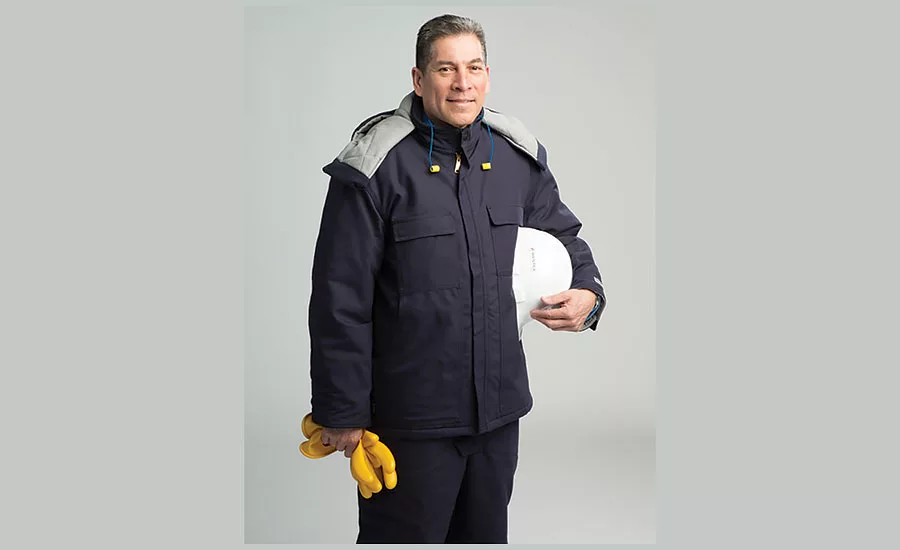
Creating a safe work environment is the sum total of many different parts. Elements such as personal protective equipment (PPE) and safety procedures must be viewed through the lens of environmental considerations to ensure workers are safe on a jobsite. With the onset of the winter season, keeping workers both warm and compliant becomes a crucial task for management — especially when accounting for arc flash and flash fire hazards.

A seemingly convoluted issue, layering AR (arc-rated)/FR (flame-resistant) PPE can cause confusion among even those well-versed in the space. Yet, it is possible to layer protective gear while also meeting the requirements outlined by consensus standards such as NFPA 2113 and NFPA 70E. As you layer to achieve warmth, consider these compliance elements when formulating an AR/FR winter weather system.

The foundation

A base layer is a critical component to achieving warmth; however, many popular, non-flame resistant base layers, consisting of manmade fibers such as acetate, nylon, polypropylene and spandex, pose a serious threat to overall arc flash or flash fire protection. These fibers, when exposed to extremely high temperatures of an arc flash or flash fire, will melt and cause serious damage to the wearer’s skin. Both NFPA 70E and NFPA 2113 address base layers. NFPA 2113 require undergarments or base layers to be made of flame resistant or non-melting fabric. NFPA 70E notes that natural — defined as flammable but non-melting — textiles may be used if appropriate arc-rated garments cover the non-FR base layers to prohibit ignition. Considering an AR/FR base layer work shirt meets this mandate, and provides added protection through additional arc-rated fabric layers and associated air gaps between clothing layers. 

Utilize performance fabrics

Adding breathable, moisture-wicking fabrics to a system will promote a comfortable wear experience. Given advancements in AR/FR fabric engineering, there are now blended fabrics that provide multi-hazard protection without sacrificing comfort. These innovative blends are helping to remove the constricted feel of stiff work clothing, which promotes worker mobility.

Lead with protection

Regardless of the type of base, or additional layers, you select, protection must be included in the outermost layer. Per NFPA 70E, only arc-rated fabric layers can contribute to the total clothing system arc rating, and NFPA 2113 requires the outermost layer of a system to be flame resistant. In the event of an arc flash or flash fire incident, non-FR outerwear could ignite and continue to burn once a thermal source is removed. Specifying an AR/FR outer garment will not only self-extinguish once a thermal source is removed but will also provide insulation from second- and third-degree body burns. 

Assess the system’s arc-rating compliance

Once you have compiled your layered system, you may need to determine the system’s total arc rating. If one of the layers of your system meets the incident energy or PPE Category protection needed, the system does not have to be tested. If, however, you rely on a combination of layers to achieve a higher level of protection, the system will need to be tested to confirm the total system arc rating. You cannot “add” the layers together — a Category 2 shirt and a Category 2 jacket does not translate to Category 4 protection, or an 8 cal/cm2 shirt and 12 cal/cm2 jacket does not necessarily translate to a 20 cal/cm2 total system arc rating. A system’s arc thermal performance value (ATPV) or an Energy Breakopen Threshold (EBT) is established by testing the complete system according to the ASTM F-1959 test method. If your layered combination has not been tested for a system arc rating, then the highest individual garment arc rating of the system is what should be used as the system arc rating per NFPA 70E. 

It is possible to meet the environmental demands of the winter months while also adhering to the standards governing your industry. Eliminating the need to prioritize compliance over comfort, managers and safety engineers are able to outfit their workers, even in winter, with protection in mind. 

KEYWORDS: arc flash protection flame resistant NFPA standards severe weather

Share This Story

Looking for a reprint of this article?
From high-res PDFs to custom plaques, order your copy today!

Scott Francis is the Technical Manager for Westex by Milliken. Involved in the safety industry for nearly 30 years, Scott has extensive knowledge of FR hazards, standards, fabrics and clothing. He has addressed end users, associations, and garment suppliers thousands of times regarding relevant safety topics.

Recommended Content

JOIN TODAY
to unlock your recommendations.

Already have an account? Sign In

  • forklift safety

    Exploring the latest technologies in forklift safety

    With more staff and more stock in warehousing now more...
    Facility Safety
    By: Josh Cramer
  • welding

    All about welder’s flash or arc eye

    A flash burn is a painful inflammation of the cornea,...
    Environmental Health and Safety
  • dangerous jobs

    The 10 most dangerous jobs in the U.S.

    On-the-job deaths have been rising — hitting the highest...
    Construction Industry Safety and Health
    By: Benita Mehta
Manage My Account
  • eMagazine Subscriptions
  • ISHN Newsletter & Other Newsletter Alerts
  • Online Registration
  • Manage My Preferences
  • Subscription Customer Service

More Videos

Sponsored Content

Sponsored Content is a special paid section where industry companies provide high quality, objective, non-commercial content around topics of interest to the ISHN audience. All Sponsored Content is supplied by the advertising company and any opinions expressed in this article are those of the author and not necessarily reflect the views of ISHN or its parent company, BNP Media. Interested in participating in our Sponsored Content section? Contact your local rep!

close
  • man wearing the the Sundström SR200 Full Face Mask Respirator
    Sponsored byOHD

    5 Fit Testing Mistakes That Could Cost You

  • This image shows Magid AcuSpex polarized blue mirrored safety glasses.
    Sponsored byMagid Glove and Safety

    Construction PPE Guide: What Crews Need for Each Task

  • lone worker in confined space
    Sponsored byAlphasense Ltd.

    GET THE LEAD OUT of your Safety Oxygen Sensors!

Popular Stories

SpaceX 7 launch

OSHA Investigating Fatal Fall at SpaceX Starbase

Automated loading dock equipment

After March 2026 Rivian Death, Safety Managers Reassess Loading Dock Systems Under OSHA's Warehouse Emphasis Program

psychology in the workplace

Most Workplaces Measure Psychological Safety, Ignoring Psychosocial Risks

top 10 most dangerous jobs

Poll

Seasonal Readiness

With the federal heat stress prevention rule on the horizon, which area of your safety program needs the most attention?
View Results Poll Archive

Products

Surviving an OSHA Audit A Management Guide, 2nd Edition

Surviving an OSHA Audit A Management Guide, 2nd Edition

See More Products

ISHN Podcasts

Related Articles

  • Training-JJ-Keller.jpg

    4 steps to an effective respiratory protection program

    See More
  • turnaround planning

    Building an OSHA-Ready Program Across Sites and Teams

    See More
  • Building an OSHA That Works

    See More

Related Products

See More Products
  • surviving.webp

    Surviving an OSHA Audit A Management Guide, 2nd Edition

  • industrial hy.jpg

    Industrial Hygiene: Improving Worker Health through an Operational Risk Approach

See More Products

Events

View AllSubmit An Event
  • March 24, 2026

    Building an OSHA-Ready Program Across Sites and Teams

    ON DEMAND: Whether you oversee multiple teams or multiple sites, you’ll leave with practical steps to improve consistency, visibility, and control across your OSHA compliance program.
View AllSubmit An Event

Related Directories

  • Bulwark FR

    When real lives are on the line and corporate reputations are at stake you can turn to Bulwark® Protection. We’re the PPE powerhouse that surrounds you completely. We balance the demand for FR and PPE that looks as good as it protects. We expand your knowledge in all directions with the latest information, advice and guidance.
×

Become a Leader in Safety Culture

Build your knowledge with ISHN, covering key safety, health and industrial hygiene news, products, and trends.

JOIN TODAY
  • RESOURCES
    • Advertise
    • Contact Us
    • Directories
    • Manufacturing Division
    • Store
    • Want More
  • SIGN UP TODAY
    • Create Account
    • eMagazine
    • Newsletters
    • Customer Service
    • Manage Preferences
  • SERVICES
    • Marketing Services
    • Reprints
    • Market Research
    • List Rental
    • Survey/Respondent Access
  • STAY CONNECTED
    • LinkedIn
    • Facebook
    • YouTube
    • X (Twitter)
  • PRIVACY
    • PRIVACY POLICY
    • TERMS & CONDITIONS
    • DO NOT SELL MY PERSONAL INFORMATION
    • PRIVACY REQUEST
    • ACCESSIBILITY

Copyright ©2026. All Rights Reserved BNP Media, Inc. and BNP Media II, LLC.

Design, CMS, Hosting & Web Development :: ePublishing