Better illumination benefits safety; reduces environmental footprints
Limits of legacy lighting
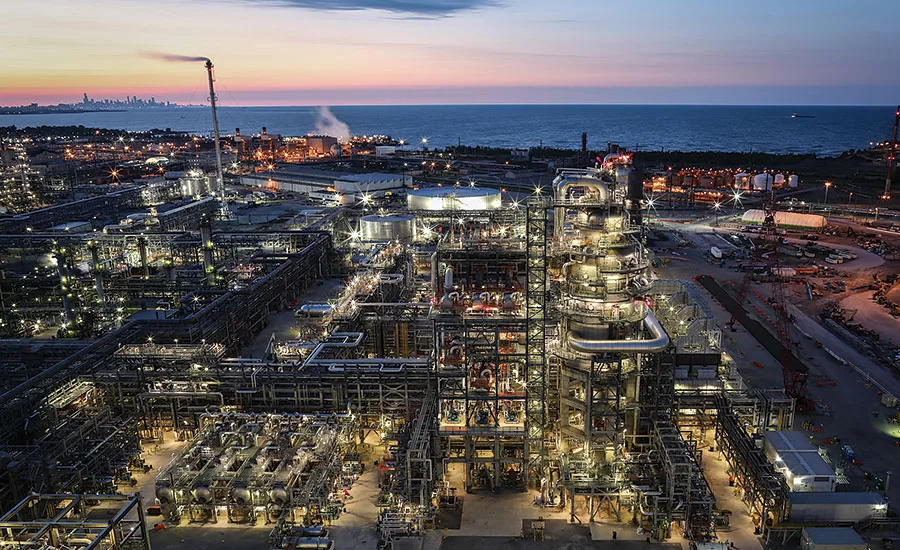
Over the past decade, Light Emitted Diode (LED) lighting has proven to be a simple, cost-saving method for businesses to reduce their long-term impact on the environment and promote a healthier, safer work environment for employees.
Despite this, it is estimated that 80-90 percent of the roughly 150 million lighting units installed in industrial facilities in the United States continue to rely on energy-inefficient High Intensity Discharge (HID) technology, specifically metal halide, mercury vapor and high-pressure sodium lighting.
LED luminaries create the same or better illumination as HID or fluorescent lighting with less than half of the energy cost, making their higher upfront cost recoupable within months. Industrial facilities that install LED luminaries also realize lower maintenance and repair expenses since LED lighting typically operates at full capacity for more than 60,000 hours, or in some cases, up to 100,000 hours.
Environmental & safety benefits
Alongside financial benefits, the environmental and safety case for LED luminaries is strong. Consider the following ways LEDs help businesses shrink their environmental footprints.
- LED lighting consumes significantly less power per lumen emitted than any other lighting source. LED lights are up to 80 percent more efficient than traditional lighting, with 95 percent of the energy in LEDs converted into light and only five percent wasted as heat.
Roughly 35 percent of the typical U.S. commercial building’s electricity usage is devoted to lighting. This takes a bite out of a company’s profits and out of the ozone layer. While LED performance varies based on the type of industrial space, it is not unusual for a facility to achieve savings of tens of thousands of dollars on their utility bill. - Less energy use translates into reduced demand from power plants and decreased greenhouse gas emissions. Greenhouse gases trap heat in the atmosphere, making the planet warmer and thickening the Earth's blanket. Greenhouse gases include carbon dioxide that enter the atmosphere through burning fossil fuels, Methane emitted during the production of coal, natural gas and oil, and nitrous oxide released in the combustion of fossil fuels and solid waste. Each of these gases can remain in the atmosphere for different amounts of time, ranging from a few years to thousands of years.
- No glass is used in the manufacturing of LEDs so there is nothing that can shatter and pose a health risk. This makes it a safer alternative to current lighting technologies not just from a personal point of view but also in retail, commercial and industrial applications. One example might be a supermarket with food preparation areas; a broken light could be a serious health risk.
- Risk assessment is another consideration from an employer’s point of view. Maintenance-free lighting means no one will be required to climb up and down ladders.
- No one is going to get electrocuted changing a lamp — LED is low voltage,.
- Food processing lighting has to be free from toxic chemicals that could contaminate the food processing area and, often, be free from glass that could contaminate food if the fixture was shattered.
- Fewer lights reduce energy consumption and benefit the environment. Fewer LED lights are needed to achieve the same level of brightness given off by fluorescents and incandescent lights. LEDs focus light in one direction as opposed to other types of lighting that waste energy by emitting light in all directions, often illuminating areas where light isn’t required
- LEDs give off very little heat. What heat is produced is dissipated by metal heat sinks that wick away the heat from the light source itself. Lowering the facility's temperature naturally reduces the power load on heat-sensitive systems, such as air conditioning and refrigeration. Adding dimming, sensors or smart controls to LED fixtures can also reduce energy usage, while extending service life. LEDs’ instant-on capability is especially energy saving in industrial settings where HID lights are left on to avoid their warm-up period.
- LED luminaries emit the least amount of carbon dioxide into the atmosphere of all lighting sources. For example, a simple incandescent bulb creates 4,500 pounds of CO2 annually, while LED bulbs create only 451 pounds of CO2 per year. Retrofitting HID fixtures with LED luminaries can have a huge environmental impact by reducing greenhouse gases.
Safety & sustainability
Retrofitting HID and other legacy lighting with high-efficiency industrial-grade LED lighting is a proven sustainability practice that delivers both bottom-line benefits and environmentally friendly operation with a relatively small investment.
For employees, LED lighting is safer since it puts off minimal glare and distributes light evenly so that shadows or dimly lit areas are eliminated. In workplaces where heavy machinery or dangerous equipment is used, such as warehouses, petrochemical plants, and factories, workers are exposed to additional danger if they are unable to clearly see all areas of their environment due to bad lighting.
Bad lighting also takes a toll on productivity. Ideal results are difficult to achieve if employees are constantly straining to see what they are doing or experiencing fatigue because of a poorly lit work environment. Some studies have gone so far as to suggest that dimly light work environments can negatively affect mental and emotional well-being. Using LED lights in the workplace can brighten the entire area and eliminate these problems.
Looking for a reprint of this article?
From high-res PDFs to custom plaques, order your copy today!