ISHN logo
search
cart
facebook twitter linkedin youtube
  • Sign In
  • Create Account
  • Sign Out
  • My Account
ISHN logo
  • NEWS
    • Today's News
    • Global Safety News
    • Government Regulations
  • PRODUCTS
    • Product Innovations
    • Featured Products
  • TOPICS
    • Environmental Health and Safety
    • Facility Safety
    • Workplace Health
    • Occupational Safety
    • PPE
    • More Topics
  • CONSTRUCTION
  • TECHNOLOGY
  • COLUMNS
    • Best Practices
    • Dave Johnson: What’s going on
    • Editorial Comments
    • Leading Safety
  • MULTIMEDIA
    • ISHN Podcast
    • Videos
    • Cold Stress Education Quiz
    • Webinars
    • White Papers
  • MORE
    • Buyer's Guide
    • Newsletters
    • Convention Companion
    • Polls
    • Events
    • ISHN Store
    • Sponsor Insights
  • EMAGAZINE
    • eMagazine
    • Archived Issues
    • Contact
    • Advertise
  • JOIN TODAY!

A NIOSH Science Blog post

Wholesale and retail trade fatal and nonfatal injuries and illnesses: 2006–2016

By Vern Putz Anderson PhD, CPE, Jeanette Novakovich PhD, Paul Schulte PhD
December 3, 2019

In 2010, the National Institute for Occupational Safety and Health (NIOSH) published a comprehensive overview of the 2006 Bureau of Labor Statistics (BLS) data on injuries, illnesses, and fatalities in the Wholesale and Retail Trade (WRT) sector. Recently, NIOSH researchers expanded on this study to include the ten years of BLS data that followed, for a richer, more complex view. The resulting article, “Wholesale and Retail Trade Sector Occupational Fatal and Nonfatal Injuries and Illnesses from 2006–2016: Implications for Intervention,” was recently published in the American Journal of Industrial Medicine. The study reports on the WRT injury and illness burden, examines the underlying changes in demographics that could be contributing to safety and health risks, and highlights WRT subsectors that merit intervention. The study’s aim is to determine what progress has been made over the eleven-year period and to identify areas for intervention.

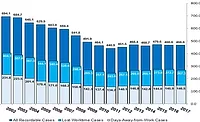
From 2006 through 2016, injury and illness rates declined overall for private industry, including the wholesale and retail trade sectors. For its size, the WRT workforce experienced a disproportionately 5% higher burden or share of serious work-related injuries and illnesses. WRT is one of the largest economic sectors in the United States – even a small increase in the burden affects large numbers of workers, their families, employers, and communities. Overexertion and bodily reaction, falls, and contact with objects contributed to more than 90% of the WRT injuries reported. In 2016, WRT nonfatal injuries cost employers more than $17 billion in workers’ compensation medical benefits and lost wages.

During this time, the fatality rate declined overall for private industry, including the retail sector. In contrast, the wholesale sector’s fatality rate increased. The average wholesale sector fatality rate (4.9/100000 FTE) exceeded the average private industry rate (3.8/100000 FTE) from 2006 through 2016. Transportation-related incidents were the leading cause of death in the wholesale sector. Assaults and violence were the leading cause of death in the retail sector.

Wholesale subsectors with elevated injury and illness rates included durable and nondurable goods, recycling materials, motor parts, lumber, metal and mineral, grocery, and alcohol merchants. Retail subsectors with elevated injury and illness rates included motor parts dealers, gasoline stations, nonstores  (sell merchandise outside of brick-and-mortar buildings), tire, home and garden centers, supermarkets, meat markets, warehouse clubs, pet stores, and fuel dealers.

For example, in 2016 the fatality rate for the wholesale subsector ‘recyclable materials’  was nearly seven times higher than the overall private industry rate. Of 17 deaths in this subsector, 7 were caused by transportation incidents and 6 were caused by contact with objects and equipment.

Two retail subsectors with high fatality rates are gasoline stations and convenience stores. In 2016, gasoline stations had the highest risk for fatal retail work injuries, nearly four times the rate in the retail sector overall. The very nature of the business makes it vulnerable to violence. The stores often are continuously open, have small staffs, and are in high-risk locations. Many of these establishments are small businesses with low profit margins. A single fatality or serious nonfatal injury or illness can threaten their existence.

The study also identified potential gaps in the available data that warrant further research. For example, the general decline in the number of cases reported to BLS of nonfatal injuries and illnesses might be a sign of underreporting. When BLS data are compared to other sources tracking work-related injuries and illnesses, large discrepancies appear.

Safety practitioners and employers should look more closely into the events and exposures that cause fatal and nonfatal injuries and illnesses and adopt proven strategies to eliminate or minimize these workplace hazards. The most practical approach would be for employers and safety practitioners to focus on their strengths and the resources available.

Late in 2018, Vern Anderson, the lead researcher of this study, retired. This article marks one of his final contributions to the field of occupational safety and health and to Wholesale and Retail Trade. Anderson hopes safety practitioners and researchers will find the direction they need to carry on his life’s work protecting U.S. workers.

Click here to visit this blog post on the NIOSH website and leave a comment.

References

  • Anderson (Putz) V, Schulte, PA, Novakovich J, Pfirman D, Bhattacharya, A [2019]. Wholesale and retail trade sector occupational fatal and nonfatal injuries and illnesses from 2006–2016: implications for intervention. Am J Ind Med. DOI: 10.1002/ajim.23063
  • Anderson (Putz) V, Schulte PA, Sestito J, Linn H, Nguyen LS [2010]. Occupational fatalities, injuries, illnesses, and related economic loss in the wholesale and retail trade sector. Am J Ind Med 53(7);673–685. doi: 10.1002/ajim.20813
KEYWORDS: illness injuries

Share This Story

Looking for a reprint of this article?
From high-res PDFs to custom plaques, order your copy today!

Vern Putz Anderson, PhD, CPE, recently retired as NIOSH Coordinator for the Wholesale and Retail Trade Sector program and guest researcher in the Division of Science Integration at NIOSH. Anderson hopes safety practitioners and researchers will find the direction they need to carry on his life’s work protecting U.S. workers.
Jeanette Novakovich, PhD, is a Writer-Editor in the NIOSH Division of Science Integration and is a resource for the NIOSH Wholesale and Retail Trade Sector Program.
Paul Schulte, PhD, is Director of the NIOSH Education and Information Division.

Recommended Content

JOIN TODAY
to unlock your recommendations.

Already have an account? Sign In

  • forklift safety

    Exploring the latest technologies in forklift safety

    With more staff and more stock in warehousing now more...
    Facility Safety
    By: Josh Cramer
  • welding

    All about welder’s flash or arc eye

    A flash burn is a painful inflammation of the cornea,...
    Environmental Health and Safety
  • dangerous jobs

    The 10 most dangerous jobs in the U.S.

    On-the-job deaths have been rising — hitting the highest...
    Construction Industry Safety and Health
    By: Benita Mehta
Manage My Account
  • eMagazine Subscriptions
  • ISHN Newsletter & Other Newsletter Alerts
  • Online Registration
  • Manage My Preferences
  • Subscription Customer Service

More Videos

Sponsored Content

Sponsored Content is a special paid section where industry companies provide high quality, objective, non-commercial content around topics of interest to the ISHN audience. All Sponsored Content is supplied by the advertising company and any opinions expressed in this article are those of the author and not necessarily reflect the views of ISHN or its parent company, BNP Media. Interested in participating in our Sponsored Content section? Contact your local rep!

close
  • man wearing the the Sundström SR200 Full Face Mask Respirator
    Sponsored byOHD

    5 Fit Testing Mistakes That Could Cost You

  • This image shows Magid AcuSpex polarized blue mirrored safety glasses.
    Sponsored byMagid Glove and Safety

    Construction PPE Guide: What Crews Need for Each Task

  • lone worker in confined space
    Sponsored byAlphasense Ltd.

    GET THE LEAD OUT of your Safety Oxygen Sensors!

Popular Stories

SpaceX 7 launch

OSHA Investigating Fatal Fall at SpaceX Starbase

Worker Impairment

How to Tell When a Co-Worker is Impaired? A Safety Pro’s Challenge

Automated loading dock equipment

After March 2026 Rivian Death, Safety Managers Reassess Loading Dock Systems Under OSHA's Warehouse Emphasis Program

top 10 most dangerous jobs

Poll

Seasonal Readiness

With the federal heat stress prevention rule on the horizon, which area of your safety program needs the most attention?
View Results Poll Archive

Products

Surviving an OSHA Audit A Management Guide, 2nd Edition

Surviving an OSHA Audit A Management Guide, 2nd Edition

See More Products

ISHN Podcasts

Related Articles

  • ladder

    Ladder safety in the wholesale and retail trade sector

    See More
  • This image depicts a safety officer or construction worker performing a workplace safety audit or inspection

    Workplace Safety News: OSHA Inspections Drop; Fatal and Nonfatal Injuries at Longtime Low

    See More
  • California injury rate

    California’s nonfatal worker injuries and illnesses stable

    See More

Related Directories

  • SAS Safety Corp.

    SAS Safety Corp. offers head-to-toe safety products and solutions for respiratory, hearing, eyes, hands, body, face, first-aid kits, absorbents, spill containment, and other crucial safety accessories. Our goal is to provide safety managers, wholesalers, and DIY’ers with simple solutions for determining safety needs and solutions.
×

Become a Leader in Safety Culture

Build your knowledge with ISHN, covering key safety, health and industrial hygiene news, products, and trends.

JOIN TODAY
  • RESOURCES
    • Advertise
    • Contact Us
    • Directories
    • Manufacturing Division
    • Store
    • Want More
  • SIGN UP TODAY
    • Create Account
    • eMagazine
    • Newsletters
    • Customer Service
    • Manage Preferences
  • SERVICES
    • Marketing Services
    • Reprints
    • Market Research
    • List Rental
    • Survey/Respondent Access
  • STAY CONNECTED
    • LinkedIn
    • Facebook
    • YouTube
    • X (Twitter)
  • PRIVACY
    • PRIVACY POLICY
    • TERMS & CONDITIONS
    • DO NOT SELL MY PERSONAL INFORMATION
    • PRIVACY REQUEST
    • ACCESSIBILITY

Copyright ©2026. All Rights Reserved BNP Media, Inc. and BNP Media II, LLC.

Design, CMS, Hosting & Web Development :: ePublishing