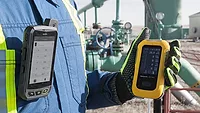
Connected worker technology can boost your gas detector safety program
Let’s face it: we are obsessed with our smart phones. We can’t live without them. We can’t leave home — or even the room — without them. When we misplace our phones, an utter panic sets in that’s only relieved when that little battery-powered, touchscreen-enabled thumb exerciser is back in our hands. Why? Because we have an overwhelming urge to be connected.
With such a strong desire to be connected, why don’t we feel this same need to be connected with safety equipment that can save our lives at work?
Even though we have embarked on the era of wireless gas detection and connected safety, people have been slow to adopt connectivity in a safety context. This is surprising given how easy it is to argue the benefits of being connected through a gas detector.
Gas detectors are great at what they do. They get your attention when hazardous gases are lurking. They tell you when it’s safe to keep working and when to evacuate. But what happens when something goes wrong, like a gas incident, a medical emergency, or an injury? How will you know that someone is incapacitated? How will you know where to send help? Manual check-in processes can tell you when a worker changes location and can reassure you every hour that they’re OK, but you and I both know that a lot can happen in an hour.
As a safety leader, these questions probably keep you up at night. After all, you can’t truly have your workers’ backs if you aren’t connected to them.
This is where connected safety comes in. Technology that connects gas detectors to cloud-based tools make it not only possible, but also easy to get the answers you need.
Gas detectors and PPE can help protect your workers, but connected safety delivers more. Connected safety technologies allow you to monitor worker and site safety in real time for instant visibility into hazards that can injure your employees and hurt your bottom line. You can use this information to not only respond fast in an emergency, but also to identify, resolve, and prevent safety issues in the future.
Here’s how to bring your gas detection program into the world of big data and sensors with connected safety.
To build a connected safety program, you need to have three distinct components: hardware, connectivity options, and management software.
Hardware and equipment
Every connected safety program starts with reliable hardware, in this case, gas detectors. Without the proper hardware and equipment in place, connected safety falls apart.
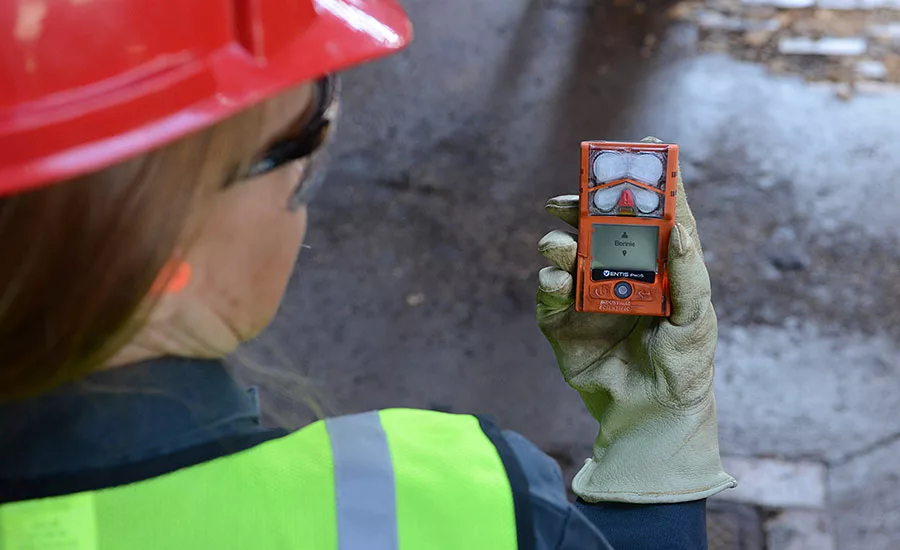
These connected devices monitor your workers and the environment around them to collect valuable data in real time. Depending on the environment, the hardware portion of a connected safety solution might include personal gas detectors, area monitors, or some combination of the two.
It’s no longer enough to have gas detectors alone. Your gas detectors must also share alarms and gas readings with nearby monitors and transmit real-time location and other valuable data to keep teams in contact.
Connectivity
To get the most from your connected safety program, you’ll need to consider your connectivity method. Look for a provider that offers wi-fi, cellular, satellite, and peer-to-peer networks so you have several options to fit your application and infrastructure.
Peer-to-peer networks, also known as mesh networks, are becoming a popular choice for industrial environments due to their reliability and minimal IT setup. Mesh networks ensure a fast and simple flow of information, even if one or more devices disconnect from the network. Peer-to-peer connectivity is a great option for local alarm sharing among workers.
Wi-fi, cellular, and satellite come into play when you want to transmit information from gas detectors on site to live monitoring software. The connectivity option that’s right for you depends on where and how you’ll use the gas monitors. Wi-fi connectivity is often a good option for in-plant monitoring, while a combination of cellular and satellite is ideal for connecting lone workers in remote locations. Cellular can be used in a number of different applications, but not all cellular devices are created equal. Make sure you choose devices with future-proof LTE-M technology so you’re not left in the cold as 3G networks shut down.
Live monitoring software
The first two components of a connected safety program ensure workers and teams are aware of gas hazards around them and are connected to the cloud and other workers, but live monitoring software is the key to giving you the site visibility you need.
When a hazard occurs, live monitoring software automatically alerts a central contact via text, email, or on-screen alerts with information on the type of alarm, who is in danger, their location, and more. With this type of visibility, you can take appropriate action in seconds instead of waiting days or weeks for an incident report.
This software can also alert you if gas detectors are shut off, when a worker has spent too much time in dangerous conditions, and even if instruments are used without being calibrated. All of this information allows you to take ownership of your gas detection program and improve your safety culture.
Connected safety devices like our gas detectors not only keep us safer, but they can make our work life easier and more productive in many ways. Let’s make this the decade where we use our obsession with connectivity for good. When we use connectivity appropriately, we can improve our workplaces—and even save lives.
Looking for a reprint of this article?
From high-res PDFs to custom plaques, order your copy today!