Cover Story
Safety and Industry 4.0: New technology drives upgraded visibility and more efficient safety measures
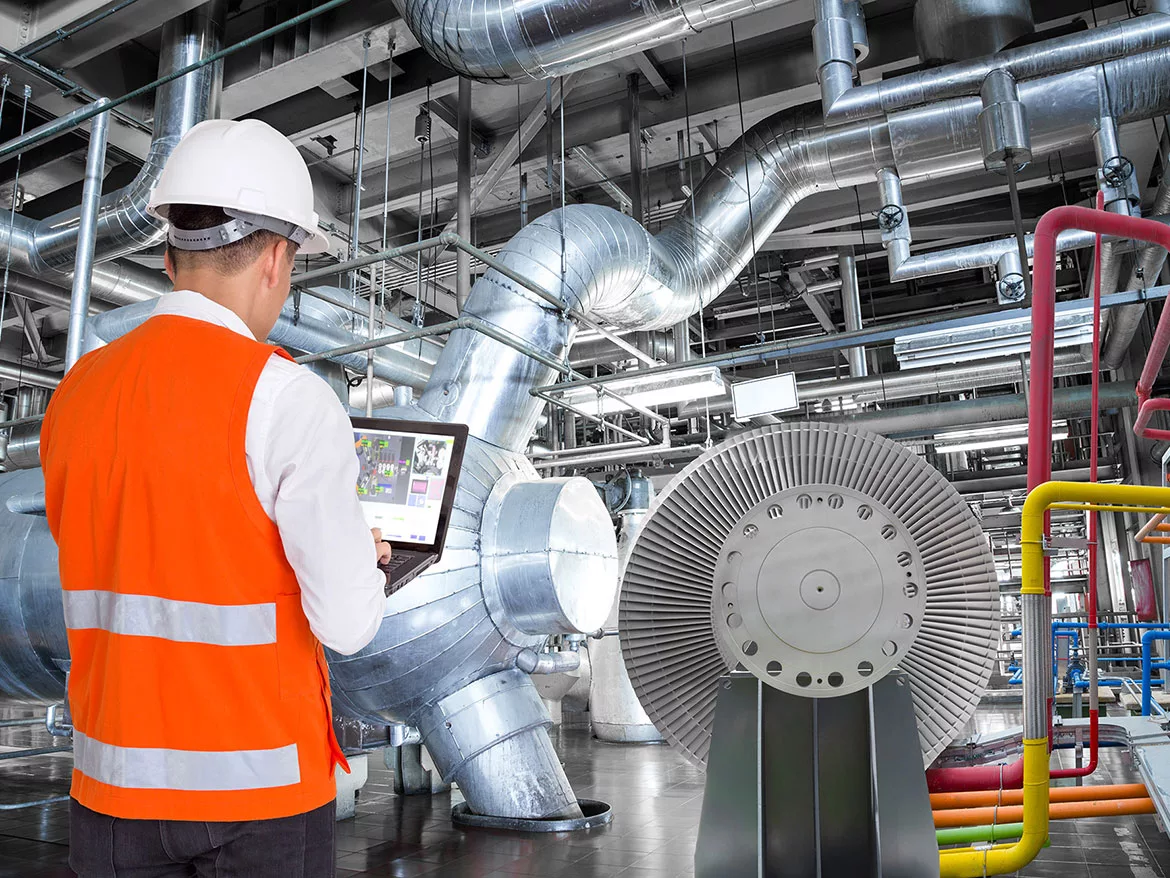
As the principles of the Fourth Industrial Revolutions, or Industry 4.0, become widely prevalent, leading industrial organizations are adopting a new generation of Environmental, Health and Safety (EHS) and plant safety solutions to drive employee health and safety initiatives and help ensure secure and sustainable operations.
Digital transformation of the industrial workforce is also driving greater efficiencies and ultimately will lead to a more prescriptive approach to plant and worker safety. It involves enhancing safety from many different aspects, from improving processes and workflows to strengthening the safety culture.
Growth of digitalization
In the current industrial operating environment, there is an increased focus on cutting-edge technologies such as connected devices, augmented and virtual reality tools, data analytics, machine learning and mobile applications that are all part of a digital transformation toolkit.
Numerous reasons exist for the acceleration of digitalization. Plant operators are dealing with a reduced workforce due to retiring employees, and today’s industry environment has created challenges around entry management and social distancing at almost all manufacturing facilities. As companies move from paper-based approaches to worker safety, which require time to complete, are less accurate and complicate reporting procedures, there is a transition to online pre-entry registration. This approach allows for scheduled facility entry and integrates real-time location tracking to assist with social distancing and contact tracing when workers are on site.
Digitalization is also helping the industrial workforce to stay compliant in terms of certifications, fatigue management and the use of valid Personal Protective Equipment (PPE). These measures further enable worker competence through training that leverages virtual reality so console operators, technicians and other personnel can experience a particular task prior to entering the site.
In addition, there has been a significant increase in the implementation of enterprise-wide EHS solutions. The objective is to protect the well-being of workers and the environment, ensure global compliance in the face of rapidly-evolving requirements, and advance sustainability and operational excellence.
Support for Industry 4.0
Industry 4.0 is extremely relevant and increasingly important to modern industrial facilities. It represents the next wave of technology driving efficiency across the plant or factory floor. However, businesses looking to roll out Industry 4.0-ready workflows must upgrade their plant and workforce safety practices as well.
In the age of the Industrial Internet of Things (IIoT), there is a close association between environmental, health and safety and field devices, portable safety devices and intelligent wearables —essentially the entire biometric feed into EHS software. But despite ongoing technology advancements, the underlying process behind reporting and documenting safety incidents and risks is still based on a top-down, historical approach in which manual spreadsheets and other paper forms remain prevalent.
A new level of Industry 4.0-driven integration, scalability and collaboration will enable plant operators to automate a host of manual safety processes, removing human error and automatically supplying crucial data for workflows to generate appropriate response to events on an instantaneous basis.
Putting technology to work
Leading technology providers have developed plant and workforce safety solutions designed to pair with Industry 4.0 initiatives, including intelligent wearables that allow industrial workers to more safely, reliably and efficiently accomplish their tasks. Likewise, automated incident workflow solutions enable plant operators to make safety decisions in a predictable and traceable way.
For example, a portable gas device might detect a gas release early in a worker’s shift. If the release is small enough, it’s likely the worker would continue with normal duties for the remainder of the day. Using a manual process, the worker would have to take time to write down notes and observations about the gas release at the end of the shift. This information might not be as complete and accurate as needed. With an integrated and automated safety solution, information about the gas release would go directly to control room operators for comparison with readings from fixed gas detectors. It would also be provided to EHS software to record the type of gas involved in the release, the level of exposure of the worker, and the time the event occurred. This process, in turn, automatically triggers an industrial hygiene workflow that reports the incident and provides recommendations on whether the worker should seek medical evaluation.
In parallel, the procedures around EHS would require that the gas release be documented as part of regulatory reporting. This process involves a similar comparison of information from fixed and portable safety devices, including details about the origin of the incident, the volume of gas released and the time of the event. With automated and collaborative safety tools, an environmental workflow is automatically triggered with all related information included in a report to EHS and plant and corporate management.
By taking the various data sources into a data analytics engine, plant operators can identify trends from process IIoT assets in order to implement a more predictive approach that reduces the likelihood of the same event happening in the future.
Similar advancements in automation and integration are taking place in the areas of compliance and competency management. Advanced technologies are helping industrial organizations ensure their workers have the right training and compliance to receive an electronic permit to work and perform their functions on the plant floor.
For instance, employees with hot works permits might be in a particular unit when a gas leak occurs. Integrated safety technology would enable early detection of the leak while automatically initiating a public address general alarm (PAGA) and pushing a notification to the electronic permit to work system—ensuring the suspension of all hot works permits until the release is cleared. This capability helps plant management make an informed decision about a possible unit evacuation, and thus minimize the consequences of an explosion or other catastrophic event.
In terms of workforce competency, new digitized tools support solutions such as worker assist or expert on call where remote guidance can be provided in real-time via headsets and video feed, by an experienced worker at an off-site location or isolated at home, to a less experienced on-task employee in the field.
Conclusion
There is now clear evidence that integration of plant and environmental, health and safety solutions is a valuable aspect of Industry 4.0 and initiatives related to industrial hygiene. The goal is to drive workforce efficiencies as opposed to reductions. New technology developments are creating a labor force of smart, connected workers while driving productivity and increasing safety across the plant floor.
Digitalization is also building greater levels of trust within industrial organizations and their processes, and among employees on site. This also encompasses to meet compliance and competency objectives across all levels of the plant workforce.
Looking for a reprint of this article?
From high-res PDFs to custom plaques, order your copy today!