Microlearning boosts retention, flexibility for employees, and cuts costs
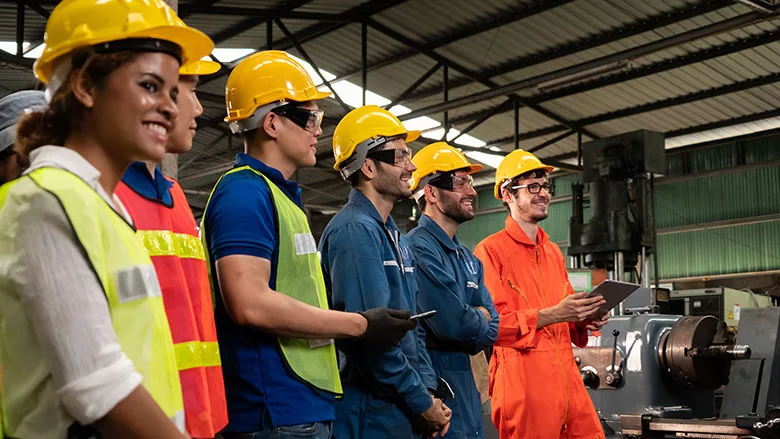
Photo credit: NanoStockk / iStock / Getty Image Plus
EHS training is often viewed as a tedious, sometimes exhausting process that managers and frontline people alike dread undertaking. It can be a challenge to ensure that workers engage with, absorb, and — most importantly — retain the important safety information that is being communicated to them. Yet, training is a critical part of your overall safety management program and plays a fundamental role in ensuring your people work safely and your organization remains compliant with a broad set of regulations, standards and policies.
So how can you improve learning retention even in the most intensive training sessions? While there are plenty of methods and tools available aimed at maximizing training effectiveness, the one currently gaining the most attention and making the greatest impact in the training space is microlearning. Following is a closer look at what microlearning is, and the benefits of integrating it into your EHS training program.
What is microlearning?
Microlearning is a training technique that breaks lessons down into smaller, bitesize components that make learning more convenient, less expensive and less disruptive for busy workers. Rather than having workers sit through hour-long courses or attend traditional training workshops held over a day or a week that cover a topic in its entirety, microlearning sessions are just a few minutes long and focus on one aspect of a topic. By shortening the focus and increasing the availability of training, workers can access microlearning courses on their own time and when it’s most convenient for them using their phone or other smart device. A series of microlearning modules can be used to replace or reinforce other training courses. Because they are brief and readily available, they can be re-accessed as needed to refresh the worker on the issue.
While the applicability and success of microlearning is primarily rooted in the growth of new technologies, it’s also driven by changing workforce demographics. Attention spans have shortened over the past several decades and people tend to forget new information faster. The need for internalized knowledge has reduced and, in some cases, been completely replaced by the ability to search and retrieve information online with greater accuracy and speed. Today’s workforce is now flooded with generations who grew up in the computer age and accustomed to getting their information online—and fast.
In addition to being brief, microlearning courses typically use rich media formats and video to engage and hold viewer attention. Many include learner interaction, such as a brief quiz or follow-up discussion, that further encourages lesson retention.
The benefits of microlearning
While we’ve already touched upon some of the benefits of microlearning, there are several significant advantages of implementing microlearning into your EHS training program, including:
- Boosts Knowledge Retention. When it comes to safety, nothing is more important than ensuring your workers understand and retain the information they receive through their training. The staggered approach to microlearning helps reinforce lesson recollection. By breaking up content, training materials are shorter, paced and not overwhelmed with new facts, making the information easier to understand and absorb. Trainees have more time to absorb what they learn instead of the information being buried under more facts. Additionally, the brevity of the courses makes it easier to revisit lessons as needed to refresh the worker on the issue.
- Increased Flexibility. Another significant benefit of microlearning is that it accommodates employee workdays and schedules. It isn’t always possible for workers in EHS fields to stop what they are doing to undergo training. Microlearning delivers short bursts of content for trainees to study at their convenience, on their own smartphone or tablet device.
- More Cost-Effective. Microlearning can be deployed for a lower cost and greater ROI than many traditional classroom-style training programs. For most companies, the expense of training is less related to the costs associated with the training itself, and more to the loss of time and productivity during in-person training sessions. Because microlearning allows employees to control when they take their training, they can do so at a time in their day when it won’t impact their productivity, ultimately resulting in a higher return to employers.
- Faster Delivery. Fewer things are more difficult than organizing in-person training across a large and busy workforce. Add to that multiple locations and the increase in more distributed workforces and the task becomes even harder. With the ability to assign specific training courses directly to the employees who need it, microlearning makes it faster and easier to meet your training requirements.
How to implement microlearning into your EHS training program
The above benefits showcase how effective microlearning can be for EHS training. But how can organizations create and implement this method successfully?
A dynamic learning and management system (LMS) with intuitive microlearning courses helps support the long-term success of your EHS training program. With an LMS, your people have access to an extensive library of pre-built online training courses available in languages they understand. The best LMS options offer versatile tools that allow you to instantly convert your existing content into interactive microlearning course complete with multimedia, quizzes and knowledge-checks.
While OSHA hasn’t specifically addressed the use of microlearning in safety training, its Resource for Development and Delivery of Training to Workers guide states that organizations should account for different employee demographics and learning styles when selecting a training delivery method. Microlearning is most successful in organizations with employees already adept to using technology in other areas of its EHS management program.
Effective microlearning courses should offer information independently of other information and not rely on any previous knowledge that the employee may or may not have. To fulfill training requirements that require more than 3-5 minutes of information—like those included in many OSHA regulations-microlearning lessons should be organized into a larger curriculum.
Another key element of training success is comprehensive program management. A centralized cloud software solution that combines interactive EHS training content, powerful training management tools, and advanced tracking and reporting features simplify training compliance and maximize your training program performance. The best solutions help you standardize training performance by identifying training requirements and sending automated in-app user notifications that keep learners more engaged and connected with your training program. Training management software also helps you more accurately visualize training program performance and quickly generate training records and reports.
Taking the leap
Change can be hard for employees, but the right change—like those that improve antiquated tasks—will be welcomed by a workforce eager to evolve. By making training easier to complete, keeping employees more engaged and improving knowledge retention, microlearning addresses the three greatest training challenges facing companies today. For more efficient and effective training, microlearning delivers a convenient and productive way to ensure your workers have the knowledge they need to do their jobs safely.
Looking for a reprint of this article?
From high-res PDFs to custom plaques, order your copy today!


