ISHN logo
search
cart
facebook twitter linkedin youtube
  • Sign In
  • Create Account
  • Sign Out
  • My Account
ISHN logo
  • NEWS
    • Today's News
    • Global Safety News
    • Government Regulations
  • PRODUCTS
    • Product Innovations
    • Featured Products
  • TOPICS
    • Environmental Health and Safety
    • Facility Safety
    • Workplace Health
    • Occupational Safety
    • PPE
    • More Topics
  • CONSTRUCTION
  • TECHNOLOGY
  • COLUMNS
    • Best Practices
    • Dave Johnson: What’s going on
    • Editorial Comments
    • Leading Safety
  • MULTIMEDIA
    • ISHN Podcast
    • Videos
    • Cold Stress Education Quiz
    • Webinars
    • White Papers
  • MORE
    • Buyer's Guide
    • Newsletters
    • Convention Companion
    • Polls
    • Events
    • ISHN Store
    • Sponsor Insights
  • EMAGAZINE
    • eMagazine
    • Archived Issues
    • Contact
    • Advertise
  • JOIN TODAY!
Environmental Health and SafetyFacility SafetyIndustrial HygieneWorkplace Health

A closer look at the dangers of welder’s anthrax
By Rick Pedley
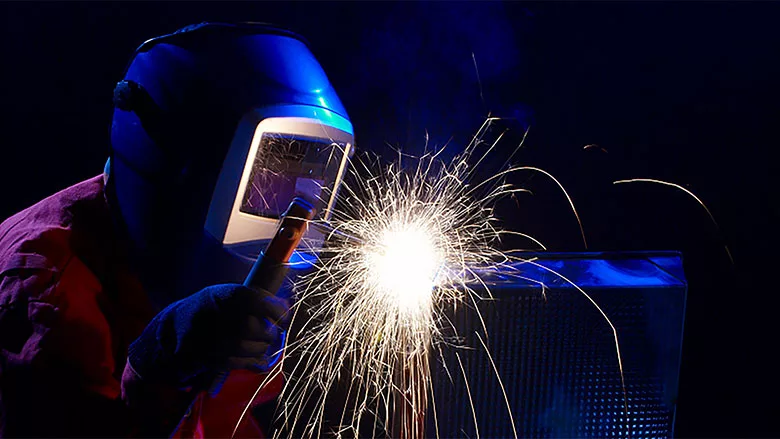
Welder’s anthrax

Photo credit: PK Safety

April 27, 2023

Welder’s anthrax is a relatively new occupational hazard identified by researchers at the Centers for Disease Control and Prevention’s (CDC) National Institute for Occupational Safety and Health (NIOSH). It’s a special case of pneumonia mainly affecting metal workers, including welders. When metals are burned or broken down into fumes, they can release hazardous particulate matter into the air and bacteria within the B. cereus group, the same one that produces the anthrax toxin. This is how the disease got its name. Medical professionals are still unsure how metal particles can cause disease, but employers are encouraged to take precautions to limit exposure.

Employee training

The crew should start by educating workers on the dangers of welder’s anthrax and how it can potentially spread. Initial symptoms include fever or chills, cough, shortness of breath (dyspnea), and coughing up blood (hemoptysis). Everyone working with or near metal should have access to the proper safety equipment and be fully trained on how to perform the task at hand safely. 

Substitution and prevention

If there are metal particles being released into the air, the team should do its best to remove the hazard from the space by increasing ventilation, substituting equipment, or altering the type of tasks being performed on the work site. Removing the hazard may not be an option when workers are welding and working with metal. Workers can wear personal protective equipment (PPE), such as welding helmets and welding respirator masks, that cover the nose and mouth to block the spread and inhalation of contaminants while welding and working with metal. Fumes produced by welding of iron or steel can often be blocked by wearing a N95 respirator. A N100 mask provides the highest-rated protection by NIOSH filter efficiency. Depending on the welding being done and your environment, a Power Air Purifying Respirator (PAPR) respirator or airline respirator may be more suitable. 

Individuals using this equipment must be fully trained on how to inspect and wear it properly. The equipment must be checked at the beginning of each shift. If the mask appears worn, cracked, or frayed in any area, it should be removed for rotation until it can be repaired or replaced. There should be a clean seal between the mask and the worker’s face, to block out these hazardous contaminants. 

No one should be near the hazard unless it's absolutely essential for their work. Access to any environment in which metal shavings or debris are being released into the air should be limited to reduce exposure. Employers may want to set up barriers or access controls to prevent unauthorized individuals from entering the space. 

The crew can also use engineering controls to increase the distance between the workers and the hazard. Airtight barriers and enclosures can help limit the spread of metal particles. They team and also use a vacuum and regularly clean the worksite to remove as much debris from the air and area as possible. Avoid using compressed air or fans near the worksite, as this will only spread the particles around the space.

Welder’s anthrax is a serious health risk for anyone cutting or working with metals. Harmful debris can float through the air and cause devastating health effects that can potentially be fatal. Employers can use this information to keep their workers safe from disease. 


KEYWORDS: metalworkers Respiratory Protection welding safety workplace hazards

Share This Story

Looking for a reprint of this article?
From high-res PDFs to custom plaques, order your copy today!

Rick Pedley, PK Safety’s President and CEO, joined the family business in 1979. PK Safety, a supplier of occupational safety and personal protective equipment, has been operating since 1947 and takes OSHA, ANSI, PPE and CSA work safety equipment seriously. Visit pksafety.com.

Recommended Content

JOIN TODAY
to unlock your recommendations.

Already have an account? Sign In

  • forklift safety

    Exploring the latest technologies in forklift safety

    With more staff and more stock in warehousing now more...
    Workplace Training Strategies
    By: Josh Cramer
  • welding

    All about welder’s flash or arc eye

    A flash burn is a painful inflammation of the cornea,...
    Environmental Health and Safety
  • dangerous jobs

    The 10 most dangerous jobs in the U.S.

    On-the-job deaths have been rising — hitting the highest...
    Construction Industry Safety and Health
    By: Benita Mehta
Manage My Account
  • eMagazine Subscriptions
  • ISHN Newsletter & Other Newsletter Alerts
  • Online Registration
  • Manage My Preferences
  • Subscription Customer Service

More Videos

Sponsored Content

Sponsored Content is a special paid section where industry companies provide high quality, objective, non-commercial content around topics of interest to the ISHN audience. All Sponsored Content is supplied by the advertising company and any opinions expressed in this article are those of the author and not necessarily reflect the views of ISHN or its parent company, BNP Media. Interested in participating in our Sponsored Content section? Contact your local rep!

close
  • man wearing the the Sundström SR200 Full Face Mask Respirator
    Sponsored byOHD

    5 Fit Testing Mistakes That Could Cost You

  • This image shows Magid AcuSpex polarized blue mirrored safety glasses.
    Sponsored byMagid Glove and Safety

    Construction PPE Guide: What Crews Need for Each Task

  • lone worker in confined space
    Sponsored byAlphasense Ltd.

    GET THE LEAD OUT of your Safety Oxygen Sensors!

Popular Stories

SpaceX 7 launch

OSHA Investigating Fatal Fall at SpaceX Starbase

Automated loading dock equipment

After March 2026 Rivian Death, Safety Managers Reassess Loading Dock Systems Under OSHA's Warehouse Emphasis Program

psychology in the workplace

Most Workplaces Measure Psychological Safety, Ignoring Psychosocial Risks

top 10 most dangerous jobs

Poll

Seasonal Readiness

With the federal heat stress prevention rule on the horizon, which area of your safety program needs the most attention?
View Results Poll Archive

Products

Surviving an OSHA Audit A Management Guide, 2nd Edition

Surviving an OSHA Audit A Management Guide, 2nd Edition

See More Products

ISHN Podcasts

Related Articles

  • A closer look at NIOSH’s Ladder Safety app for mobile devices

    See More
  • A closer look at e-learning

    See More
  • A closer look at OSHA recordkeeping rules

    See More

Related Products

See More Products
  • 1119906652.webp

    Alive and Well at the End of the Day: The Supervisor's Guide to Managing Safety in Operations, 2E

See More Products

Related Directories

  • MSA - The Safety Co.

    WE KNOW WHAT'S AT STAKE. Unpredictable work environments are often part of the job. That's why it's critically important to have the right safety equipment at the moment it matters most. MSA's complete lines of safety solutions help protect those workers at the heart of your operation.
×

Become a Leader in Safety Culture

Build your knowledge with ISHN, covering key safety, health and industrial hygiene news, products, and trends.

JOIN TODAY
  • RESOURCES
    • Advertise
    • Contact Us
    • Directories
    • Manufacturing Division
    • Store
    • Want More
  • SIGN UP TODAY
    • Create Account
    • eMagazine
    • Newsletters
    • Customer Service
    • Manage Preferences
  • SERVICES
    • Marketing Services
    • Reprints
    • Market Research
    • List Rental
    • Survey/Respondent Access
  • STAY CONNECTED
    • LinkedIn
    • Facebook
    • YouTube
    • X (Twitter)
  • PRIVACY
    • PRIVACY POLICY
    • TERMS & CONDITIONS
    • DO NOT SELL MY PERSONAL INFORMATION
    • PRIVACY REQUEST
    • ACCESSIBILITY

Copyright ©2026. All Rights Reserved BNP Media, Inc. and BNP Media II, LLC.

Design, CMS, Hosting & Web Development :: ePublishing