ISHN logo
search
cart
facebook twitter linkedin youtube
  • Sign In
  • Create Account
  • Sign Out
  • My Account
ISHN logo
  • NEWS
    • Today's News
    • Global Safety News
    • Government Regulations
  • PRODUCTS
    • Product Innovations
    • Featured Products
  • TOPICS
    • Environmental Health and Safety
    • Facility Safety
    • Workplace Health
    • Occupational Safety
    • PPE
    • More Topics
  • CONSTRUCTION
  • TECHNOLOGY
  • COLUMNS
    • Best Practices
    • Dave Johnson: What’s going on
    • Editorial Comments
    • Leading Safety
  • MULTIMEDIA
    • ISHN Podcast
    • Videos
    • Cold Stress Education Quiz
    • Webinars
    • White Papers
  • MORE
    • Buyer's Guide
    • Newsletters
    • Convention Companion
    • Polls
    • Events
    • ISHN Store
    • Sponsor Insights
  • EMAGAZINE
    • eMagazine
    • Archived Issues
    • Contact
    • Advertise
  • JOIN TODAY!
Environmental Health and SafetyPPEWorkplace Training Strategies

Cover Feature

Understanding suspension trauma

A properly worn safety harness may result in death, even after rescue
By Robin Marth, CSP
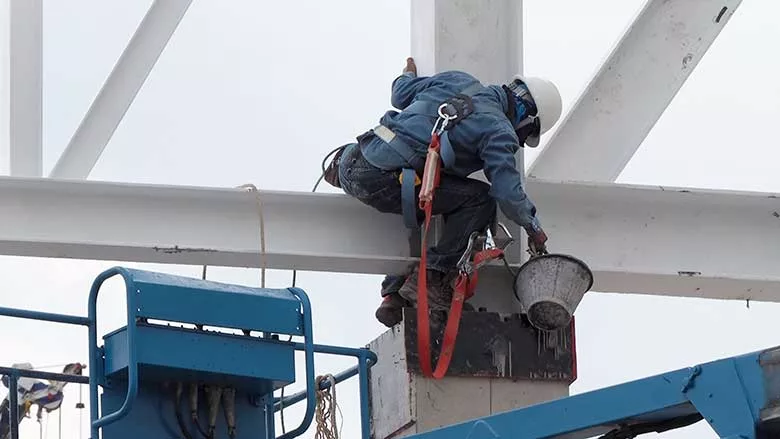
A worker working at heights

Getty Images 

August 18, 2023

A fall can occur in a split second without any time for the worker to react. But even when wearing the right fall protection equipment, a fall can still end in tragedy. Employers must train workers to recognize the signs and symptoms of orthostatic intolerance, also known as suspension trauma, and plan accordingly. 

Quick response is key

Call 9-1-1 immediately upon knowing that a worker suffered a fall. Every second a worker remains hanging in suspension increases the risk of suspension trauma. Blood can begin to accumulate in the legs due to the pressure of the safety harness leg straps on the veins. After only five minutes, a suspended worker may begin to show symptoms such as light-headedness, heart palpitations, involuntary muscle contractions, poor concentration, fatigue, nausea, dizziness, headache, sweating, and weakness. 

Any suspension lasting longer than thirty minutes may put the worker at an increased risk of suffering a serious or fatal injury, as the brain, kidneys, and other organs are deprived of oxygen and begin to shut down. Venous pooling and suspension trauma can be exacerbated by other factors that include:

  • Inability to move the legs,
  • Pain and injuries during the fall,
  • Fatigue and dehydration,
  • Hypothermia and shock,
  • Cardiovascular and/or respiratory disease, and
  • Blood loss.

Rescuers must recognize that moving a victim to a horizontal position too quickly could cause post-rescue death. Moving a worker too quickly to the ground could allow a large amount of used, deoxygenated blood to go to the heart, leading to cardiac arrest. Rescuers need to be knowledgeable of first aid techniques to avoid suspension trauma. 

Training workers

Employers must train their workers to use fall arrest systems and other personal protective equipment (PPE) in accordance with 29 CFR 1910 Subpart I and 29 CFR 1926 Subpart M. 

Workers that may be asked to perform rescue activities (including self-rescue) should be trained in:

  • How to determine whether their PPE fits properly and will perform as intended;
  • How suspension trauma may occur;
  • How certain factors may increase a worker’s risk;
  • How to recognize the signs and symptoms of suspension trauma; and
  • How to implement rescue procedures to diminish risk while suspended.

Initiating a rescue plan

A rescue plan will provide guidelines for responding to falls from heights. Several standards require that employers provide for prompt rescue of employees in the event of a fall, including:

  • 29 CFR 1910.140(c)(21) - The employer must provide for prompt rescue of each employee in the event of a fall.
  • 29 CFR 1926.502(d)(20) - The employer must provide for prompt rescue of employees in the event of a fall or must assure that employees are able to rescue themselves.
  • ANSI A92.22, Ch. 6.1.2.6.3 – The employer must have a rescue plan for employees working at height on a Mobile Elevating Work Platform.
  • ANSI Z359.2, Ch. 8.3.1 - The employer must include rescue procedures as part of their fall protection program.

Some employers rely on their local fire department or emergency service provider as their sole fall rescue resource. While this can be an option, employers still need to plan and evaluate response times, accessibility, and rescue equipment available. A well thought out plan will describe how to perform rescue under specific locations or circumstances. The plan can address:

  • Self-rescue,
  • Assisted rescue, or
  • Professional/technical rescue.

Self-rescue

When a worker who fell can climb to an adjacent structure or platform, this is a form of self-rescue. Other options may include using an automatic or user controlled descent system (e.g., self-rescue pack or rescue ladder) to allow the worker to control their own descent. 

Often misunderstood, suspension trauma straps are not a form of self-rescue, but a means of delaying the negative effects of venous pooling in the legs while awaiting rescue. Pumping of the legs can also alleviate pressure, provide support, and delay symptoms. 

Assisted rescue

When the worker must be rescued by others, the rescuer will use a controlled rescue/descent device allowing for fully automatic controlled descent. Another option includes a rescue pole of varying lengths designed to be used with a rope utility system. For low- and high-angle rescue, and the ability to lift horizontally or vertically, a rescuer may use a rescue stretcher or basket in a variety of applications. Also, a halfback extrication/lift harness can be used for quick extraction of a victim with upper body injuries requiring spinal immobilization. 

Professional/technical rescue

When a worker is unable to self-rescue, and any trained in-house workers are unable to perform an assisted rescue, an outside agency (e.g., fire department) is summoned to perform the rescue. It is imperative the employer contact the outside agency in advance to perform a worksite review and understand the agency’s rescue capabilities. 

Working at heights poses a risk to every industry. In 2021, the Bureau of Labor Statistics reported 825 fatal occupational injuries in the United States due to falls on the same or to a lower level. While an effectively used personal fall arrest system may initially prevent another devastating fatality, employers must develop a well thought out plan for how to rescue a worker after a fall. Rescue options should include self-rescue, assisted rescue, and professional (or technical) rescue from an outside source. Misunderstood and often overlooked, the rescue plan should also emphasize the dangers of and how to respond to suspension trauma.


KEYWORDS: Fall Protection safety harnesses working at heights

Share This Story

Looking for a reprint of this article?
From high-res PDFs to custom plaques, order your copy today!

Robin Marth, CSP joined J. J. Keller & Associates, Inc. as an Editor on the Environmental, Health & Safety Publishing Team. She is an experienced EHS Specialist with a history of working in the consulting and manufacturing industry. Robin’s professional skill set includes Workplace Safety Administration, Ergonomics, Environmental Management, and Fleet Safety.

Recommended Content

JOIN TODAY
to unlock your recommendations.

Already have an account? Sign In

  • forklift safety

    Exploring the latest technologies in forklift safety

    With more staff and more stock in warehousing now more...
    Facility Safety
    By: Josh Cramer
  • welding

    All about welder’s flash or arc eye

    A flash burn is a painful inflammation of the cornea,...
    Environmental Health and Safety
  • dangerous jobs

    The 10 most dangerous jobs in the U.S.

    On-the-job deaths have been rising — hitting the highest...
    Construction Industry Safety and Health
    By: Benita Mehta
Manage My Account
  • eMagazine Subscriptions
  • ISHN Newsletter & Other Newsletter Alerts
  • Online Registration
  • Manage My Preferences
  • Subscription Customer Service

More Videos

Sponsored Content

Sponsored Content is a special paid section where industry companies provide high quality, objective, non-commercial content around topics of interest to the ISHN audience. All Sponsored Content is supplied by the advertising company and any opinions expressed in this article are those of the author and not necessarily reflect the views of ISHN or its parent company, BNP Media. Interested in participating in our Sponsored Content section? Contact your local rep!

close
  • man wearing the the Sundström SR200 Full Face Mask Respirator
    Sponsored byOHD

    5 Fit Testing Mistakes That Could Cost You

  • This image shows Magid AcuSpex polarized blue mirrored safety glasses.
    Sponsored byMagid Glove and Safety

    Construction PPE Guide: What Crews Need for Each Task

  • lone worker in confined space
    Sponsored byAlphasense Ltd.

    GET THE LEAD OUT of your Safety Oxygen Sensors!

Popular Stories

SpaceX 7 launch

OSHA Investigating Fatal Fall at SpaceX Starbase

Automated loading dock equipment

After March 2026 Rivian Death, Safety Managers Reassess Loading Dock Systems Under OSHA's Warehouse Emphasis Program

psychology in the workplace

Most Workplaces Measure Psychological Safety, Ignoring Psychosocial Risks

top 10 most dangerous jobs

Poll

Seasonal Readiness

With the federal heat stress prevention rule on the horizon, which area of your safety program needs the most attention?
View Results Poll Archive

Products

Surviving an OSHA Audit A Management Guide, 2nd Edition

Surviving an OSHA Audit A Management Guide, 2nd Edition

See More Products

ISHN Podcasts

Related Articles

  • Suspension Trauma Strap

    See More
  • Suspension Trauma Relief

    See More
  • SUSPENSION TRAUMA RELIEF

    See More

Related Products

See More Products
  • A Basic Guide to RCRA—Understanding Solid and Hazardous Waste Management, Second Edition

  • 1119010160.jpg

    Guidelines for Combustible Dust Hazard Analysis

See More Products

Related Directories

  • Grace Industries

    How Do You Protect Your Lone Workers? Working at Heights? Check out our new WorkForce product line - Fall Detection with Immediate Notification – Prevent Suspension Trauma. Fixed Facility – No Monthly Fees. Working in the field? Check out Grace Connected Safety – Cellular and Satellite Cloud Connect
  • PK Safety

    After 75+ years in the safety business, we understand the importance of staying safe in your work and home environments. We’ve vetted thousands of safety equipment and products including gas detectors, confined space gear, fall protection and respirators. We are also a Factory Authorized Service Center for gas monitors with factory trained certified technicians in house.
×

Become a Leader in Safety Culture

Build your knowledge with ISHN, covering key safety, health and industrial hygiene news, products, and trends.

JOIN TODAY
  • RESOURCES
    • Advertise
    • Contact Us
    • Directories
    • Manufacturing Division
    • Store
    • Want More
  • SIGN UP TODAY
    • Create Account
    • eMagazine
    • Newsletters
    • Customer Service
    • Manage Preferences
  • SERVICES
    • Marketing Services
    • Reprints
    • Market Research
    • List Rental
    • Survey/Respondent Access
  • STAY CONNECTED
    • LinkedIn
    • Facebook
    • YouTube
    • X (Twitter)
  • PRIVACY
    • PRIVACY POLICY
    • TERMS & CONDITIONS
    • DO NOT SELL MY PERSONAL INFORMATION
    • PRIVACY REQUEST
    • ACCESSIBILITY

Copyright ©2026. All Rights Reserved BNP Media, Inc. and BNP Media II, LLC.

Design, CMS, Hosting & Web Development :: ePublishing