Summer weather can elevate injury risk
It’s time to re-evaluate your fall protection program
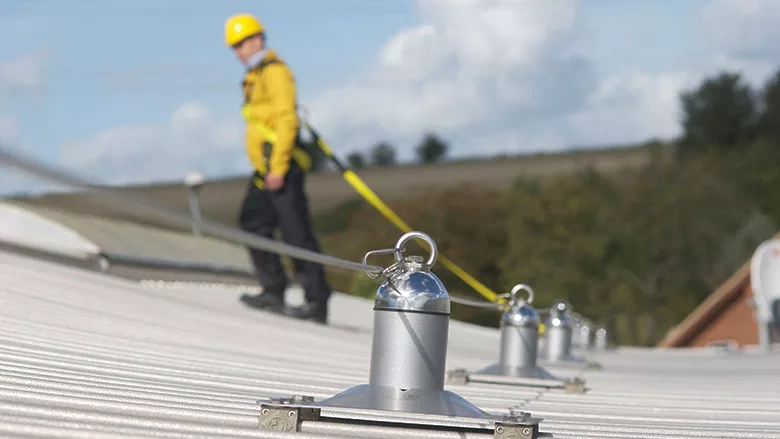
Photo credit: Diversified Fall Protection
Summer is a season welcomed by almost everyone. Warmer weather provides more hours of sunlight to increase job-site productivity, less precipitation to hinder outdoor work operations and a boost in morale amongst workers. Unfortunately, the US Bureau of Labor Statistics (BLS) reports that most occupational injuries occur during the months of June, July and August. While the exact reasons for that increase are difficult to determine, it is important to remain vigilant to ensure equipment is being properly used and workers are properly trained to ensure their safety. This article will discuss various aspects to increase awareness of the elevated risk of injury during summer and ensure your workers are as safe in the summer months as any other month.
Safety equipment maintenance during summer
Proper maintenance of safety equipment, such as fall protection equipment, is important regardless of the time of year, but warmer weather can exacerbate the need to protect against ultraviolet (UV) damage. Increased exposure to UV rays can greatly damage the webbing on body harnesses. It is important that when a worker is not wearing their body harness, they must be stored out of direct sunlight, and it is preferred to be stored in a cool, dry environment. Overexposure to UV rays can lead to harness webbing becoming brittle and losing its elasticity. Harnesses can stretch up to 18in during fall arrest and if the integrity of the harnesses is compromised, its performance during fall arrest can also be compromised. During pre-use inspections, workers should take the time to feel their harness webbing with their bare hands to verify it still has a smooth, sheen feeling. Discolored or faded webbing or rough, scratchy texture can be signs of UV damage.
While most workers pride themselves on “breaking a sweat” during a long day’s work, increased perspiration is almost guaranteed while hearing a body harness in the summer heat. Many employers provide harnesses with soft, thick padding because it adds comfortability and typically promotes better ergonomics while working at heights. However, these thick pads can increase perspiration and cause discomfort while working in warmer weather. When workers are uncomfortable in their harness, their likelihood to loosen or remove the harness increases. And if that happens, they could be exposed to unnecessary fall hazards. EHS managers and those in safety leadership positions should ask their crews for feedback on their equipment as the seasons change. This can prevent accidental misuse of equipment and remind workers that they must wear their harnesses 100% of the time while working at heights. Some newer fall protection harnesses on the market have removable pads that workers can don/doff if they become uncomfortable or need to be removed for washing/cleaning.
Increase of temporary workers during summer
OSHA requires employers to properly train employees on fall protection hazards & equipment and designate “authorized users” before they can use fall protection equipment. If the employer feels that there is a gap in knowledge or understanding of the material, OSHA requires retraining to occur. When companies hire seasonal or temporary employees during the summer months, they should ensure new workers retain sufficient understanding of fall protection knowledge and the organization’s safety policies. It is often said that a job site is only as safe as the least-trained worker. Workers who struggle to comply with corporate safety policies or do not adhere to industry best-practices can become a danger to themselves and those who work around them.
Increased productivity demands must still make time for training
With increased daylight & the potential of working hours, many job sites increase their demand for productivity in the summer. However, it has been found that safer workers are also more productive in the long run. Safer workers will typically lead to fewer injuries occurring and fewer injuries can equate to less downtime on the job site. Additionally, an increase in exposing workers to regular, consistent safety training will increase their awareness of hazards in their workplace.
During the summer months and warmer weather, employers should take strides to ensure employees remain cool and decrease the risk of heat exhaustion or dehydration. With a little creativity and pre-planning, they can often provide this service while incorporating additional safety training at the same time. Some organizations will mandate periodic breaks for workers to sit down in shaded areas and provide water or electrolyte-enriched beverages while the workers listen to a brief safety training from one of their supervisors. Another example is when facilities host special events, like lunchtime BBQs, to boost morale, provide relief & refreshments to workers, and capitalize on the captive audience to review safe fall protection practices.
When a company invests in safety training, they are directly investing in its own best interests. It has been shown that companies who invest time in training their employees experience fewer accidents, improved morale, reduced downtime, increased regulatory compliance, increased productivity, and many more benefits.
Vacation-time and volatility in consistent leadership
The summer months bring many challenges, and safety leaders taking vacations can cause unexpected interruptions to normal safety operations. It is imperative that organizations do not put all their safety eggs in one basket, so to speak. Safety is everybody’s responsibility and if the EHS manager or safety director takes a well-deserved family vacation during the summer, the organization should not be faced with increased risks during that time. Throughout the year, organizations should ensure that many department heads & stakeholders are involved in regular safety trainings & operations so frontline workers do not suffer when their normal safety leaders are “out of office.”
Here is an example of a hypothetical scenario that could lead to injury, or worse:
When it comes to fall protection programs, only the organization’s Competent Person(s) can approve new equipment or anchorages used by workers. In this scenario, a worker must climb on top of a piece of equipment for emergency maintenance, which exposes them to a fall greater than four feet (mandating the need for fall protection equipment, per OSHA). This worker might already have a harness & connection device but requires an approved anchorage from a Competent Person to work on top of the equipment. If the organization only had one Competent Person and that person happened to be on vacation during this incident, the company would risk violating OSHA regulations because they lacked the foresight to designate more than one Competent Person. Or worse, the worker could decide to perform the work without proper fall protection and be at risk of falling. It would behoove many companies to ensure they have enough Competent Persons certified and trained to provide their workers with consistent resources, so they are safe whenever working at heights.
Conclusion
While summer can bring many unique challenges in maintaining a safe workplace for employees, it can be viewed as an opportunity to make an organization’s safety program as robust as possible. Overcoming these challenges will ensure that workers feel a consistent sense of safety no matter the weather and will increase the versatility & effectiveness of a safety program.
Looking for a reprint of this article?
From high-res PDFs to custom plaques, order your copy today!