ISHN logo
search
cart
facebook twitter linkedin youtube
  • Sign In
  • Create Account
  • Sign Out
  • My Account
ISHN logo
  • NEWS
    • Today's News
    • Global Safety News
    • Government Regulations
  • PRODUCTS
    • Product Innovations
    • Featured Products
  • TOPICS
    • Environmental Health and Safety
    • Facility Safety
    • Workplace Health
    • Occupational Safety
    • PPE
    • More Topics
  • CONSTRUCTION
  • TECHNOLOGY
  • COLUMNS
    • Best Practices
    • Dave Johnson: What’s going on
    • Editorial Comments
    • Leading Safety
  • MULTIMEDIA
    • ISHN Podcast
    • Videos
    • Cold Stress Education Quiz
    • Webinars
    • White Papers
  • MORE
    • Buyer's Guide
    • Newsletters
    • Convention Companion
    • Polls
    • Events
    • ISHN Store
    • Sponsor Insights
  • EMAGAZINE
    • eMagazine
    • Archived Issues
    • Contact
    • Advertise
  • JOIN TODAY!
Occupational SafetyIndustrial HygieneWorkplace Training Strategies

Beyond the mask: Respiratory protection in contaminated environments
By Steve Gonzales
Respiratory Protection

Getty Images

October 4, 2024

The danger presented by airborne contaminants, though very real, is sometimes not immediately obvious. 

Exposure to certain contaminants can sometimes prompt immediate disorientation or loss of consciousness. Other long-term, small exposures can cause lung disease, however, that may not become apparent for years.

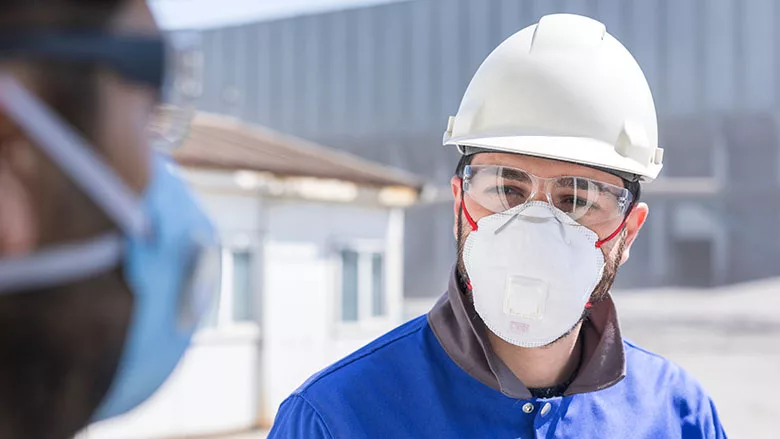
Both potentialities are reasons why respiratory protection in contaminated environments must mean more than throwing on whatever mask is handy. It means complying with regulations, knowing the best gear for the situation, fitting that gear properly, and training employees on its use and maintenance.

Respirator regulation

OSHA issues mandatory standards —specifically, OSHA 29 CFR Part 1910.134 — regarding the use of respirators in the workplace. The National Institute for Occupational Safety and Health (NIOSH) governs the respirators. While not a government agency, the American National Standards Institute (ANSI) sets forth best practices guidelines for respirator programs and air quality.

OSHA and NIOSH controls mandate the elimination of and substitution for respiratory hazards where possible, followed by physical changes to the workplace and administrative controls (changes in activities/practices/actions). The use of respirators (personal protective equipment, or PPE) is considered a last resort.

Which respirator is right?

Simply, a respirator is a device that protects the user from hazardous gases or particulate in the atmosphere. A tight-fitting respirator may cover the nose and mouth or the entire face, while a loose-fitting respirator covers the head.

An air-purifying respirator filters the outside air, removing contaminants, and comes with a cartridge or filter that will have to be changed on schedule or as dictated by performance. Atmosphere-supplying respirators provide breathable air from a tank that is either carried by the user or attached to the user via a hose.

Choosing the right respirator for the job involves:

  • An exposure assessment
  • Job site configuration, temperatures, and humidity
  • The worker’s comfort, physical condition, and on-site physical demands
  • Knowledge of the specific contaminant(s) — e.g., gas or vapor, or biological — and whether it has an available material safety data sheet (MSDS) or has specific mandated or recommended exposure levels
  • Selecting the proper assigned protection factor (APF) — the level of protection provided by a properly fitted and used respirator — for the given contaminant

Fitting a respirator

Employees should be given multiple model options within the range of designs considered appropriate to the job. Individual comfort can help ensure proper use.

Fitting should be tested in one or both of two ways:

  1. Qualitative: Simply, a substance is introduced by a tester in the vicinity of the wearer. If the wearer — through taste, smell, or other reaction — can detect it, the respirator isn’t correctly fitted.
  2. Quantitative: The respirator is worn by the user and connected to a mechanical measuring device. Upon release of an aerosol or controlled negative pressure, the device determines whether the respirator is functioning effectively.

Controlled environment testing of tight-fitting respirators will identify the best make, model, and size for the user. It is also an opportunity to identify respirator misuse review proper methods for putting on and wearing the respirator chosen.

Respirator training and maintenance

Ample time should be allotted within the workday for both training on and maintenance of respirators. Employers should create dedicated space for maintenance and storage of PPE. A training program should identify the type of contaminants present, avoidance thereof, the dangers of those contaminants, and steps to take when exposure occurs.

Training and maintenance should also include:

  • A review of regulatory requirements
  • The capabilities and limitations of the respirator
  • Factors that impact its performance
  • How to put it on and take it off
  • How to use it when it malfunctions
  • How to inspect, service, clean, and store the respirator

Respiratory protection certification is not an OSHA requirement, but it is helpful both to document compliance for the employer and as proof of training for an employee moving to another assignment.

Breathe easy

The global COVID-19 pandemic brought into sharp focus the need for everyone to properly deploy respiratory protection. It also pointed out how cavalier some users can be about correct procedures. Reinforcing all the ways respiratory protection is critical to your operation will help to ensure a safe, productive, and OSHA-compliant environment for any company, from the executive suites to the production floor.


Sources

https://www.hazmatschool.com/blog/respiratory-protection-standards/

https://www.dir.ca.gov/DOSH/DOSH_Publications/respiratory-protection-employer-guide.pdf

KEYWORDS: face masks fit testing Respiratory Protection

Share This Story

Looking for a reprint of this article?
From high-res PDFs to custom plaques, order your copy today!

Steve Gonzales is CEO of Technical Safety Services, which provides testing, certification and calibration of equipment and controlled environment crucial to the success of the biopharma, medical device, academic research and food production industries.

Recommended Content

JOIN TODAY
to unlock your recommendations.

Already have an account? Sign In

  • forklift safety

    Exploring the latest technologies in forklift safety

    With more staff and more stock in warehousing now more...
    Workplace Training Strategies
    By: Josh Cramer
  • welding

    All about welder’s flash or arc eye

    A flash burn is a painful inflammation of the cornea,...
    Environmental Health and Safety
  • dangerous jobs

    The 10 most dangerous jobs in the U.S.

    On-the-job deaths have been rising — hitting the highest...
    Occupational Safety
    By: Benita Mehta
Manage My Account
  • eMagazine Subscriptions
  • ISHN Newsletter & Other Newsletter Alerts
  • Online Registration
  • Manage My Preferences
  • Subscription Customer Service

More Videos

Sponsored Content

Sponsored Content is a special paid section where industry companies provide high quality, objective, non-commercial content around topics of interest to the ISHN audience. All Sponsored Content is supplied by the advertising company and any opinions expressed in this article are those of the author and not necessarily reflect the views of ISHN or its parent company, BNP Media. Interested in participating in our Sponsored Content section? Contact your local rep!

close
  • man wearing the the Sundström SR200 Full Face Mask Respirator
    Sponsored byOHD

    5 Fit Testing Mistakes That Could Cost You

  • This image shows Magid AcuSpex polarized blue mirrored safety glasses.
    Sponsored byMagid Glove and Safety

    Construction PPE Guide: What Crews Need for Each Task

  • lone worker in confined space
    Sponsored byAlphasense Ltd.

    GET THE LEAD OUT of your Safety Oxygen Sensors!

Popular Stories

SpaceX 7 launch

OSHA Investigating Fatal Fall at SpaceX Starbase

Automated loading dock equipment

After March 2026 Rivian Death, Safety Managers Reassess Loading Dock Systems Under OSHA's Warehouse Emphasis Program

psychology in the workplace

Most Workplaces Measure Psychological Safety, Ignoring Psychosocial Risks

top 10 most dangerous jobs

Poll

Seasonal Readiness

With the federal heat stress prevention rule on the horizon, which area of your safety program needs the most attention?
View Results Poll Archive

Products

Surviving an OSHA Audit A Management Guide, 2nd Edition

Surviving an OSHA Audit A Management Guide, 2nd Edition

See More Products

ISHN Podcasts

Related Articles

  • ISEA active in IOM workshop on respiratory protection in health care

    See More
  • Respiratory protection in six simple steps

    See More
  • Respiratory protection in U.S.: A billion-dollar market

    See More

Related Products

See More Products
  • 1119906652.webp

    Alive and Well at the End of the Day: The Supervisor's Guide to Managing Safety in Operations, 2E

See More Products

Related Directories

  • MSA - The Safety Co.

    WE KNOW WHAT'S AT STAKE. Unpredictable work environments are often part of the job. That's why it's critically important to have the right safety equipment at the moment it matters most. MSA's complete lines of safety solutions help protect those workers at the heart of your operation.
×

Become a Leader in Safety Culture

Build your knowledge with ISHN, covering key safety, health and industrial hygiene news, products, and trends.

JOIN TODAY
  • RESOURCES
    • Advertise
    • Contact Us
    • Directories
    • Manufacturing Division
    • Store
    • Want More
  • SIGN UP TODAY
    • Create Account
    • eMagazine
    • Newsletters
    • Customer Service
    • Manage Preferences
  • SERVICES
    • Marketing Services
    • Reprints
    • Market Research
    • List Rental
    • Survey/Respondent Access
  • STAY CONNECTED
    • LinkedIn
    • Facebook
    • YouTube
    • X (Twitter)
  • PRIVACY
    • PRIVACY POLICY
    • TERMS & CONDITIONS
    • DO NOT SELL MY PERSONAL INFORMATION
    • PRIVACY REQUEST
    • ACCESSIBILITY

Copyright ©2026. All Rights Reserved BNP Media, Inc. and BNP Media II, LLC.

Design, CMS, Hosting & Web Development :: ePublishing