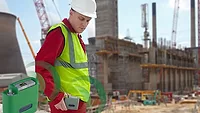
Taking respiratory protection to a higher level

Photo credit: J. J. Keller
Recent events, such as the rise in wildfires and the COVID-19 pandemic, have underscored the increasing importance of respiratory protection. These events highlight how both natural and human factors can significantly impact air quality and create hazardous environments for workers.
OSHA's respiratory protection standard consistently ranks among the top 10 most frequently cited regulations, emphasizing the importance of understanding and implementing effective respiratory protection programs.
Implementing a respiratory protection program
If respirators are deemed necessary to ensure worker safety, then the OSHA 1910.134 Respiratory Protection Standard comes into play. In such cases, it’s important to follow and document the key steps required by the standard. These steps include:
- Hazard assessment: Identify and evaluate respiratory hazards in the work environment.
- Medical evaluation: Ensure that employees are medically fit to wear respirators.
- Fit testing: Conduct fit tests to confirm that respirators provide an adequate seal.
- Training: Educate employees on the proper use, maintenance, and limitations of respirators.
- Program evaluation: Regularly review and update the respiratory protection program to address any new hazards or changes in the workplace.
Beyond respirators: “Higher level thinking”
While the use of respirators are essential tools in respiratory protection, they should be seen as a last resort. According to OSHA, the hierarchy of controls for respiratory protection is a system designed to minimize or eliminate exposure to airborne contaminants. The controls are ranked from most to least effective:

OSHA prioritizes the first three controls — elimination, substitution, and engineering — because they address the hazard at its source. Administrative controls and PPE rely on worker actions and protective equipment, which are considered less effective in controlling hazards.
Applying the controls in a real-world application
Let’s look at an example of applying the hierarchy of controls from the most effective to least effective in a manufacturing facility that uses a chemical process producing toxic fumes:
The facility can explore alternative methods or materials that do not produce toxic fumes. For example, they could investigate using a different chemical process that does not generate harmful fumes. By completely eliminating the need for the toxic chemical, the facility can eliminate the risk of exposure and the need for respiratory protection.
If complete elimination is not feasible, the facility can consider substituting the toxic chemical with a less hazardous alternative. Switching to a different chemical that produces fewer or less harmful fumes reduces the risk of exposure and may reduce the need for respiratory protection.
The facility can invest in engineering controls to minimize employee exposure to toxic fumes. One example is improving the ventilation systems in the workplace. By installing local exhaust ventilation systems, such as fume hoods or dust collectors, the facility can capture and remove the toxic fumes at the source, preventing them from spreading in the work area. This significantly reduces employee exposure and the reliance on respiratory protection.
In addition to engineering controls, the facility can implement administrative controls to further mitigate risk. For example, they can implement job rotation, where employees are periodically rotated to different tasks to minimize their exposure to the toxic fumes. Proper training and education on safe work practices can also be provided to employees to ensure they understand the risks and know how to protect themselves. These administrative controls complement the engineering controls and help reduce the need for respiratory protection.
While the goal is to minimize or eliminate the need for respiratory protection, there may still be situations where it is necessary. If the engineering and administrative controls are not enough to eliminate exposure, the facility may provide employees with appropriate PPE, such as respirators.
Innovating respirator technology
Recent advancements in respirator technology will offer new solutions to enhance worker safety. Some new innovations on the horizon include:
Smart respirators: Equipped with sensors, these respirators monitor air quality, filter status, and the user’s breathing patterns, providing real-time feedback and alerts to ensure optimal protection.
Self-sterilizing respirators: Using UV-C light, sterilizing materials, or other sterilization methods, these respirators automatically disinfect their surfaces, reducing contamination risk and extending their lifespan.
Adaptive fit technology: New respirators feature adaptive fit technology that automatically adjusts to the user’s face, ensuring a secure, consistent, and comfortable fit for better protection.
Reusable respirators with replaceable filters: Designed for sustainability, these respirators allow users to replace the filter instead of the entire mask, reducing waste and lowering long-term costs.
Beard bands: Accessories like silicone or rubber beard bands help individuals with facial hair achieve a better seal when wearing respirators. The National Institute for Occupational Safety and Health (NIOSH) is studying the effectiveness of these bands in improving the fit of respirators for workers with facial hair.
Key to remember: To ensure effective respiratory protection, employers should take a comprehensive approach that goes beyond just providing respirators. By following the hierarchy of controls and adopting innovative technologies, businesses can create safer work environments that protect employees, improve productivity, and ensure compliance with OSHA regulations.
Looking for a reprint of this article?
From high-res PDFs to custom plaques, order your copy today!