7 essential strategies to safeguard your data center against electrical hazards
Credit: Getty Images
Data centers may not appear to be hazardous at first glance. However, their relative safety can lead to complacency, making these facilities’ electrical risks increasingly dangerous. Regardless of how safe a server room may seem, data center safety is crucial, especially as the cloud and artificial intelligence (AI) sectors grow.
A data center can use up to 50 times more energy per floor space than a conventional office building. With so much electricity flowing through this infrastructure, electrical safety is essential. Here are seven strategies IT workers must employ to manage these risks.
1. Hardware selection and design
Data center safety starts with using the right components for a facility’s needs. Legacy hardware — especially power supply units (PSUs) and distribution equipment — may be unable to keep up with servers’ energy demands efficiently. Electrical faults become more likely in such a scenario.
Similarly, businesses should review their server room designs to ensure the right amount of electricity flows to each rack at any given time. Automated testing tools may be necessary in this process. Automatic load balancing solutions are also ideal, as electrical needs tend to fluctuate between moments.
Cooling systems deserve special attention. Heat management is crucial for safe equipment operations but is also typically the largest power consumer, potentially leading to excess electrical strain. Airflow-friendly server orientation and in-rack cooling can use up to three times less energy, offering a balance between temperatures and safety.
2. Lockout/tagout procedures
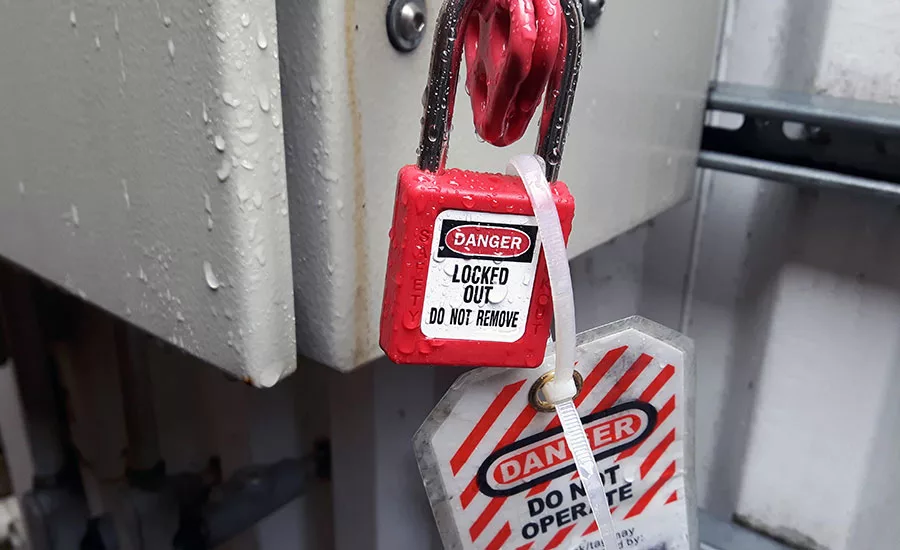
Lockout/tagout (LOTO) practices are also a central piece of data center safety training. Because servers face strict uptime requirements, employees will almost always have to work near energized equipment. As a result, they must tag out nearby PSUs and distribution systems while locking out the ones they’re maintaining.
Before beginning work on any server or accompanying system, employees need to turn it off and disconnect it from power. Allowing a few minutes for electricity to dissipate after disconnection is also critical, as lingering charges can still pose shock hazards.
Multimeters are useful here, as workers can use them to determine whether a system is de-energized before handling any wires. Organizations must also periodically review their LOTO procedures. OSHA mandates that energy control inspections should occur at least annually, but quarterly reviews offer greater safety.
3. Cable management
Proper cable management is likewise essential. Excess bundling and tangling of wires can hamper airflow, leading to higher temperatures that may make electrical faults or related malfunctions increasingly likely. By contrast, neat, tidy cabling provides easy, safe access to components and enables better airflow.
Employees need to also keep cables clear from walkways or moving parts. Wear and tear can cause cords to fray and expose wires, creating easy-to-miss shock hazards. Zip ties and similar measures can prevent such damage by minimizing sagging cables.
Running wires under the floor or within plastic conduits is often the best way to manage cables. These approaches ensure cords are both clear from areas where they may bunch up and safe from physical abrasion, minimizing the risk of fraying.
4. Arc flash boundaries
Data centers must also grapple with arc flash hazards around their power distribution systems. Faults in switchboards or other high-powered equipment can cause sudden sparks hot enough to melt or burn items up to three feet away, so boundaries and proper personal protective equipment (PPE) are necessary.
Arc flash boundaries consist of two primary zones — a limited approach boundary and a restricted approach one. No one can enter the first without fire-resistant and nonconductive PPE. Only a qualified worker with sufficient PPE and a documented work protocol can cross the second distance.
How far each line should be from the arc flash hazard depends on the kind of current, voltage level and equipment within the system. Businesses can consult with an experienced electrician to determine the risks for their specific hardware.
5. Risk analysis and monitoring
No data center safety plan is complete without a thorough risk assessment, either. Equipment, electrical usage and environmental conditions vary widely between facilities, so no two centers have identical hazards. A risk analysis will reveal the specifics about what to address and how best to manage them.
Because data centers are experiencing increasing demand, many will need to scale up over time. Consequently, regular re-assessments are necessary to ensure the building remains safe as its hardware and operation evolve.
Data center operators can go further in this practice by deploying ongoing monitoring tools. Internet of Things sensors can monitor temperature and humidity levels, among other conditions, to alert workers of issues as they arise. Businesses can then manage electrical faults or other safety incidents before they grow into larger problems.
6. Fire suppression equipment
While shocks may be the most prominent electrical hazards, electrical fires also deserve attention. High heat and energized equipment can be a dangerous combination in terms of combustion, so all data centers need to have fire suppression systems in place.
Generally speaking, dry pipes, which use compressed air or nitrogen instead of water, are ideal in this sector. Water or foam sprinklers may be more common, but they could damage equipment and result in costly downtime.
Regardless of what type of fire suppression a data center installs, the organization must inspect its condition regularly. National Fire Protection Agency standards require monthly inspections for dry pipe exteriors and annual ones for the interior. A qualified professional should perform these tests.
7. Employee training
As with any work environment, employee education is nonnegotiable. Businesses must develop a data center safety training program that addresses all relevant hazards and specific steps to report and manage them.
Testing employees before permitting them to work is ideal, as it ensures everyone understands best practices before potentially getting in harm’s way. Relatedly, data center operators should consider regular reassessments to stop workers from becoming complacent.
Organizations may need to update their protocols and training as their facility evolves. Consequently, it’s best to include educational materials and workflow policies during every risk assessment to ensure they’re up to date.
Data center safety is a growing concern
Data centers are growing as the world relies more on AI and other digital services. As that change occurs, ensuring electrical safety at such facilities will likewise become increasingly critical. Employing these seven strategies will keep workers safe while ensuring uptime at these important structures.
Looking for a reprint of this article?
From high-res PDFs to custom plaques, order your copy today!