Why Your Lockout Procedures Stop Matching Reality Within 12 Months
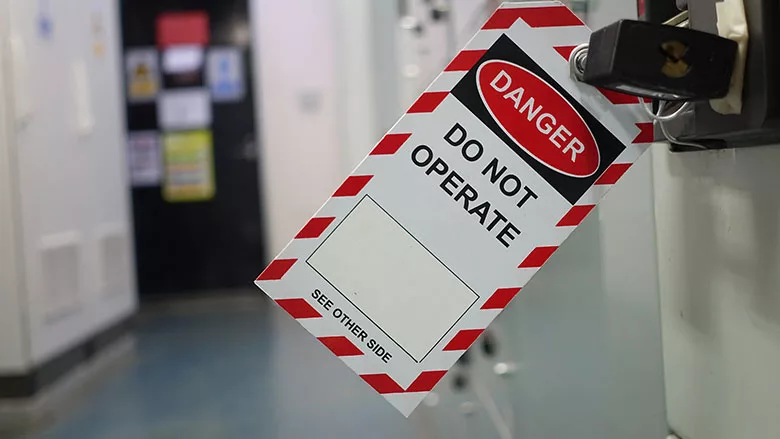
A facility writes machine-specific lockout/tagout procedures during commissioning. Every energy source is identified. Every isolation point is documented. Every step matches the equipment on the floor. On day one, the procedure is accurate.
Six months later, a motor gets replaced. A guard is relocated. A pneumatic line is rerouted during a weekend shutdown. The equipment changes, but the LOTO procedure does not. The document an operator follows no longer reflects what is actually in front of them - and nobody flags it.
This is procedure drift. Control of hazardous energy ranked fourth on OSHA's Top 10 most cited standards in FY2025, with 2,177 violations [1]. The standard has not changed materially since 1989. The hardware is mature. Training programmes exist at every major manufacturer. So why do citations keep climbing? Because the problem is not knowledge - it is maintenance of the procedures themselves.
How Drift Happens
LOTO procedures are written at a point in time. They describe a specific machine configuration with specific energy sources, isolation points, and a sequence. Manufacturing equipment does not stay static.
Motors get swapped. Control systems are upgraded. A pneumatic supply is rerouted as part of a line reconfiguration. A heating element gets added to a process, introducing a new energy source. Each of these changes can alter the isolation requirements for a machine — but maintenance work orders rarely trigger a corresponding update to the LOTO procedure.
Over time, the gap between what the procedure says and what the machine actually requires grows. The operator follows the documented steps. The documented steps no longer account for every energy source. The result is an incomplete isolation that looks compliant on paper.
The Periodic Inspection Gap
Facilities that manage procedure accuracy well tend to have one thing in common: they tie LOTO procedure reviews directly to equipment change orders.
29 CFR 1910.147(c)(6) requires employers to conduct a periodic inspection of each energy control procedure at least annually. The inspection must be performed by an authorised employee other than the one using the procedure, and it must verify that the procedure and the requirements of the standard are being followed [2].
In practice, this inspection often becomes a checkbox exercise. The inspector confirms the procedure exists and that the employee can describe the general steps. What rarely happens is a point-by-point comparison between the written procedure and the current machine configuration. Does every energy source listed still exist? Have new sources been introduced? Is every isolation point and method still accurate? Those questions tend not to get asked.
OSHA's compliance directive CPL 02-00-147 instructs inspectors to evaluate whether periodic inspections are being conducted, properly documented, and performed by someone other than the person using the procedure [3]. Violations of 1910.147(c)(6)(i) remain among the most frequently cited LOTO subsections - inspections not done, not documented, or performed by the wrong person.
The annual inspection exists to catch exactly this kind of drift. When it gets treated as paperwork rather than a field walk-down, procedure inaccuracies go unchecked for years.
Why Static Systems Make It Worse
When LOTO procedures live in binders, shared drives, or static PDF files, there is no built-in trigger to flag that a procedure may be out of date. A maintenance work order closes out a motor replacement. The LOTO procedure for that machine sits in a folder three offices away. Nothing connects the two.
There is no version history showing when the procedure was last reviewed. No audit trail of which version an operator used during a specific lockout. No flag when a procedure has not been touched since a modification was completed on the equipment it covers.
For multi-site operations, the problem compounds. A procedure update at one facility does not propagate to others running similar equipment. Each site maintains its own documentation with its own review cadence — or lack of one.
What Gets This Right
Facilities that manage procedure accuracy well tend to have one thing in common: they tie LOTO procedure reviews directly to equipment change orders. When a work order modifies a machine, it triggers a review of the associated lockout procedure before that machine goes back into service. The procedure update is not a separate task that someone remembers to do next week - it is built into the change management workflow.
Version control matters too. Every revision gets tracked with a timestamp, an author, and a record of what changed. When an operator performs a lockout, the system logs which version of the procedure was used. If an incident occurs, you can trace exactly what the operator followed and whether it matched the current machine configuration.
And the annual periodic inspection needs to be a genuine field verification, not a desk review. The inspector walks the machine with the procedure in hand, confirms each energy source and isolation point against the physical equipment, and documents discrepancies. Digital workflow tools can support this by flagging procedures that have not been reviewed within the required interval or since the last equipment modification — but even a disciplined paper-based process will catch drift if someone actually walks the floor.
The Standard Is Not the Problem
29 CFR 1910.147 is clear about what it requires: machine-specific procedures, periodic inspections, and retraining when conditions change. Most facilities have the procedures. The gap is keeping them accurate after day one.
OSHA estimates that proper compliance with the lockout/tagout standard prevents around 120 fatalities and 50,000 injuries each year [4]. LOTO violations continue to rank in the top five most cited standards year after year. Until facilities close the loop between equipment changes and procedure updates, that is not going to change.
Matthew Nugent is a chemical engineer and co-founder of Zentri, a digital lockout/tagout platform, and The Lock Box. He works with manufacturing safety teams across the U.S. and Europe on LOTO compliance and energy isolation programs.
References
[1] OSHA. Top 10 Most Frequently Cited Standards, Fiscal Year 2025. https://www.osha.gov/top10citedstandards
[2] OSHA. 29 CFR 1910.147 - The Control of Hazardous Energy (Lockout/Tagout). https://www.osha.gov/laws-regs/regulations/standardnumber/1910/1910.147
[3] OSHA. CPL 02-00-147 - The Control of Hazardous Energy - Enforcement Policy and Inspection Procedures. https://www.osha.gov/enforcement/directives/cpl-02-00-147
[4] OSHA. Control of Hazardous Energy (Lockout/Tagout) - Overview. https://www.osha.gov/control-hazardous-energy
Looking for a reprint of this article?
From high-res PDFs to custom plaques, order your copy today!