What is Fall of Ground in Underground Mining?
Causes, risks and prevention methods to better understand this phenomenon
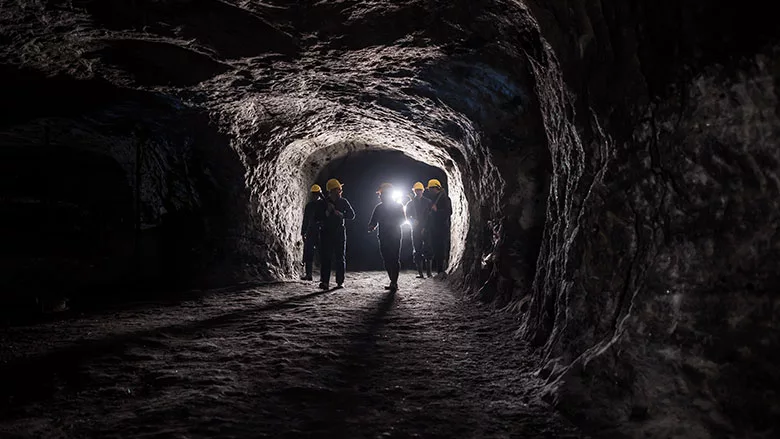
Underground mining involves extracting minerals from beneath the earth’s surface through tunnels, shafts, and stopes. One of the most serious hazards associated with underground mining is Fall of Ground (FOG). This phenomenon occurs in coal, metal, nonmetal, and stone mines worldwide. Despite advancements in technology, ground falls continue to account for a significant portion of mining accidents and fatalities.
What is Fall of Ground
Fall of ground refers to the unexpected collapse or detachment of rock from the roof, sidewalls, or face of an underground excavation. The fallen material may range from small rock fragments to large blocks (boulder) or complete roof collapses.
FOG can occur in several areas of a mine:
- Roof falls: Collapse from the mine roof.
- Rib falls: Failure of the sidewalls.
- Face falls: Collapse from the working face.
- Pillar failure: Collapse due to inadequate pillar support.
Effects of Fall of Ground
Fall of ground incidents can have serious consequences for underground mining operations:
- Injuries or fatalities to mine workers
- Damage to machinery and infrastructure
- Production delays or stoppages
- Increased operational costs due to rehabilitation work
- Potential loss of access to working areas
Major Causes of Fall of Ground
Ground falls result from a combination of factors, often classified into three main categories:
- Geological factors: Natural weaknesses in the rock mass, such as joints, faults, bedding planes, shear zones, or low-strength rock. High in-situ stresses in deeper mines can also trigger sudden failures, including violent rock bursts.
- Mining-induced factors: Excavation activities that redistribute stress, including blasting vibrations, continuous miner operations, or undercutting that destabilizes the roof or ribs. Human/machine interactions during drilling, bolting, or scaling frequently trigger falls.
- Engineering and support-related factors: Inadequate support design, poor installation quality, corrosion of bolts over time, or failure to adapt supports to changing conditions (e.g., increased humidity or water ingress).
Prevention and Control Measures
In underground mining, scaling is an important safety practice used to remove loose rock from the roof and walls to prevent fall-of-ground accidents.
Effective ground control is proactive, site-specific, and multi-layered.
Key strategies include:
- Rock support systems: The primary defense. Common methods involve installing rock bolts to reinforce the rock mass, combined with wire mesh, steel straps, or shotcrete (sprayed concrete). Surface protection (mesh) prevents small pieces from detaching between bolts.
- Regular Scaling: In underground mining, scaling is an important safety practice used to remove loose rock from the roof and walls to prevent fall-of-ground accidents. Mining activities like blasting and equipment movement disturb the rock mass, causing loose material to form regularly, so scaling must be done frequently before workers enter the area. There are two main types of scaling. Manual scaling uses a long bar to remove loose rock and is usually done in small areas, but it involves more risk to workers. Mechanical scaling uses a machine with a hydraulic arm to safely remove loose rock from a distance and is the most commonly used method.
- Geological monitoring: Geological monitoring is essential for detecting potential fall-of-ground hazards before failure occurs. Geotechnical engineers use tools like ground penetrating radar (GPR) to identify hidden weak zones and fractures. Seismic monitoring systems detect small stress movements that may indicate impending failures. In addition, regular visual inspections are important for identifying early warning signs such as cracks, loose rock, or unusual sounds, allowing timely corrective action.
- Proper mine design: Proper mine design helps maintain stability by controlling how stresses act within the rock mass. Ensuring adequate pillar sizes is critical, as pillars support the overlying strata and prevent collapse. Controlling excavation spans reduces the likelihood of roof failure, especially in weak rock conditions. Furthermore, well-designed support patterns consisting of rock bolts, mesh, and shotcrete, provide an effective reinforcement. A design based on site-specific geological conditions ensures safer and more stable underground operations.
Key precautions
Below are some key precautions a mine worker should take to prevent fall of ground in underground mining
- Maintain a clear escape route: A clear escape route must always be maintained while working underground to ensure quick evacuation if ground conditions suddenly become unsafe. Obstructions such as equipment, debris, or materials should never block access ways.
- Talking rocks: Listen for popping or cracking sounds which indicate stress buildup and potential imminent failure.
- Trust the warnings: Never ignore warning signs, readings from geotechnical instruments and observations from experienced miners.
- No work under unsupported ground: Ensure rock bolts, mesh and shotcrete should be installed and intact before working beneath any ground.
- Confirm scaling is completed: Verify that manual or mechanical scaling has been done in the area before entering, and follow all supervisory clearance protocols.
- Use protective equipment: Wear a safety helmet, reflective clothing, gum boot, cap lamp, gloves, dust mask, rescuer, safety goggle and ensure that personal protective gear is in good condition at all times.
Looking for a reprint of this article?
From high-res PDFs to custom plaques, order your copy today!


