ISHN logo
search
cart
facebook twitter linkedin youtube
  • Sign In
  • Create Account
  • Sign Out
  • My Account
ISHN logo
  • NEWS
    • Today's News
    • Global Safety News
    • Government Regulations
  • PRODUCTS
    • Product Innovations
    • Featured Products
  • TOPICS
    • Environmental Health and Safety
    • Facility Safety
    • Workplace Health
    • Occupational Safety
    • PPE
    • More Topics
  • CONSTRUCTION
  • TECHNOLOGY
  • COLUMNS
    • Best Practices
    • Dave Johnson: What’s going on
    • Editorial Comments
    • Leading Safety
  • MULTIMEDIA
    • ISHN Podcast
    • Videos
    • Cold Stress Education Quiz
    • Webinars
    • White Papers
  • MORE
    • Buyer's Guide
    • Newsletters
    • Convention Companion
    • Polls
    • Events
    • ISHN Store
    • Sponsor Insights
  • EMAGAZINE
    • eMagazine
    • Archived Issues
    • Contact
    • Advertise
  • JOIN TODAY!
Columns

PSYCHOLOGY OF SAFETY: World-Class Safety: What does it take?

March 1, 2005
Recently, the CEO of a leading chemical company told me he dislikes the term “world-class safety,” because its meaning is so ambiguous. “Everyone talks about wanting a world-class safety program, but nobody provides a straightforward definition of this vision. What does it mean to be world class?”

This is the first of three columns exploring what it takes to be world class in workplace safety. My answer does not come from common sense, but from more than five years of empirical research. In “From Good to Great” (2001, Harper Collins, NY), Jim Collins and his research team studied 11 companies that rocketed from being good to achieving greatness — generating cumulative stock returns that on average were seven times better than general stock market — for a sustained period of 15 years.

Collins and his researchers systematically compared these good-to-great companies with a carefully selected set of 11 companies that maintained good profits for at least 15 years, but never made the leap to true greatness, using Collins’ financial criteria.

Good-to-great companies demonstrated signature qualities not consistently observed at comparison companies. These attributes afford us an operational definition of “world-class safety” — and suggest ways to achieve this enviable level of safety excellence.

Here are Collins’ five fundamentals:

1) Get the right people on the job;

2) Get the wrong people off the job;

3) Match talent and interest with job operations;

4) Maintain a climate of truth-telling by engaging people in rigorous debate, analysis, and continuous learning; and,

5) Confront the facts, even when they are harsh.

Recruit the right people

Collins stresses from the start that you need to employ the right people — “it’s who you pay, not how you pay them,” he writes. He uses a bus as a metaphor for today’s organization, emphasizing the need “to get the right people on the bus in the first place and to keep them there.”

Character, work ethic, conscientiousness, and values are the “right” stuff to look for in people, more important than educational background, practical skills, specialized knowledge and work experience, according to Collins. Skills and know-how are teachable; experience changes with time. But things like character and values are presumably more permanent traits.

Top performers are motivated by the intrinsic or natural consequences of their job, according to Collins. If people do not find such satisfaction in their job, it’s in the best interest of all involved to let them go early or find them another assignment.

Find the right seats

Once you have the right people on your bus, it’s essential to put each person in the right seat. It can take time to determine whether less-than-great performance means a person is merely in the wrong seat on the bus or needs to get off the bus altogether. These harsh decisions require ongoing assessment through behavioral observation, as well as interpersonal conversation and coaching.

Climate of truth-telling

It might seem cold to push people off the bus, or to yank people from one seat to another. Yet this is the culture of good-to-great companies — employees engage in rigorous debate, analysis and continuous learning to uncover and report the objective facts of current reality. A climate of truth-telling is created in part by supervisors leading with questions — not answers. And supers seek facts — not faults.

Good-to-great companies deal with as much adversity as comparison companies, writes Collins. The difference is this: good-to-great companies uncover the brutal facts of the situation (poor performance, poor performers) and confront them head-on. They emerge from their troubles stronger than before.

Relevance to safety

These special qualities of good-to-great companies can help us define world-class safety cultures:

  • World-class safety requires open, frank, and fact-finding conversations about all safety-related incidents, from close calls and first-aid cases to the most serious injuries and fatalities.

    A world-class safety workforce discusses freely and openly, without embarrassment, all injuries (minor and major), as well as close calls. Workers realize that only through such open discussion can the environmental, behavioral, and cultural factors contributing to these mishaps be rooted out. Facing such adversity head-on results in a workforce more empowered to prevent occupational injuries.

  • The high safety standards of a world-class organization are explained to all employees, with specific reference to the behaviors of relevant jobs.

    Safety organizations aspiring to be world class give specific safety-related expectations during worker orientation. New workers are observed carefully during this orientation period to determine compatibility between job function and individual talents, interests, and values.

  • When an employee’s safety-related behavior does not meet specific expectations, a corrective action plan is implemented that includes candid conversation and a personal commitment to change — or get off the bus. This is the relevance of getting the right people on the bus and in the right seats.

    At a workshop I gave last December to 90 first-line supervisors, the plant manager urged me to emphasize this particular lesson. He wanted his supervisors to realize that workers may not be doing the job for which they are most suited, and this could be a safety hazard. And in some cases, an employee or contractor may not care about safety to the degree demanded by the work culture. He wanted his supervisors to look for these incongruities and then engage in open and frank conversation with individuals whose at-risk behaviors suggest they are not prepared or appropriate for a particular job.

    To achieve world-class status in safety, work cultures need to help employees confront the brutal reality that at-risk behavior cannot exist in a workplace that promotes safety as a core value. This does not necessarily mean a risk-taking person should be bumped off the bus, but it does mean some corrective action is required — and the sooner the better.

    Part of that corrective plan requires the person to commit to specific behavior change, and any peer or management support needed to make this happen must be detailed.

    Bear in mind we are talking about the qualities of an ideal Total Safety Culture. These qualities reflect safety ideals toward which we should aspire. Rarely, if ever, are these exemplary criteria achieved throughout an entire workplace.

  • Share This Story

    Looking for a reprint of this article?
    From high-res PDFs to custom plaques, order your copy today!

    Recommended Content

    JOIN TODAY
    to unlock your recommendations.

    Already have an account? Sign In

    • forklift safety

      Exploring the latest technologies in forklift safety

      With more staff and more stock in warehousing now more...
      Facility Safety
      By: Josh Cramer
    • welding

      All about welder’s flash or arc eye

      A flash burn is a painful inflammation of the cornea,...
      Environmental Health and Safety
    • dangerous jobs

      The 10 most dangerous jobs in the U.S.

      On-the-job deaths have been rising — hitting the highest...
      Construction Industry Safety and Health
      By: Benita Mehta
    Manage My Account
    • eMagazine Subscriptions
    • ISHN Newsletter & Other Newsletter Alerts
    • Online Registration
    • Manage My Preferences
    • Subscription Customer Service

    More Videos

    Sponsored Content

    Sponsored Content is a special paid section where industry companies provide high quality, objective, non-commercial content around topics of interest to the ISHN audience. All Sponsored Content is supplied by the advertising company and any opinions expressed in this article are those of the author and not necessarily reflect the views of ISHN or its parent company, BNP Media. Interested in participating in our Sponsored Content section? Contact your local rep!

    close
    • man wearing the the Sundström SR200 Full Face Mask Respirator
      Sponsored byOHD

      5 Fit Testing Mistakes That Could Cost You

    • This image shows Magid AcuSpex polarized blue mirrored safety glasses.
      Sponsored byMagid Glove and Safety

      Construction PPE Guide: What Crews Need for Each Task

    • lone worker in confined space
      Sponsored byAlphasense Ltd.

      GET THE LEAD OUT of your Safety Oxygen Sensors!

    Popular Stories

    SpaceX 7 launch

    OSHA Investigating Fatal Fall at SpaceX Starbase

    Worker Impairment

    How to Tell When a Co-Worker is Impaired? A Safety Pro’s Challenge

    Automated loading dock equipment

    After March 2026 Rivian Death, Safety Managers Reassess Loading Dock Systems Under OSHA's Warehouse Emphasis Program

    top 10 most dangerous jobs

    Poll

    Seasonal Readiness

    With the federal heat stress prevention rule on the horizon, which area of your safety program needs the most attention?
    View Results Poll Archive

    Products

    Surviving an OSHA Audit A Management Guide, 2nd Edition

    Surviving an OSHA Audit A Management Guide, 2nd Edition

    See More Products

    ISHN Podcasts

    Related Articles

    • World class safety cultures – What does it take?

      See More
    • World Class safety cultures - What does it take?

      See More
    • PSYCHOLOGY OF SAFETY: World-class in safety

      See More

    Related Products

    See More Products
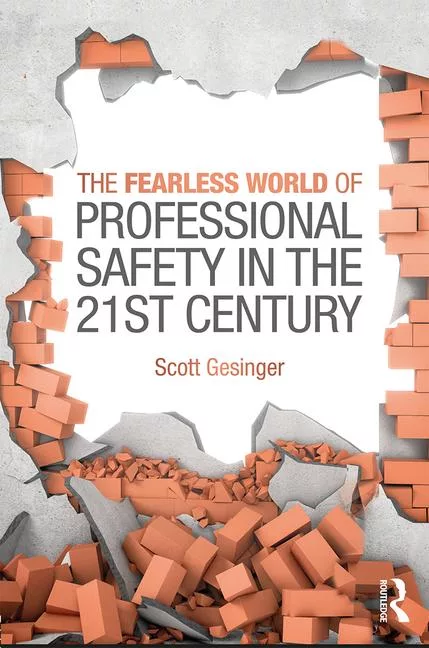
    • fearless world.jpg

      The Fearless World of Professional Safety in the 21st Century

    See More Products

    Related Directories

    • American Society of Safety Professionals (ASSP)

      The American Society of Safety Professionals (ASSP) is a global association of occupational safety and health professionals who are dedicated to workplace safety. We provide education, safety standards, advocacy and a professional community that supports our diverse members and the profession.
    • Alliance of Women’s Safety Apparel Manufacturers (AWSAM)

      The Alliance of Women's Safety Apparel Manufacturers is a collection of specialty manufacturers and distributors committed to providing properly designed and fitted PPE for women. Our foundational pillars are Awareness, Access and Advocacy. Our non-profit organization has 12 Founding Members and aligns the needs of women in the workforce and the companies they work for with specialty manufacturers dedicated to providing appropriate PPE for women. The Founding Members of the organization have made great strides in removing barriers to access that have existed for many years and kept women from being equally protected. Together, we create a platform that increases awareness of products made for women, encourages equal access to appropriately fitting PPE, and advocates for the safety of women in the workforce. In the spirit of co-opetition, we collaborate to envision what is next for women in industry as we work side by side to accomplish our mission, increase our impact, and share the journey with everyone seeking to elevate diversity and equality in their workplace.
    • Board of Certified Safety Professionals (BCSP)

      Since 1969, BCSP has been setting and certifying the technical competency criteria for safety, health, and environmental practitioners; ensuring safety through certification. In 2019, BCSP developed examCORE a comprehensive educational program for safety certification.
    ×

    Become a Leader in Safety Culture

    Build your knowledge with ISHN, covering key safety, health and industrial hygiene news, products, and trends.

    JOIN TODAY
    • RESOURCES
      • Advertise
      • Contact Us
      • Directories
      • Manufacturing Division
      • Store
      • Want More
    • SIGN UP TODAY
      • Create Account
      • eMagazine
      • Newsletters
      • Customer Service
      • Manage Preferences
    • SERVICES
      • Marketing Services
      • Reprints
      • Market Research
      • List Rental
      • Survey/Respondent Access
    • STAY CONNECTED
      • LinkedIn
      • Facebook
      • YouTube
      • X (Twitter)
    • PRIVACY
      • PRIVACY POLICY
      • TERMS & CONDITIONS
      • DO NOT SELL MY PERSONAL INFORMATION
      • PRIVACY REQUEST
      • ACCESSIBILITY

    Copyright ©2026. All Rights Reserved BNP Media, Inc. and BNP Media II, LLC.

    Design, CMS, Hosting & Web Development :: ePublishing