ISHN logo
search
cart
facebook twitter linkedin youtube
  • Sign In
  • Create Account
  • Sign Out
  • My Account
ISHN logo
  • NEWS
    • Today's News
    • Global Safety News
    • Government Regulations
  • PRODUCTS
    • Product Innovations
    • Featured Products
  • TOPICS
    • Environmental Health and Safety
    • Facility Safety
    • Workplace Health
    • Occupational Safety
    • PPE
    • More Topics
  • CONSTRUCTION
  • TECHNOLOGY
  • COLUMNS
    • Best Practices
    • Dave Johnson: What’s going on
    • Editorial Comments
    • Leading Safety
  • MULTIMEDIA
    • ISHN Podcast
    • Videos
    • Cold Stress Education Quiz
    • Webinars
    • White Papers
  • MORE
    • Buyer's Guide
    • Newsletters
    • Convention Companion
    • Polls
    • Events
    • ISHN Store
    • Sponsor Insights
  • EMAGAZINE
    • eMagazine
    • Archived Issues
    • Contact
    • Advertise
  • JOIN TODAY!

Occupational disease concerns will grow as the workforce ages

May 17, 2000
"Show me the money." That's what more and more employers are saying to industrial hygienists today. "Where are the savings? Prove your value to the company." This is easier said than done. And as a result, industrial hygienists intent on advancing their careers are adding safety, environmental protection, workers' compensation, and other activities to their job duties. But I don't rest easy with experienced industrial hygienists accepting major new responsibilities. Why? With every new duty taken on, an equal amount of attention to industrial hygiene is lost. That's because there is often no one else picking up the slack.

This is short-sighted, considering that more than 60,000 people die annually from occupational diseases. This figure comes from the study, "Occupational Injury and Illness in the United States: Estimates of Costs, Morbidity and Mortality," which appeared in the July, 1997, issue of Archives of Internal Medicine.

Grasp the figures. On an annual basis there are about ten times as many people dying from occupational disease as from occupational injury (estimated at 6,200).

But it's easy to ignore death from occupational disease. It most often occurs long after a person has left the workforce. Rarely will the death show up on the OSHA 200 log, and it escapes coverage by workers' compensation. Most employers don't even have the slightest suspicion that the job they provided caused their former employee's death. The deceased person's family and friends are also likely unaware of any connection.

Rolling the dice

Judging by our country's demographics, I'd say employers who neglect industrial hygiene are taking a risk. Right now the median age in the U.S. is about 36 years. Back when OSHA was just getting started in the early 1970s the median age was less than 29 years. Nearly 13 percent of the population is now over age 65, compared to only 8 percent in 1950. More dramatically, the number of people over the age of 85 has grown 30 percent since 1950. These statistics point to death becoming a big business in the future. Just this year a new mutual fund was created to invest solely in funeral businesses.

As we attend more funerals, more people will ask the question raised by Bernardino Ramazzini in his 1713 treatise, *Diseases of Workers*: What job did the deceased have and could the death have been related to this occupation?

Just as the heat has been turned up on tobacco companies over the damaging health effects of their products, pressure will build on employers to demonstrate that their work environments did not contribute to an employee's eventual death.

In this light, it's not comforting to know that 71 percent of the top 3,000 highest volume commercial chemicals used in the U.S. lack basic toxicological testing, or that only a fraction of the chemicals used in most work places have an established exposure limit.

Employers will be challenged: What did you know about toxic exposures and when did you know it? Did you determine exposure limits for all chemicals? Did you evaluate simultaneous multiple chemical exposures for their additive and synergistic properties? Was medical surveillance for chemical exposure provided to employees on a routine bases? Certainly all the other tedious industrial hygiene activities--hard to put a value on now--had better be done right to protect your company in the future. This work should be considered a valuable long-term investment. Don't back off from industrial hygiene--stick with it.

Share This Story

Looking for a reprint of this article?
From high-res PDFs to custom plaques, order your copy today!

Recommended Content

JOIN TODAY
to unlock your recommendations.

Already have an account? Sign In

  • forklift safety

    Exploring the latest technologies in forklift safety

    With more staff and more stock in warehousing now more...
    Facility Safety
    By: Josh Cramer
  • welding

    All about welder’s flash or arc eye

    A flash burn is a painful inflammation of the cornea,...
    Environmental Health and Safety
  • dangerous jobs

    The 10 most dangerous jobs in the U.S.

    On-the-job deaths have been rising — hitting the highest...
    Government Safety Regulations
    By: Benita Mehta
Manage My Account
  • eMagazine Subscriptions
  • ISHN Newsletter & Other Newsletter Alerts
  • Online Registration
  • Manage My Preferences
  • Subscription Customer Service

More Videos

Sponsored Content

Sponsored Content is a special paid section where industry companies provide high quality, objective, non-commercial content around topics of interest to the ISHN audience. All Sponsored Content is supplied by the advertising company and any opinions expressed in this article are those of the author and not necessarily reflect the views of ISHN or its parent company, BNP Media. Interested in participating in our Sponsored Content section? Contact your local rep!

close
  • man wearing the the Sundström SR200 Full Face Mask Respirator
    Sponsored byOHD

    5 Fit Testing Mistakes That Could Cost You

  • This image shows Magid AcuSpex polarized blue mirrored safety glasses.
    Sponsored byMagid Glove and Safety

    Construction PPE Guide: What Crews Need for Each Task

  • lone worker in confined space
    Sponsored byAlphasense Ltd.

    GET THE LEAD OUT of your Safety Oxygen Sensors!

Popular Stories

SpaceX 7 launch

OSHA Investigating Fatal Fall at SpaceX Starbase

Automated loading dock equipment

After March 2026 Rivian Death, Safety Managers Reassess Loading Dock Systems Under OSHA's Warehouse Emphasis Program

psychology in the workplace

Most Workplaces Measure Psychological Safety, Ignoring Psychosocial Risks

top 10 most dangerous jobs

Poll

Seasonal Readiness

With the federal heat stress prevention rule on the horizon, which area of your safety program needs the most attention?
View Results Poll Archive

Products

Surviving an OSHA Audit A Management Guide, 2nd Edition

Surviving an OSHA Audit A Management Guide, 2nd Edition

See More Products

ISHN Podcasts

Related Articles

  • ASSE: Start prepping now as U.S. workforce ages (10/30)

    See More
  • Global focus April 28 will be on occupational disease prevention

    See More
  • Manager fired for reporting e-cigarette environmental concerns will get $110K

    See More

Related Products

See More Products
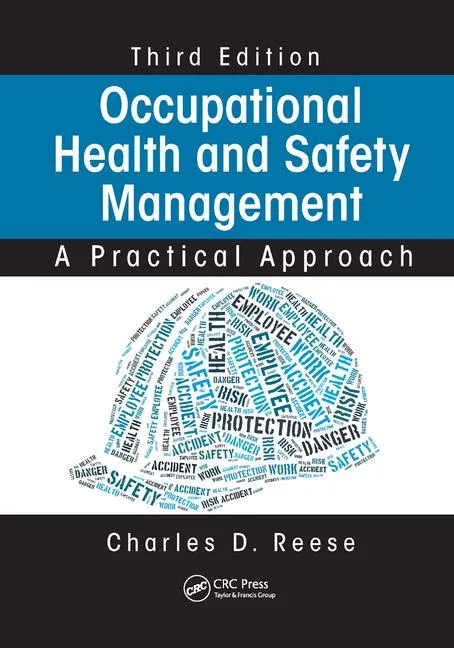
  • 9781138749573.jpg

    Occupational Health and Safety Management: A Practical Approach, Third Edition

  • 9781138029422.jpg

    Occupational Safety and Hygiene IV

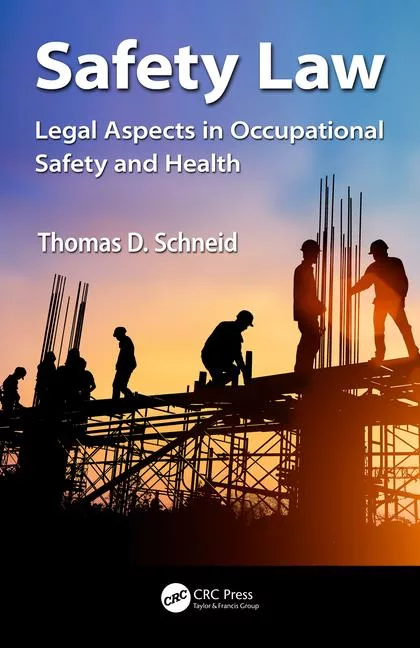
  • safety law.jpg

    Safety Law: Legal Aspects in Occupational Safety and Health

See More Products

Events

View AllSubmit An Event
  • May 23, 2017

    Zika Virus: An Emerging Infectious Disease, Epidemiology, Risks and Prevention in the Workplace

    Zika Virus: An Emerging Infectious Disease, Epidemiology, Risks and Prevention in the Workplace will present the history and evolution of the Zika Virus including understanding the geographic areas and populations at risk, the epidemiology of the disease, modes of transmission, case definitions, clinical presentation, health effects, surveillance and prevention in the workplace and in the community.
View AllSubmit An Event
×

Become a Leader in Safety Culture

Build your knowledge with ISHN, covering key safety, health and industrial hygiene news, products, and trends.

JOIN TODAY
  • RESOURCES
    • Advertise
    • Contact Us
    • Directories
    • Manufacturing Division
    • Store
    • Want More
  • SIGN UP TODAY
    • Create Account
    • eMagazine
    • Newsletters
    • Customer Service
    • Manage Preferences
  • SERVICES
    • Marketing Services
    • Reprints
    • Market Research
    • List Rental
    • Survey/Respondent Access
  • STAY CONNECTED
    • LinkedIn
    • Facebook
    • YouTube
    • X (Twitter)
  • PRIVACY
    • PRIVACY POLICY
    • TERMS & CONDITIONS
    • DO NOT SELL MY PERSONAL INFORMATION
    • PRIVACY REQUEST
    • ACCESSIBILITY

Copyright ©2026. All Rights Reserved BNP Media, Inc. and BNP Media II, LLC.

Design, CMS, Hosting & Web Development :: ePublishing